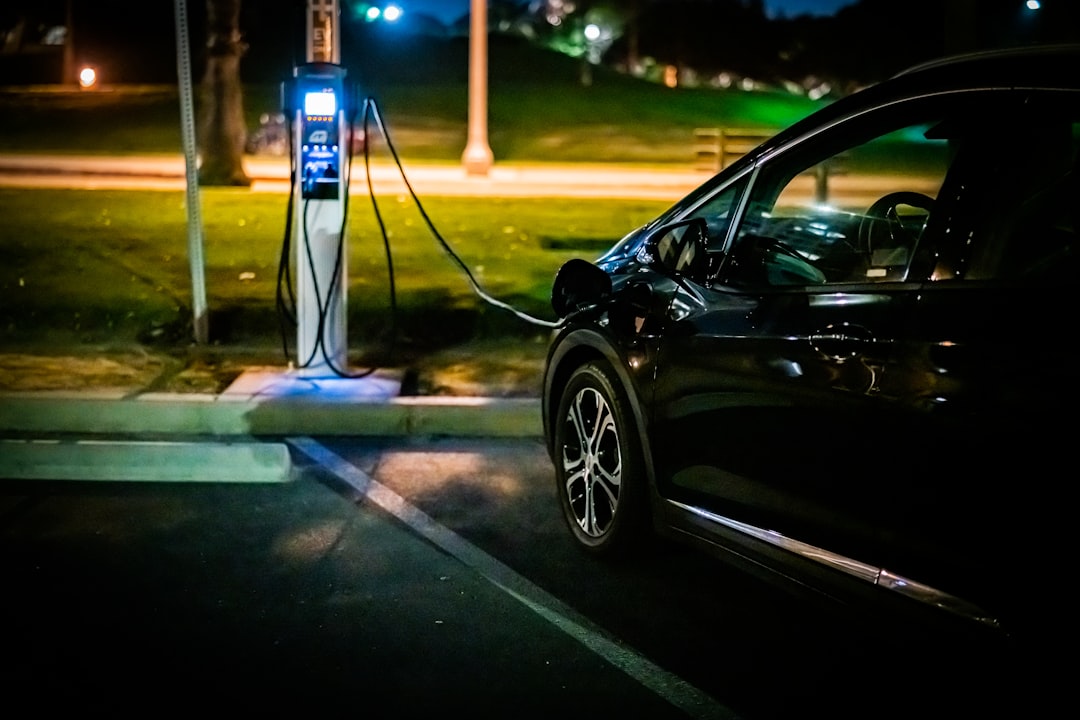
Picture this: it’s early 2026, and you’re standing at a highway rest stop somewhere between Seoul and Busan. To your left, there’s a sleek EV charging station humming quietly as a dozen lithium-battery vehicles queue up, each waiting 20–40 minutes for a meaningful charge. To your right, a hydrogen refueling station fills up a fuel-cell truck in under five minutes, and the driver is already back on the road. Which side of that parking lot represents the future? Honestly — and this is what makes this topic so fascinating — both do. But in very different ways, for very different users.
The competition between hydrogen fuel cells and lithium-ion batteries has moved well past theoretical debate. In 2026, we’re seeing real-world deployment, real-world failures, and real-world winners emerging in specific sectors. Let’s think through this together, because the answer isn’t as simple as picking a side.
⚡ The State of Play: Key Data Points in 2026
To understand where we are, let’s ground ourselves in some numbers that have reshaped the conversation this year.
- Lithium battery energy density has climbed to approximately 320–350 Wh/kg in next-generation solid-state cells (commercialized at scale by Toyota and Samsung SDI in late 2025), compared to ~250 Wh/kg for conventional lithium-ion packs just three years ago.
- Hydrogen fuel cell efficiency in automotive applications now hovers around 60–65% (well-to-wheel), while lithium battery EVs clock in at roughly 77–85% well-to-wheel efficiency — still a meaningful gap favoring batteries.
- Green hydrogen production cost has dropped to approximately $3.20–$4.50/kg in leading markets (South Korea, Germany, Australia), down from over $6/kg in 2022 — progress, but still not cost-competitive with grid-charged batteries for light passenger vehicles.
- Global fuel cell vehicle (FCV) stock reached roughly 120,000 units by Q1 2026, compared to over 42 million battery electric vehicles (BEVs) — a ratio that tells a clear short-term story.
- Heavy-duty trucking, however, tells a different story: fuel cell adoption in Class 8 trucks grew 340% year-over-year in 2025, with Hyundai’s XCIENT platform and Daimler’s GenH2 leading deployments across Europe and East Asia.
🏭 Where Each Technology Actually Thrives
Here’s the logical framework I find most useful: think about energy storage as a spectrum defined by weight sensitivity, refueling time, and duty cycle intensity. Lithium batteries win decisively where weight is manageable, range is predictable, and charging infrastructure is accessible. Hydrogen wins where none of those conditions apply.
For passenger cars and urban commuting, the lithium battery case is essentially closed in 2026. Charging networks in South Korea, the EU, and coastal U.S. cities have reached genuine density. Solid-state batteries are eliminating range anxiety for most use cases. The total cost of ownership for a BEV sedan is now 15–22% lower over five years than a comparable hydrogen FCV, primarily because fuel cell vehicles still pay a hydrogen fuel premium.
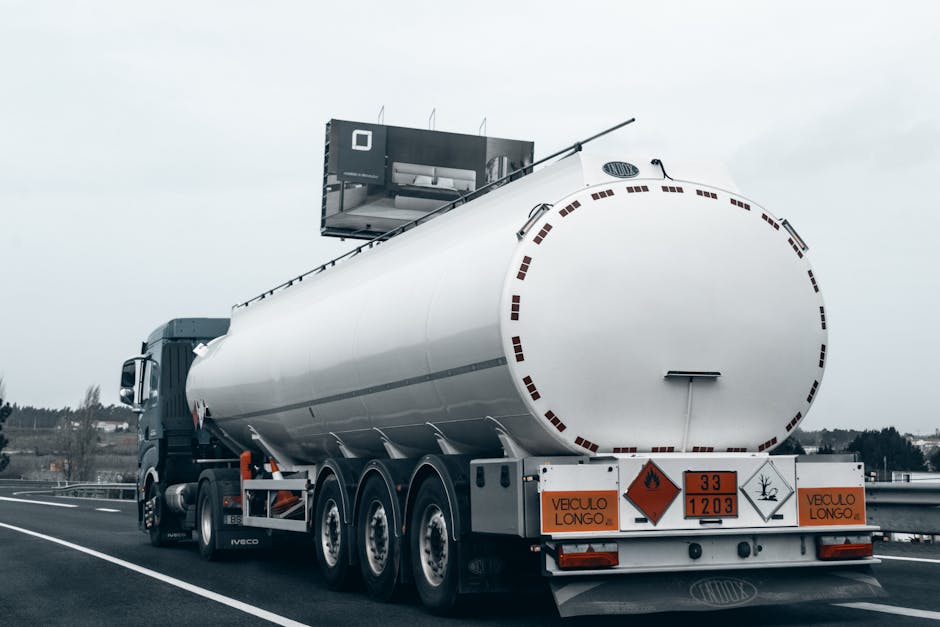
But for long-haul freight, maritime shipping, and aviation? Hydrogen is making a genuinely compelling argument. Carrying enough lithium batteries to power a 40-ton truck across 800 km cuts deeply into payload capacity and adds enormous vehicle weight — a compounding problem. A fuel cell system for the same route adds far less weight and refuels in minutes. Kawasaki Heavy Industries launched its first liquid hydrogen cargo vessel route between Japan and Australia in January 2026, and the economics are beginning to pencil out at industrial scale.
🌍 Real-World Examples: From Seoul to Stuttgart
Let’s look at what’s actually happening on the ground across key markets.
South Korea remains the most aggressive hydrogen economy in the world. The government’s “Hydrogen Economy Roadmap 2.0” targets 30,000 hydrogen buses by 2030, and Hyundai’s Nexo FCV has seen renewed commercial fleet uptake in 2026 — particularly in logistics companies that operate fixed routes between hydrogen refueling hubs. Seoul’s metropolitan bus system is now 18% hydrogen-powered, and the infrastructure density in the capital makes refueling genuinely convenient for fleet operators.
Germany is playing both sides strategically. Volkswagen Group doubled down on solid-state battery development through its PowerCo subsidiary, while simultaneously investing €2.1 billion in hydrogen infrastructure for freight corridors via a consortium with Daimler Truck and Linde. German industrial policy in 2026 essentially says: batteries for personal mobility, hydrogen for industry and freight — and that pragmatic division is proving increasingly wise.
California, USA tells a cautionary tale about hydrogen’s infrastructure chicken-and-egg problem. Despite early enthusiasm, several hydrogen retail stations closed in 2024–2025 due to supply chain issues and low utilization. The state pivoted in 2026 toward hydrogen clusters around ports and logistics hubs rather than consumer retail — a much smarter deployment strategy that’s already showing better utilization rates.
China, meanwhile, is doing something characteristically bold: aggressively pursuing both technologies simultaneously. CATL continues to dominate global lithium battery production with its Condensed Battery achieving 500 Wh/kg in prototype form, while state-backed hydrogen projects are deploying fuel cells in mining, port equipment, and intercity buses at a pace no other country can match.
💡 The Underrated Middle Ground: Hybrid Systems
One development that doesn’t get enough attention is the rise of battery-fuel cell hybrid powertrains. Companies like Ballard Power Systems and Toyota are deploying systems where a smaller fuel cell acts as a “range extender” for a lithium battery primary drive. This captures the fast-refueling benefit of hydrogen while using the battery’s superior efficiency for typical driving loads. Several European bus fleets adopted this architecture in 2025, reporting 23% better energy efficiency than pure fuel cell systems and 40% better range than equivalent pure-battery buses. This hybrid approach might be the most practical near-term answer for transit agencies caught between the two worlds.
🔮 Realistic Alternatives: What Should You Actually Think About?
If you’re making decisions — whether as a consumer, a fleet manager, or a policy thinker — here’s how I’d frame your thinking in 2026:
- Personal vehicle buyer? Go lithium battery. The infrastructure, the cost, and the technology maturity all point clearly in this direction for 2026 and the next decade.
- Fleet operator running fixed urban routes? Evaluate hydrogen seriously if your city has refueling infrastructure. The lower per-km fuel cost on some hydrogen corridors is genuinely competitive now.
- Heavy freight operator? Model your specific routes against hydrogen hub locations. If green hydrogen is available within your logistics network, fuel cell total cost of ownership is approaching parity with diesel in several European markets.
- Industrial or maritime sector? Hydrogen’s window of advantage is opening. The weight-to-energy ratio and the need for zero-emission certification in ports makes hydrogen the only viable pathway for many applications.
- Investor or policy maker? Don’t bet on a single winner. The most resilient energy portfolios and national strategies in 2026 are technology-agnostic at the infrastructure level but application-specific in deployment.
The honest truth is that framing this as a “competition” with a single winner is probably the wrong mental model. Lithium batteries and hydrogen fuel cells are increasingly revealing themselves as complementary technologies optimized for different applications — the way diesel engines and electric motors coexisted and each found their niches over decades of transportation history.
The next 18–24 months will be particularly telling. Green hydrogen production costs need to cross the $2/kg threshold to unlock true mass-market competitiveness. Solid-state batteries need to prove their longevity at scale beyond the 200,000-unit mark. Both milestones are plausible by late 2027, which means the competitive landscape we’re mapping today could look quite different by your next vehicle purchase.
Stay curious, stay flexible, and resist anyone telling you this story is already over. It very much isn’t.
Editor’s Comment : What strikes me most about the hydrogen vs. battery debate in 2026 is how the conversation has matured — we’ve finally moved past tribalism and into genuine application-specific thinking. The readers who will make the smartest decisions are the ones who ask “for what purpose?” before asking “which technology?” That question changes everything. If this piece sparked new questions for you, drop them in the comments — I genuinely love reasoning through these scenarios with readers who are thinking carefully about where energy is heading.
태그: [‘hydrogen fuel cell 2026’, ‘lithium battery vs hydrogen’, ‘EV technology comparison’, ‘green hydrogen economy’, ‘solid state battery 2026’, ‘fuel cell vehicle FCV’, ‘clean energy transportation’]
Leave a Reply