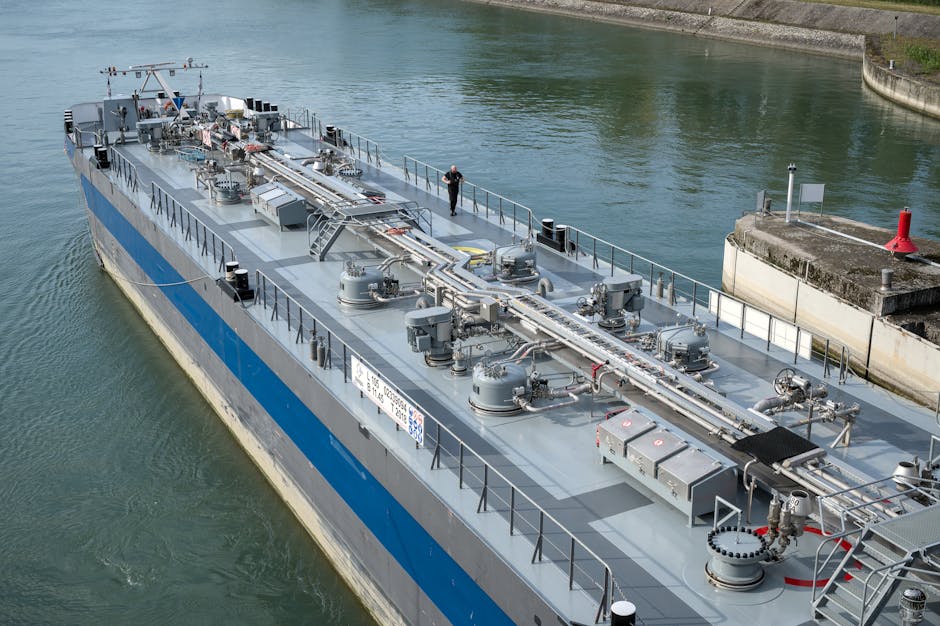
Picture this: a massive, silver-white tanker gliding silently into a port in Kawasaki, Japan — not carrying oil, not carrying LNG, but carrying liquid hydrogen cooled to -253°C. That’s cold enough to make liquid nitrogen look warm. Just a few years ago, this was firmly in the realm of science fiction. Today, in 2026, it’s becoming a routine industrial operation. And the technology making it possible? It’s evolving faster than most people realize.
Whether you’re an energy enthusiast, an investor, or just someone curious about where the world is heading, let’s think through what’s really happening in liquid hydrogen (LH2) transport and storage — and why it matters beyond the headlines.
Why Liquid Hydrogen Is So Technically Challenging
Before we dive into the latest breakthroughs, it helps to understand why this problem is so hard. Hydrogen, when liquefied, occupies about 1/800th of its gaseous volume — making it incredibly energy-dense for transport. But keeping it liquid requires maintaining temperatures near absolute zero (-253°C / 20 Kelvin). That’s colder than the surface of Pluto.
The core engineering challenges are:
- Boil-off gas (BOG): Even with the best insulation, heat leaks in and hydrogen slowly evaporates. Industry benchmarks in 2024 saw boil-off rates of 0.3–0.5% per day on large vessels. In 2026, leading designs are now pushing toward 0.1% per day or lower through advanced vacuum-jacketed multi-layer insulation (MLI).
- Ortho-para hydrogen conversion: Hydrogen exists in two spin states — orthohydrogen and parahydrogen. During liquefaction, converting ortho- to para-hydrogen releases heat. New catalytic converters integrated into liquefaction plants are now achieving 99%+ para-hydrogen purity, dramatically reducing boil-off during storage.
- Materials embrittlement: Metals behave differently at cryogenic temperatures. Austenitic stainless steels and aluminum alloys remain the gold standard, but 2026 has seen the emergence of carbon fiber reinforced polymer (CFRP) composite tanks that offer 40% weight reduction with comparable thermal performance.
- Refueling infrastructure: Getting LH2 from ship to shore to end-user requires cryogenic pumps, vacuum-insulated piping, and fast-fill stations — all of which are still being standardized globally.
The Numbers That Are Turning Heads in 2026
Let’s get specific, because the data in 2026 is genuinely exciting:
The global liquid hydrogen market, valued at approximately $1.8 billion in 2023, is now tracking toward $14–17 billion by 2030 according to multiple industry analysts. That’s not linear growth — that’s an inflection point. Several catalysts are driving this curve steeper:
- The EU’s Hydrogen Bank, now in its second auction round, has committed over €3 billion toward green hydrogen production and LH2 logistics infrastructure across member states.
- Japan’s revised Basic Hydrogen Strategy (updated 2023, with 2026 implementation milestones) targets 3 million tonnes of hydrogen per year by 2030, with LH2 as a primary import pathway.
- South Korea’s HySupply corridor with Australia is now in commercial phase, with the first full-scale LH2 carrier (capacity: 1,250 m³) completing its third commercial voyage in early 2026.
- In the U.S., DOE’s hydrogen hub program (H2Hubs) has accelerated LH2 distribution trials in Texas and California, with liquid hydrogen truck delivery corridors now operational along I-10.
Real-World Examples: Who’s Leading and How
Let’s look at who’s actually doing this — not just announcing it.
🇯🇵 Japan — Kawasaki Heavy Industries & HySTRA: The Suiso Frontier, the world’s first LH2 carrier, completed its pioneering pilot voyage back in 2022. By 2026, KHI’s next-generation vessel — designed with a 160,000 m³ cargo capacity (compare that to the original 1,250 m³ pilot ship) — is in advanced construction at the Sakaide shipyard. The insulation system uses advanced perlite-vacuum panels that have reduced thermal losses by approximately 35% compared to the pilot vessel’s design.
🇦🇺 Australia — Fortescue & CSIRO: Australia has positioned itself as the Saudi Arabia of green hydrogen. In the Pilbara region, Fortescue’s green hydrogen facility is now producing LH2 for export, with a dedicated liquefaction train capacity of 500 tonnes per day — one of the largest standalone green LH2 facilities outside of the U.S. CSIRO’s membrane separation technology continues to improve on-site purity to 99.999% (5N grade) hydrogen.
🇩🇪 Germany — Linde & Hydrogenious LOHC (for comparison): Germany presents an interesting contrast. While investing in LH2 terminals at Hamburg and Brunsbüttel ports, German industry has also heavily backed Liquid Organic Hydrogen Carriers (LOHC) as a competing technology. The debate is real: LOHC operates at ambient temperature and pressure but requires energy-intensive dehydrogenation at the point of use. In 2026, the German federal government’s official position is to support both pathways, letting market conditions determine the winner — a pragmatic hedge that other nations are watching closely.
🇺🇸 United States — Air Products & NASA Heritage: The U.S. has the deepest industrial experience with LH2, largely thanks to NASA’s decades of work. Air Products, which operates the world’s largest LH2 plant (in New Orleans, ~30 tonnes/day), is now scaling up to a new 90 tonnes/day facility in Louisiana, primarily targeting export markets via the Gulf Coast. Their cryo-pump technology innovations in 2025–2026 have reportedly reduced LH2 transfer losses during ship loading to under 0.05% — a remarkable engineering feat.
The Storage Side: What’s New on Land
Transport gets the glamour, but stationary storage is equally critical. Think of it like this: if LH2 is water, then storage tanks are the reservoirs — without them, the whole system falls apart.
Key developments in 2026 include:
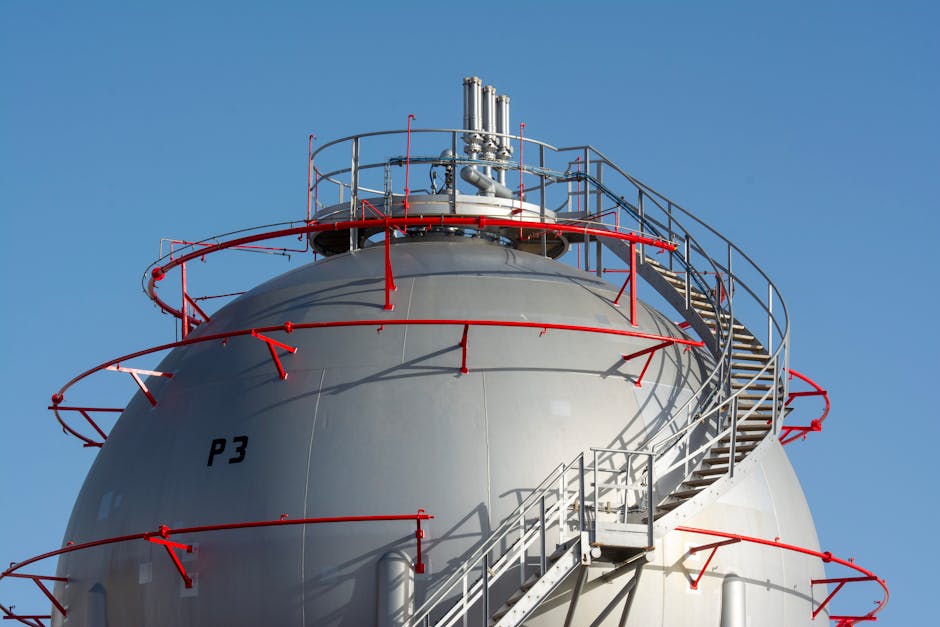
- Spherical vacuum-insulated tanks at gigawatt scale: EDF in France and POSCO in South Korea are both commissioning large-scale LH2 storage spheres with capacities exceeding 5,000 m³. The spherical geometry minimizes surface-area-to-volume ratio, inherently reducing heat ingress.
- Underground LH2 cavern storage (pilot phase): Taking a page from LNG’s playbook, researchers in Norway and Japan are exploring rock cavern storage for LH2. The naturally cold, stable rock environment could reduce insulation requirements significantly. Full feasibility results are expected by late 2026.
- Smart boil-off management systems: Rather than venting boil-off gas (wasted energy and a safety concern), new integrated systems capture BOG, recompress it, and re-liquefy it using waste cold from incoming LH2 streams. Several German and Japanese terminals deployed these systems in 2025, reporting near-zero net BOG losses in steady-state operation.
Realistic Alternatives: What If LH2 Isn’t Right for Your Use Case?
Here’s where I want to be really honest with you, because not every situation calls for liquid hydrogen — and choosing the right carrier form is genuinely important.
If you’re thinking about hydrogen in an industrial or investment context, consider these realistic alternatives:
- Compressed gaseous hydrogen (CGH2): For short-distance distribution (under ~300 km), tube trailers at 200–500 bar are often more cost-effective than LH2. No liquefaction energy cost (~30% of hydrogen’s energy content), simpler infrastructure. Downside: much lower energy density per vehicle.
- Ammonia (NH3) as hydrogen carrier: Ammonia is already globally traded at massive scale. Green ammonia — cracked back to hydrogen at destination — is being seriously pursued by Saudi Aramco, JERA in Japan, and OCI Global. It sidesteps cryogenics entirely. The trade-off: cracking efficiency and the need for nitrogen handling.
- LOHC (Liquid Organic Hydrogen Carriers): As mentioned above, companies like Hydrogenious LOHC Technologies and Chiyoda Corporation’s SPERA Hydrogen system offer ambient-condition transport. Best suited for industrial clusters where dehydrogenation infrastructure already exists.
- Metal hydrides: For small-scale, high-density stationary storage (think back-up power for data centers), solid-state metal hydrides offer a compelling safety profile. Startups like H2 Energy Storage (Switzerland) are gaining traction in 2026 for niche applications.
The honest reality? LH2 wins when you need large volumes over long distances and high delivery purity — aerospace refueling, large-scale power-to-X applications, and intercontinental export. For distributed, smaller-scale needs, one of the alternatives above may actually make more sense economically and operationally.
What to Watch for in the Rest of 2026
A few things I’m personally tracking that could shift this space significantly:
- The ISO/TC 197 hydrogen technology standards update expected in Q3 2026, which will set global benchmarks for LH2 marine transport safety — this will either accelerate or slow investment timelines.
- China’s entry into large-scale LH2 export: SINOPEC and State Power Investment Corporation (SPIC) have both announced LH2 export ambitions. China’s scale could commoditize aspects of the supply chain within years.
- The outcome of the EU’s hydrogen import tariff negotiations — currently a hot political topic — which will determine whether European LH2 import terminals get their business cases confirmed or complicated.
Editor’s Comment : Liquid hydrogen technology in 2026 is genuinely at that exciting, slightly uncomfortable inflection point where the engineering is ahead of the policy and the policy is ahead of the public understanding. The boil-off numbers are getting real, the vessels are getting big, and the supply chains are clicking into place. But let’s stay clear-eyed: LH2 is one arrow in the quiver, not the whole bow. The smartest players right now are the ones building flexible infrastructure that can adapt as the competition between LH2, ammonia, and LOHC plays out over the next decade. My advice? Keep watching the terminal construction announcements — that’s where the real money signals are hiding.
태그: [‘liquid hydrogen storage 2026’, ‘LH2 transport technology’, ‘cryogenic hydrogen infrastructure’, ‘green hydrogen supply chain’, ‘hydrogen energy news 2026’, ‘liquid hydrogen carrier ship’, ‘hydrogen boil-off management’]
Leave a Reply