Imagine pulling up to a fueling station in 2026, not to pump gasoline, but to fill your vehicle with hydrogen in under five minutes — paying roughly the equivalent of what you’d spend on a mid-range coffee subscription per month. Sounds like a vision board fantasy, right? Well, it’s closer to reality than most people realize, and the policy machinery driving it is humming louder than ever this year. Let’s think through what the Hydrogen Economy Roadmap 2026 policies really mean — not just in abstract government-speak, but in terms you can actually use.
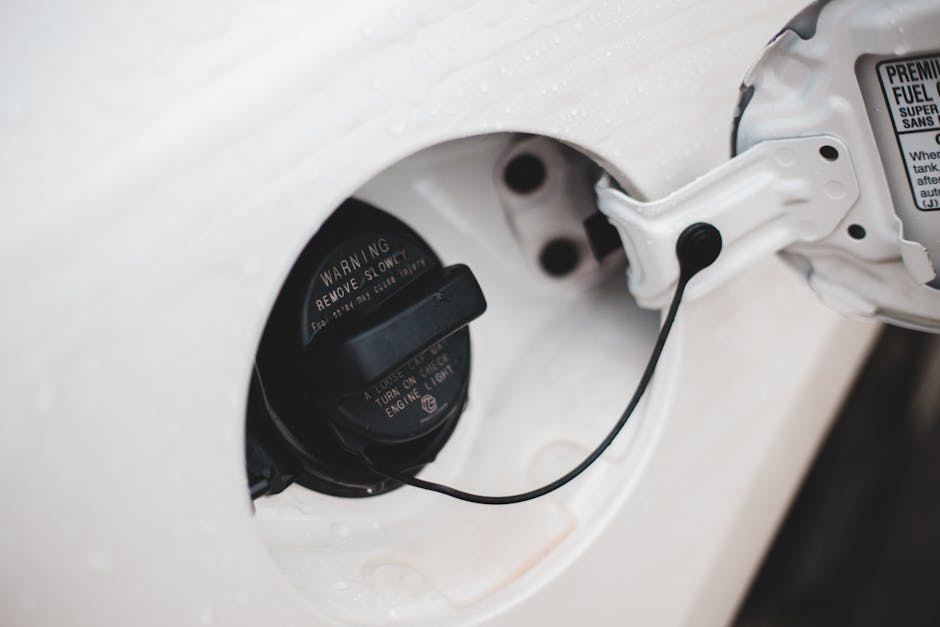
What Is the Hydrogen Economy Roadmap, and Why Does 2026 Matter So Much?
The Hydrogen Economy Roadmap is essentially a government blueprint that outlines how nations plan to transition from fossil-fuel dependency toward hydrogen as a primary clean energy carrier. In 2026, this roadmap has evolved from aspirational targets into binding policy commitments across South Korea, the EU, Japan, and the United States — each with their own funding mechanisms and timelines.
South Korea’s Ministry of Trade, Industry and Energy (MOTIE) confirmed in early 2026 that the country aims to deploy over 300,000 hydrogen fuel cell vehicles (FCEVs) and establish 660+ hydrogen refueling stations nationwide by year-end. Meanwhile, the EU’s Hydrogen Bank has committed €3 billion in auction-based subsidies specifically targeting green hydrogen production at scale. These aren’t just numbers on a slide deck — they reflect real capital flows that are reshaping supply chains, job markets, and energy costs.
Breaking Down the Key Policy Pillars in 2026
Let’s be specific here, because vague policy talk helps no one. The 2026 roadmap across major economies generally rests on four pillars:
- Production Scaling: Prioritizing green hydrogen (produced via electrolysis powered by renewables) over grey hydrogen (derived from natural gas). South Korea’s Hydrogen Law, now in its operational phase, mandates that public sector hydrogen procurement must source at least 50% from certified clean hydrogen by Q3 2026.
- Infrastructure Investment: Japan’s NEDO (New Energy and Industrial Technology Development Organization) is co-funding a liquid hydrogen pipeline corridor connecting Kobe to Osaka — a $1.2 billion project expected to deliver its first commercial throughput in mid-2026.
- Demand Stimulation: The US Inflation Reduction Act’s hydrogen tax credit (Section 45V) has been refined in 2026 to offer up to $3 per kilogram for hydrogen meeting the strictest lifecycle emissions criteria, making domestic green hydrogen increasingly cost-competitive.
- Safety & Standards Harmonization: ISO/TC 197 updated its hydrogen technology standards in January 2026, providing unified certification pathways that reduce cross-border trade friction — a huge deal for exporters like Australia and Chile who are positioning themselves as green hydrogen powerhouses.
Real-World Examples: Who’s Actually Getting It Right?
Theory is fine, but let’s look at who’s turning policy into practice in 2026.
South Korea — The FCEV Pioneer: Hyundai’s NEXO second generation, released in late 2025, is now benefiting directly from government purchase subsidies of up to ₩20 million per unit under the 2026 Green Mobility Support Program. Fleet operators — particularly logistics companies in the Busan-Incheon corridor — are reporting total cost of ownership comparisons that are now within 8–12% of equivalent diesel trucks over a five-year period. That gap is narrowing fast.
Germany — Industrial Hydrogen at Scale: ThyssenKrupp’s Duisburg steel plant began its phased green hydrogen integration in early 2026, targeting a 20% reduction in carbon intensity within 18 months. Germany’s H2Global mechanism, which uses a double-auction system to bridge the price gap between cheaper fossil-based and costlier green hydrogen, has successfully onboarded suppliers from Namibia and Saudi Arabia — demonstrating that hydrogen can be a globally traded commodity, not just a local experiment.
Australia — The Export Ambition: Australia’s National Hydrogen Strategy 2026 update formalized offtake agreements with Japan and South Korea totaling 1.5 million metric tons of hydrogen annually by 2030. Projects in Western Australia’s Pilbara region are already in construction phase, leveraging some of the world’s cheapest solar irradiance to power electrolyzers at costs projected below $2/kg by 2028.
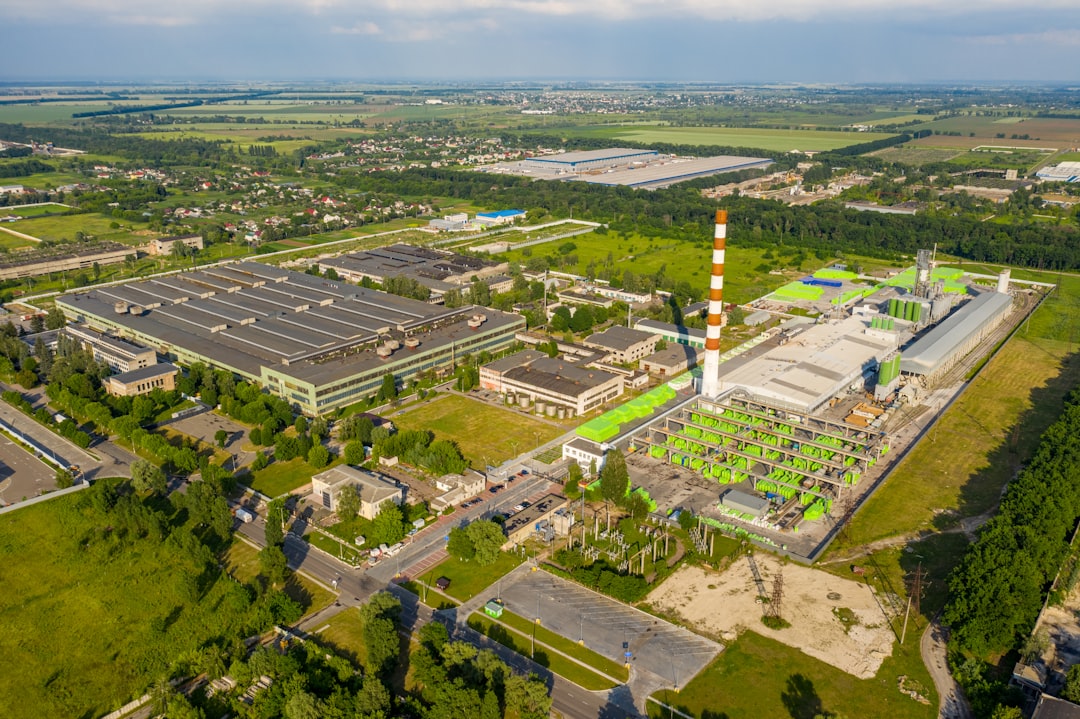
What Does This Mean for Everyday People — Not Just Corporations?
Here’s where I think a lot of coverage goes wrong — it stays at the 30,000-foot level. Let’s bring it down to earth. If you’re a homeowner, a small business owner, or just someone watching your energy bill, here’s how the 2026 hydrogen policy environment could realistically touch your life:
- Home Heating: Hydrogen-blended natural gas (up to 20% hydrogen by volume) is being trialed in residential networks in the UK’s Redcar area and parts of the Netherlands. If these pilots scale, existing gas boilers could run on this blend without modification — a pathway that avoids the expensive all-electric retrofits many homeowners dread.
- Transportation Costs: If you’re in a metro area with expanding hydrogen refueling infrastructure (Tokyo, Seoul, Los Angeles, Rotterdam), FCEVs are becoming a genuinely rational choice for high-mileage drivers, especially with 2026 government incentives factored in.
- Energy Security: Countries that successfully scale domestic green hydrogen reduce their exposure to volatile LNG markets — the price spikes of 2021–2023 are still fresh in collective memory. Policy investment today is partly a hedge against tomorrow’s geopolitical energy disruptions.
- Job Creation: The International Energy Agency (IEA) projects that the global clean hydrogen sector will support 3.4 million direct jobs by 2030. In 2026, training programs in South Korea, Germany, and Canada are already pipeline-filling those roles — if you’re in a technical field, this is worth watching as a career opportunity.
The Honest Challenges — Because This Isn’t All Smooth Sailing
Let’s be real with each other. The hydrogen economy roadmap in 2026, for all its momentum, still faces structural headwinds that policy alone can’t fully resolve. Green hydrogen production costs, while falling, remain roughly 2–3x higher than grey hydrogen in most markets. Electrolyzer supply chains are still bottlenecked — many manufacturers are quoting 18–24 month lead times on large-scale units. And public acceptance of hydrogen infrastructure in residential areas remains a communication challenge that governments have been slow to address head-on.
A realistic alternative framing: rather than viewing hydrogen as a universal replacement for all fossil fuels, the smarter policy logic — and the one increasingly endorsed by energy economists in 2026 — is to deploy hydrogen strategically where electrification is hardest. Think heavy-duty trucking, shipping, aviation, and industrial heat. For passenger cars in urban settings, battery electric vehicles (BEVs) still hold the efficiency advantage. The best outcomes come from letting both technologies compete and complement each other, rather than forcing ideological purity on either side.
If you’re an investor, a policy watcher, or simply a curious citizen, the actionable takeaway is this: follow the infrastructure spending, not just the headline targets. When refueling networks reach critical density (roughly one station per 25km in urban corridors), adoption curves tend to inflect sharply upward. Based on current 2026 deployment rates in South Korea and Japan, that inflection point is likely 18–36 months away in leading markets.
Editor’s Comment : The Hydrogen Economy Roadmap in 2026 is genuinely one of the most consequential — and underreported — policy shifts happening right now. It’s easy to get either swept up in the hype or dismissive of the timelines. The truth, as usual, lives in the middle: this is a real transition with real capital behind it, but it will be uneven, messy, and slower in some sectors than advocates hope. The smartest move, whether you’re a consumer, entrepreneur, or policymaker, is to stay curious, stay specific, and resist both the breathless optimism and the reflexive skepticism. The hydrogen story in 2026 is just getting good.
태그: [‘hydrogen economy roadmap 2026’, ‘green hydrogen policy’, ‘fuel cell vehicles 2026’, ‘clean energy transition’, ‘hydrogen infrastructure investment’, ‘FCEV adoption’, ‘sustainable energy 2026’]
Leave a Reply