Picture this: it’s a cold January morning, your heating bill just landed in your inbox, and you’re staring at a number that makes your coffee go cold. A neighbor casually mentions their home fuel cell system hasn’t cost them a dime in grid electricity since autumn. Sound familiar? This exact scenario is playing out in thousands of households across North America, Europe, and East Asia right now — and it’s got a lot of homeowners wondering whether a residential fuel cell is a smart financial move or just expensive green theater.
Let’s think through this together, because the honest answer is: it depends — but in ways that are very calculable once you know what to look for.
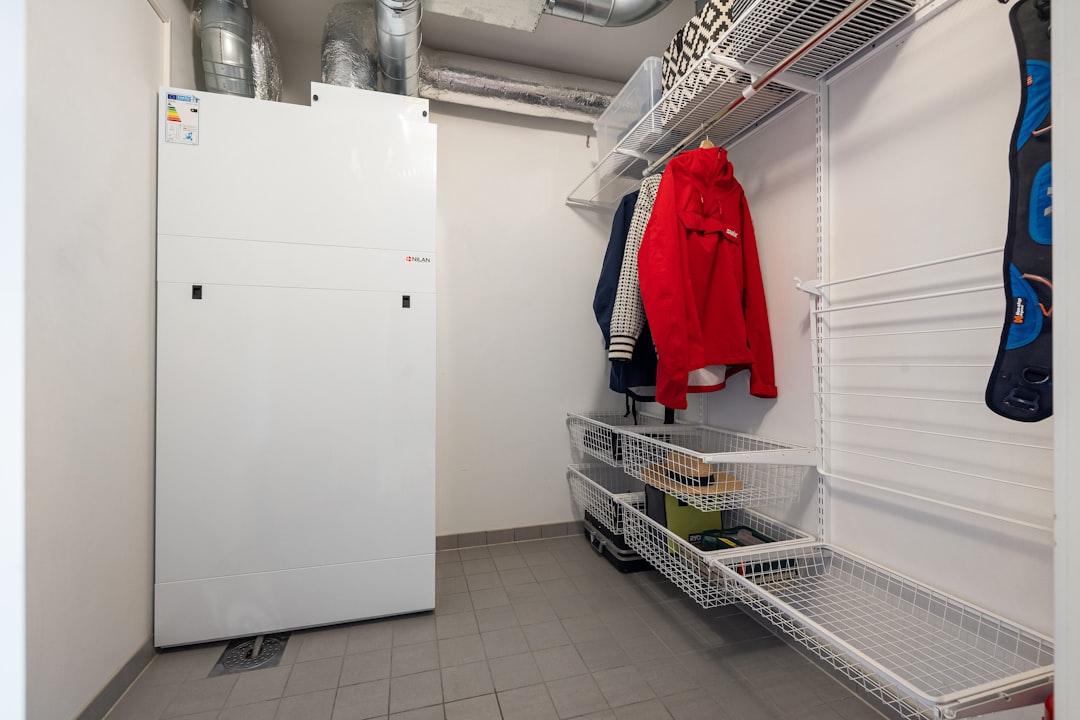
What Exactly Is a Home Fuel Cell System?
Before we crunch numbers, a quick primer for anyone newer to this technology. A residential fuel cell (most commonly a PEMFC — Proton Exchange Membrane Fuel Cell — or a SOFC — Solid Oxide Fuel Cell) converts natural gas or hydrogen into electricity and heat through an electrochemical reaction, not combustion. The key selling point: efficiencies of 85–95% in combined heat and power (CHP) mode, compared to roughly 35–45% for conventional grid electricity generation.
In 2026, the two dominant residential players globally are Bloom Energy’s home-scale ES-5 unit (targeting the North American premium market) and Panasonic’s ENE-FARM series (dominating Asia-Pacific). European households are increasingly looking at Viessmann’s Vitovalor PT2 and newer hydrogen-ready models from Bosch.
The 2026 Cost Landscape: Installation, Operation, and the Break-Even Math
Let’s get into the numbers, because vague promises don’t pay bills.
Upfront Installation Costs (2026 estimates, USD):
- Entry-level SOFC units (1–2.5 kW): $8,000 – $14,000 installed
- Mid-range CHP systems (2.5–5 kW): $16,000 – $28,000 installed
- Premium whole-home systems (5–10 kW): $32,000 – $55,000 installed
- Hydrogen-ready systems (with on-site reformer): Add $6,000 – $12,000 to above tiers
These figures have actually dropped 18–22% compared to 2023 levels, largely due to scaled manufacturing in South Korea and Japan and improved stack longevity (modern stacks now reliably reach 60,000–80,000 operating hours before replacement).
Annual Operating Costs: A typical 2.5 kW natural-gas-fed unit running in CHP mode costs roughly $900–$1,400/year in fuel (at 2026 average US natural gas prices of ~$1.15/therm) while displacing $1,800–$2,600/year in grid electricity and heating costs for a median US home consuming ~10,500 kWh annually.
Simple payback period — before incentives — currently runs 14–22 years for most US households. That’s admittedly long. But here’s where policy makes a dramatic difference.
Incentives That Genuinely Change the Math in 2026
The US Inflation Reduction Act extensions still provide a 30% federal tax credit on residential fuel cell installations (up to $500/0.5 kW of capacity). Several states — California, New York, Massachusetts, and Connecticut — layer additional rebates of $1,500 – $4,000 on top of that. Run those numbers and your payback window can compress to 7–11 years in high-electricity-cost markets like California (averaging $0.32/kWh in 2026).
In Germany, the KfW 433 program continues to subsidize up to €4,800 per fuel cell installation, and in Japan, the Ministry of Economy’s ENE-FARM subsidy (restructured in 2025) offers ¥150,000–¥350,000 depending on system type. South Korea’s Green New Deal successor program covers up to 30% of installation costs for residential micro-CHP.

Real-World Case Studies: Who’s Actually Winning?
California Household (San Jose, 2025–2026): A family of four installed a 2.5 kW Panasonic SOFC unit in late 2024. After the 30% federal credit and $3,200 California Self-Generation Incentive Program (SGIP) rebate, net cost was ~$11,800. With PG&E rates at $0.34/kWh, they’re saving approximately $2,100/year. Projected payback: ~5.6 years. That’s genuinely compelling.
Tokyo Apartment (Minato Ward): A retired couple on the ENE-FARM program reports a 38% reduction in combined gas and electricity bills. The Japanese model benefits from the country’s high grid electricity costs (¥30–35/kWh in 2026) and a culture of long-term appliance investment. Their system is in year 9 with no major maintenance costs beyond the scheduled annual service (¥25,000/year).
German Single-Family Home (Bavaria): A Viessmann Vitovalor system installed under KfW 433 is providing heat and power but the owner candidly notes that with Germany’s slightly lower electricity prices post-2025 energy stabilization (~€0.28/kWh), payback is closer to 10–13 years. Still worthwhile, but no magic bullet.
The Hidden Costs and Honest Drawbacks
- Stack replacement: Around year 10–12, expect a $3,000–$6,000 stack replacement cost — this must be factored into lifetime ROI.
- Natural gas dependency: Most residential units still run on fossil-derived methane. If your goal is true decarbonization, the picture is more complicated without green hydrogen access.
- Home suitability: Multi-unit apartments, homes with low energy consumption (<7,000 kWh/year), or renters face significant structural and financial barriers.
- Maintenance expertise: Unlike solar panels, fuel cells need annual professional servicing. Technician availability varies widely by region.
- Grid export limitations: Unlike solar PV, most home fuel cell systems are not optimized for grid export, limiting a key revenue stream.
Realistic Alternatives Worth Considering
If the numbers don’t stack up for your specific situation right now, here’s how I’d think through your options:
- High-efficiency heat pump + solar PV combo: Often a faster payback (5–8 years in most US markets) with lower upfront complexity. Best for moderate climates.
- Wait for hydrogen-ready systems: Several manufacturers (including Honda and Kyocera) are launching true green-hydrogen-compatible residential units in late 2026. If you’re in a region building out H2 infrastructure, waiting 12–18 months could be strategically smarter.
- Community fuel cell programs: Utilities in Connecticut, Hawaii, and South Korea are piloting neighborhood-scale fuel cells where homeowners buy in at a fraction of individual installation costs.
- Lease models: Bloom Energy and a few regional utilities have begun residential lease programs at $150–$250/month with zero upfront — worth investigating if capital is the barrier.
The bottom line? A home fuel cell system in 2026 makes strong financial sense for high-energy-consuming households in high-electricity-cost markets with robust incentive access. For everyone else, it’s a future-leaning investment that rewards patience and careful local analysis over FOMO-driven purchasing.
Editor’s Comment : After digging into these numbers, what genuinely surprises me is how dramatically location and incentive stacking shift the calculus. The same physical system is a slam-dunk in San Jose and a 15-year gamble in rural Iowa. Before you call an installer, I’d strongly recommend running your own numbers using the US DOE’s updated Fuel Cell Cost Calculator (relaunched January 2026) or Japan’s ENE-FARM simulator — both are free and take about 20 minutes. The technology is legitimately impressive and steadily maturing; the question is simply whether your specific situation is ready to reward it today.
태그: [‘home fuel cell system 2026’, ‘residential fuel cell cost analysis’, ‘SOFC PEMFC home energy’, ‘fuel cell ROI payback period’, ‘ENE-FARM Bloom Energy residential’, ‘clean energy home investment 2026’, ‘CHP combined heat and power home’]
Leave a Reply