Picture this: It’s a brisk Tuesday morning in 2026, and instead of pulling into a gas station or waiting 45 minutes at a congested EV charging hub, a driver in Seoul pulls up to a hydrogen refueling station, tops off their fuel cell vehicle in under five minutes, and gets back on the road — zero emissions, zero drama. Sounds almost too good to be true, right? Well, that scenario is becoming increasingly real this year, and the global conversation around hydrogen fuel cell vehicles (FCEVs) has shifted dramatically from “maybe someday” to “okay, let’s talk logistics.”
So let’s actually think through this together. Where do hydrogen fuel cell vehicles stand in 2026? What’s holding them back, and what’s quietly pushing them forward?
📊 The State of the Market: What the Numbers Tell Us
To understand where we are, we need to ground ourselves in real data. As of early 2026, global FCEV sales have surpassed 850,000 cumulative units — a figure that still pales against the tens of millions of battery electric vehicles (BEVs) on the road, but the trajectory is telling. In 2025 alone, FCEV registrations grew by approximately 34% year-over-year, with South Korea, Japan, China, and Germany leading the charge (no pun intended).
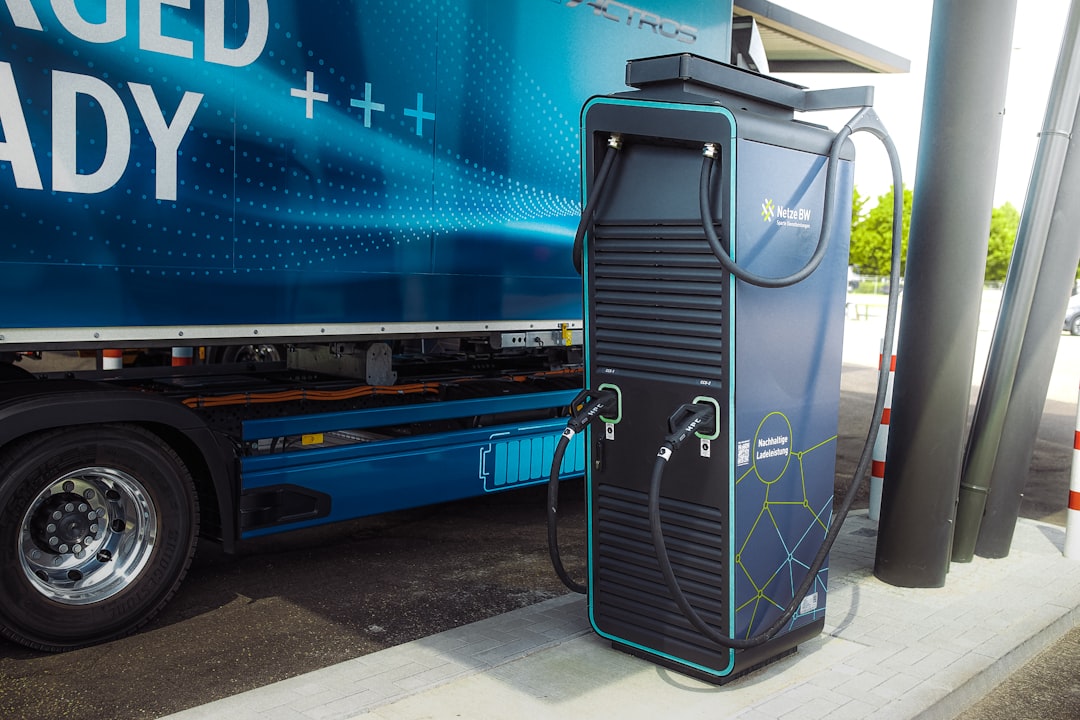
Hydrogen infrastructure has also seen meaningful acceleration. The global count of operational hydrogen refueling stations (HRS) crossed 1,800 stations in early 2026, with China alone accounting for nearly 600 of those. The International Energy Agency (IEA) had projected this kind of growth contingent on government policy alignment — and that alignment, at least in Asia and parts of Europe, is finally showing up in tangible form.
On the cost front, green hydrogen production costs have dropped to approximately $3.50–$4.80 per kilogram in leading markets, down from $5–$7/kg just three years ago. This is still above the $2/kg “golden threshold” widely cited as the point of true economic competitiveness, but the curve is bending in the right direction. Electrolyzer manufacturing costs have dropped by roughly 40% since 2022, which is a big deal for the entire supply chain.
🚗 Key Players and Their 2026 Moves
Let me walk you through who’s actually making waves right now, because this isn’t just a Hyundai-and-Toyota story anymore.
- Hyundai NEXO 2026 Edition: South Korea’s flagship FCEV has received a significant platform refresh this year, boasting a range of over 700 km (435 miles) on a single fill-up and improved cold-weather stack performance — a longstanding criticism of fuel cell systems in sub-zero climates.
- Toyota Mirai Gen 3 Concept: Toyota has signaled a third-generation Mirai targeted for late 2026 or 2027, featuring a smaller, lighter fuel cell stack and a more accessible price point aimed at closing the gap with premium BEVs.
- BMW iX5 Hydrogen (Limited Series): BMW’s hydrogen SUV moved beyond pilot phase in 2025 and is now available in select European markets, providing real-world fleet data that’s informing its broader roadmap.
- China’s SAIC, GAC, and BAIC: Chinese OEMs have been quietly but aggressively scaling FCEV production, particularly in commercial vehicles — buses and heavy trucks — where hydrogen’s refueling speed advantage is most operationally impactful.
- Commercial & Heavy Transport (Nikola, Hyzon, Daimler Truck): This is perhaps the most strategically significant space. Long-haul trucking is where FCEVs genuinely outperform BEVs on range and payload weight tradeoffs, and 2026 is seeing real fleet deployments, not just pilot programs.
🌍 International Lessons: What’s Working and Where
South Korea’s “Hydrogen Economy Roadmap” has arguably been the most cohesive national policy framework. With government subsidies covering up to 50% of FCEV purchase prices and a committed rollout of 310+ HRS stations by end of 2026, Korea is functioning as a kind of living laboratory for hydrogen mobility at scale.
Japan, meanwhile, has leaned into hydrogen for both mobility and stationary energy storage, with the government’s GX (Green Transformation) strategy earmarking significant resources through 2030. The cultural alignment between Japanese industrial policy and long-term technology bets gives Toyota and Honda a home-field advantage here.
In Europe, Germany’s H2Mobility network has been expanding steadily, though the pace has frustrated some industry observers. The EU’s Alternative Fuels Infrastructure Regulation (AFIR) is adding regulatory teeth, requiring hydrogen stations at 200 km intervals on major corridors by 2031 — which is creating a structured demand signal for infrastructure investment today.
The United States presents a more complex picture. The Inflation Reduction Act’s hydrogen tax credits have catalyzed private investment, particularly in California, Texas, and the Pacific Northwest, but fragmented state-level policy and a lack of coherent national infrastructure planning means the US is lagging behind Asia and Europe in practical deployment.

⚖️ The Honest Tradeoffs: FCEV vs. BEV in 2026
Here’s where I want to be genuinely useful and not just cheerleading. FCEVs are not a universal solution — they’re a contextual one. Let’s think through this logically:
- Where FCEVs make more sense: Long-range driving (500km+), commercial/fleet vehicles, regions with limited grid capacity, cold climates where battery degradation is a real issue, and use cases demanding rapid refueling turnaround.
- Where BEVs still win: Urban commuting, short-to-medium range trips, areas with robust charging infrastructure, and lower total cost of ownership when home charging is available.
- The energy efficiency argument: This one’s worth being honest about — BEVs are more energy-efficient on a well-to-wheel basis. Green hydrogen via electrolysis loses roughly 30–40% of input energy, whereas BEV charging loses about 15–20%. However, if the hydrogen is produced from otherwise curtailed renewable energy (excess wind/solar that would be wasted), that efficiency gap becomes less morally significant.
- Infrastructure chicken-and-egg: Consumers won’t buy FCEVs without stations; investors won’t build stations without consumers. This classic dilemma is being broken by government mandates and fleet operators rather than individual consumer demand — which is actually the realistic path forward.
🔮 Realistic Alternatives for Consumers Right Now
If you’re sitting there thinking “I’m interested in hydrogen but don’t know if it’s practical for me yet,” here’s how I’d frame your options depending on your situation:
- You live in a hydrogen-accessible metro (Seoul, Tokyo, LA, Munich): Leasing a current-gen FCEV like the NEXO or Mirai is genuinely viable and often economically attractive with subsidies. Leasing rather than buying protects you from tech depreciation risk.
- You need range + fast refueling for business: A FCEV or PHEV (plug-in hybrid) combination fleet might make more operational sense than pure BEV right now, especially for logistics companies.
- You’re in a region with sparse H2 infrastructure: Honestly? A long-range BEV like a Tesla Model Y Long Range or a Hyundai IONIQ 6 is probably your smarter near-term choice. The infrastructure math doesn’t support daily FCEV ownership yet in those markets.
- You’re a fleet manager for heavy transport: This is genuinely the sweet spot for FCEVs in 2026. The business case is becoming real — do a serious TCO (total cost of ownership) analysis including refueling time savings.
The honest truth about hydrogen fuel cell vehicles in 2026 is that they’re not replacing BEVs — they’re finding their lane. And that lane is wider than most people expected two years ago, particularly in commercial transport and in countries with deliberate policy alignment. The technology has matured, the cost curve is bending, and the infrastructure, while still patchy, is no longer theoretical. We’re not at mass adoption yet, but we’re convincingly past the “interesting experiment” phase.
The next two to three years will be genuinely decisive. Watch the commercial trucking sector, watch green hydrogen production costs, and watch whether the US gets its policy act together. Those three variables will tell you more about FCEV’s future than any single car launch.
Editor’s Comment : Hydrogen fuel cell vehicles in 2026 remind me of the early smartphone market circa 2007 — clearly capable of something transformative, but still needing the ecosystem to catch up. The tech believers aren’t wrong; they’re just early. If you’re in a position to engage with FCEVs today — through leasing, fleet adoption, or policy advocacy — you might just be helping build the infrastructure that makes this obvious in 2030. And if you’re not, a well-chosen BEV remains an excellent, guilt-free choice. Either way, the internal combustion engine is increasingly the odd one out at the dinner table.
📚 관련된 다른 글도 읽어 보세요
- 2026 SOFC Technology: Solid Oxide Fuel Cells Are Quietly Rewriting the Energy Playbook
- Hydrogen Economy & Fuel Cell Commercialization: What’s Actually Happening in 2026?
- 2026년 한국 수소 경제 로드맵 완전 분석 — 정부 정책과 현실 사이의 간극
태그: [‘hydrogen fuel cell vehicles 2026’, ‘FCEV mass adoption’, ‘green hydrogen technology’, ‘hydrogen car vs electric car’, ‘Hyundai NEXO 2026’, ‘hydrogen refueling infrastructure’, ‘sustainable transportation 2026’]
Leave a Reply