Picture this: It’s a chilly morning in Hamburg, Germany, and a fleet of hydrogen-powered buses quietly rolls through the city streets, emitting nothing but water vapor. Not long ago, the economics behind this scene were almost laughably unfavorable — green hydrogen cost upwards of $6–9 per kilogram to produce, making it roughly three to four times more expensive than its fossil-fuel-derived counterpart, gray hydrogen. But as we move through 2026, something genuinely exciting is happening in labs, factories, and offshore platforms around the world. The cost curve is bending — and bending fast.
If you’ve been following the clean energy space, you know green hydrogen has always been the “too expensive but too promising to ignore” kid on the block. It’s produced by splitting water (H₂O) using electricity from renewable sources — a process called electrolysis. When that electricity is clean, the hydrogen is clean. The math is beautiful in theory. The wallet, historically, not so much. So let’s think through what’s actually changing in 2026 and why it matters for you, whether you’re an investor, a policy enthusiast, or just someone who wants to know if their future car might run on water.
📉 The Numbers Are Finally Moving: Where Does Green Hydrogen Stand in 2026?
Let’s anchor ourselves in real data before we get excited. According to the International Energy Agency (IEA) and BloombergNEF’s 2026 hydrogen tracker, green hydrogen production costs in leading markets have dropped to a range of $2.50–$4.00 per kilogram in regions with optimal renewable resources — places like Chile’s Atacama Desert, Western Australia, and Morocco’s Atlantic coast. That’s down dramatically from the $5–9/kg range that dominated the early 2020s. In a few pilot projects, costs have even dipped below $2/kg, which is essentially the threshold where green hydrogen starts genuinely competing with gray hydrogen on a levelized cost basis.
The drivers behind this shift aren’t magic — they’re engineering, scale, and smart policy layered together. Let’s break them down.
⚡ Electrolyzer Technology: The Engine Room of the Revolution
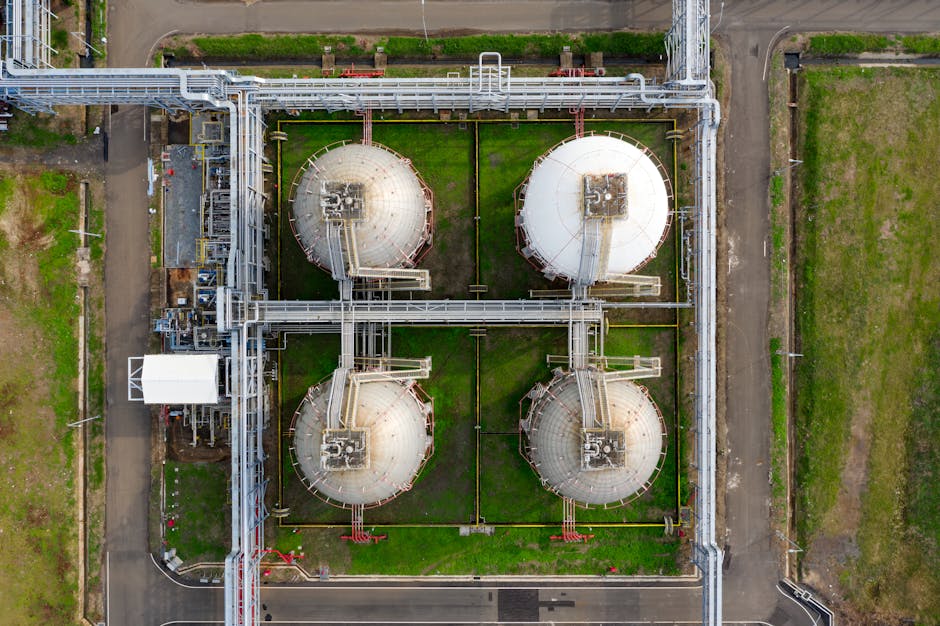
The electrolyzer is the core piece of equipment that splits water into hydrogen and oxygen using electricity. For years, the two dominant technologies — Alkaline Electrolysis (AEL) and Proton Exchange Membrane (PEM) electrolysis — were expensive to manufacture and had limited efficiency ceilings. Here’s what’s shifting in 2026:
- Anion Exchange Membrane (AEM) electrolyzers — a newer, hybrid approach — are hitting commercial scale. Companies like Enapter (Germany/Italy) have announced AEM systems that cost roughly 30–40% less per kilowatt than comparable PEM units, while still offering fast dynamic response to fluctuating renewable power.
- Solid Oxide Electrolysis (SOEC) is maturing rapidly for industrial use. Operating at high temperatures (700–900°C), SOEC achieves system efficiencies above 80%, meaning you get more hydrogen out of the same amount of electricity. Bloom Energy and Toshiba have both reported commercial-scale SOEC deployments in 2026.
- Stack lifetime improvements — a crucial but often overlooked cost driver — have extended PEM stack durability to 100,000+ hours in several manufacturer benchmarks, dramatically reducing replacement and maintenance costs over a project’s lifetime.
- Manufacturing scale-up: Global electrolyzer manufacturing capacity crossed 25 GW/year in early 2026, up from just 8 GW/year in 2023. This “gigafactory effect,” similar to what happened with lithium-ion batteries, is pushing component costs down steadily.
☀️ The Renewable Electricity Factor: Cheap Power = Cheap Hydrogen
Here’s a fundamental truth about green hydrogen: it’s essentially “bottled electricity.” So when solar and wind power get cheaper, green hydrogen gets cheaper too — almost automatically. In 2026, we’re seeing solar LCOE (Levelized Cost of Energy) in sun-rich regions fall below $0.01–$0.015 per kWh in places like Saudi Arabia, Chile, and parts of India. That is almost incomprehensibly cheap electricity. Since electricity typically accounts for 60–70% of green hydrogen’s production cost, these ultra-low power prices are transformational.
The strategic insight here is that green hydrogen projects are increasingly being co-located with dedicated renewable generation — what the industry calls “behind-the-meter” or “direct-coupled” electrolysis — rather than drawing from the grid. This avoids transmission costs and grid fees, trimming another $0.30–$0.80/kg off the production cost in some cases.
🌍 Global Examples: Who’s Leading the Charge in 2026?
It’s one thing to talk about technology in theory. Let’s look at who’s actually doing this at scale right now.
NEOM’s ENOWA Project (Saudi Arabia): The NEOM green hydrogen complex in northwest Saudi Arabia — a joint venture between Air Products, ACWA Power, and NEOM — is now in its second operational phase in 2026. It’s targeting production costs below $1.50/kg by the late 2020s, leveraging Saudi Arabia’s near-perfect combination of solar irradiance and vast open land. Early operational data from Phase 1 has confirmed the electrolyzer performance assumptions that made the business case viable.
South Korea’s Hydrogen Economy Roadmap: South Korea remains one of the most hydrogen-committed nations in the world. In 2026, POSCO (the steel giant) and Hyundai are collaborating on a domestic green hydrogen supply chain specifically targeted at decarbonizing steel production — one of the hardest industrial processes to clean up. The government’s H2 Korea initiative provides production incentives capped at ₩3,000/kg, effectively subsidizing the gap between current green hydrogen costs and the economically viable threshold for industrial users.
European Hydrogen Bank Auctions: The EU’s Hydrogen Bank completed its second major auction round in early 2026, with winning bids for green hydrogen production subsidies coming in at €0.37–€0.48/kg — significantly lower than the first auction round in 2024. This signals that producers are becoming more confident in their cost curves and requiring less public support to make projects pencil out.
Australia’s Asian Renewable Energy Hub (AREH): Located in Western Australia, AREH is progressing toward its target of producing green hydrogen (and ammonia for export) at competitive prices for Asian markets. Australia’s proximity to Japan and South Korea — both massive potential green hydrogen importers — gives it a geographic advantage that European producers simply don’t have.
🔬 Innovation at the Frontier: What the Labs Are Working On Now
Beyond incremental improvements, there are a few genuinely disruptive technologies in advanced development stages in 2026 that could reshape the economics further:
- Photoelectrochemical (PEC) cells: These devices split water directly using sunlight — no separate solar panel and electrolyzer required. MIT and KAUST researchers published promising efficiency results in late 2025, though commercial viability is still 5–8 years away.
- Biological hydrogen production: Engineered microalgae and bacteria that produce hydrogen as a metabolic byproduct are attracting renewed interest. Startups like Algae Systems (US) and SynBioBeta-funded ventures are exploring scalable bioreactor designs.
- AI-optimized electrolysis operations: Machine learning models that dynamically adjust electrolyzer operating parameters in real time — responding to power price fluctuations, stack degradation signals, and weather forecasting — are now being deployed commercially. Early results show 8–15% efficiency improvements in real-world operations compared to static control systems.
- Seawater electrolysis: Splitting seawater directly (rather than highly purified freshwater) would be a game-changer for coastal and offshore projects. Challenges with chlorine chemistry and membrane fouling are being actively addressed; several startups received major funding rounds in 2025 to push this forward.
🤔 Realistic Alternatives: Not Everyone Needs Green Hydrogen Right Now
Here’s where I want to be genuinely practical with you. Green hydrogen is not a universal solution for every decarbonization challenge — at least not yet. If you’re thinking about this from a business, investment, or policy perspective, it’s worth being honest about the alternatives:
- For long-haul trucking: Battery-electric trucks are increasingly competitive for routes under 500 km due to their superior energy efficiency (roughly 3x more efficient than hydrogen fuel cells end-to-end). Green hydrogen’s sweet spot for transport is really long-haul heavy freight and maritime shipping, where batteries become prohibitively heavy.
- For residential heating: Heat pumps running on green electricity are almost certainly more efficient than burning green hydrogen for space heating. Green hydrogen as a heating fuel would waste roughly 60–70% of the original renewable energy in conversion steps. District heating systems powered by excess renewable electricity are a smarter bet for most regions.
- For industrial processes: This is genuinely where green hydrogen shines — steel, ammonia, chemicals, and high-temperature industrial heat. There are no good electrification alternatives for these applications at scale, making green hydrogen essentially irreplaceable here.
- For energy storage at grid scale: Green hydrogen (or ammonia/LOHC carriers derived from it) makes sense for seasonal energy storage — storing summer solar surplus for winter use — in a way that batteries cannot economically do at the required scale.
The key insight is to be strategic about where you deploy green hydrogen, rather than treating it as a silver bullet for all things energy.
🗺️ The Road to $1/kg: Is It Actually Achievable?
The much-discussed “$1/kg” green hydrogen target — championed by the US Department of Energy’s “Hydrogen Shot” initiative — is still a stretch goal for most of the world in 2026, but it no longer looks like science fiction. In optimal locations (very high solar capacity factors + very low land costs + proximity to water), the cost trajectory suggests sub-$1.50/kg is achievable by 2028–2030, with $1/kg potentially reachable in the most favorable sites in the early 2030s.
The more grounded target for a globally meaningful impact is getting green hydrogen below $2/kg reliably in multiple geographies — because that’s where it displaces gray hydrogen in industrial applications at scale, without requiring ongoing subsidies. That milestone looks genuinely achievable within the next 3–5 years based on current cost curves.
What would accelerate this? Three things, mostly: continued electrolyzer manufacturing scale-up, sustained low renewable energy prices, and policy certainty that gives developers the confidence to make long-term investment decisions without worrying about regulatory reversals.
Editor’s Comment : The green hydrogen story in 2026 is fundamentally one of a technology that has crossed from “interesting demonstration” to “serious commercial contender” — but unevenly and selectively. The honest takeaway is this: don’t bet on green hydrogen solving every energy problem, but absolutely pay attention to it as the backbone of heavy industry decarbonization and long-duration energy storage. The cost data is moving in the right direction, the engineering is improving faster than most analysts predicted five years ago, and the geopolitical interest in energy independence is keeping policy support surprisingly resilient even in turbulent political climates. If you’re watching one clean energy technology to follow closely over the next decade, this is a strong candidate. The water-splitting dream is getting real — just maybe not for your home heating bill quite yet.
태그: [‘green hydrogen’, ‘hydrogen production cost 2026’, ‘electrolyzer technology’, ‘renewable energy’, ‘clean energy innovation’, ‘hydrogen economy’, ‘decarbonization technology’]
Leave a Reply