A couple of months back, I was deep in a debugging session at our fuel cell test bench — watching our YSZ-based SOFC cell degrade faster than predicted at high-cycle conditions — when a colleague walked in and slapped a freshly printed paper on the desk. “Have you read this one on high-entropy perovskite electrolytes?” he asked, grinning like he’d just found a cheat code. That conversation sent me down a rabbit hole I haven’t fully climbed out of yet. Let’s explore it together.
Solid oxide fuel cells are genuinely one of the most exciting technologies in the clean energy space right now — not just because of their efficiency potential, but because of what’s brewing in the electrolyte material science layer underneath. And in 2026, the perovskite story in SOFC electrolytes is heating up fast.
Why the Classic YSZ Electrolyte Is Showing Its Age
SOFCs have potential in energy conversion technology due to their characteristics such as good modularization, better fuel efficiency, and lesser toxic products like CO₂, SOₓ, and NOₓ. But the conventional workhorse material — yttria-stabilized zirconia (YSZ) — has long demanded operating temperatures above 800°C, which brings its own set of headaches: accelerated electrode-electrolyte interdiffusion, costly balance-of-plant components, and steep fabrication bills.
Lowering the operating and fabrication temperature to 400°C–800°C could reduce both cell degradation and manufacturing costs. Cells that operate in this temperature range are known as intermediate temperature SOFCs (IT-SOFCs). And that’s exactly where the perovskite electrolyte story becomes compelling.
The electrolyte used in a SOFC must be stable in both reducing and oxidizing environments and must have sufficiently high ionic conductivity but low electronic conductivity at the cell operating temperature. YSZ checks most of those boxes, but it struggles at intermediate temperatures. Enter perovskite-type oxides.
The ABO₃ Structural Advantage: Why Perovskite Is a Materials Engineer’s Dream
Perovskite-type oxides with the general formula ABO₃ have been widely studied and utilized in a large range of applications due to their tremendous versatility. The high stability of the perovskite structure compared to other crystal arrangements and its ability, given the correct selection of A and B cations, to maintain a large oxygen vacancy concentration makes it a good candidate as electrode in SOFC applications.
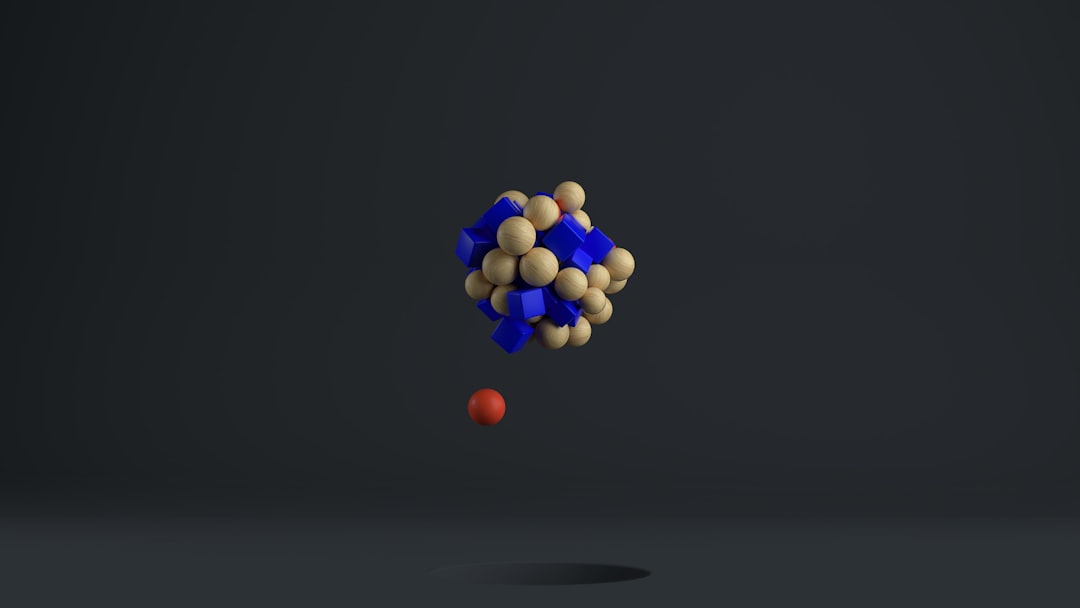
Think of it like a Lego system. Perovskite-type oxides (ABO₃) are a promising next-generation electrode material due to their tuneable crystal structure, high mixed ionic and electronic conductivity (MIEC), oxygen vacancy flexibility and compositional stability under SOFC operating conditions. Tailoring A-site or B-site dopants allows for precise control of catalytic activity, oxygen vacancy concentration, thermal expansion coefficient (TEC), and structural resilience, making doped perovskites a flexible family for performance enhancement.
From an engineering standpoint, this tunability is massive. When you’re fighting grain boundary resistance, thermal mismatch cracking, or chemical compatibility issues at the cathode/electrolyte interface — and trust me, these are real field problems — having a material system you can chemically dial in is invaluable.
Protonic Perovskites: The Real Frontier in 2026
If oxygen-ion-conducting perovskites are exciting, proton-conducting perovskites are the stuff of late-night engineering obsession. Protonic solid oxide fuel cells (P-SOFCs), as a promising power generation technology, have garnered increasing attention due to their advantages of cleanliness, high efficiency, and high reliability. As a critical component of P-SOFCs, proton-conducting electrolytes exhibit high ionic conductivity, enabling high chemical-to-electrical energy conversion efficiency at intermediate temperatures.
Iwahara discovered the proton conductivity in ABO₃ perovskite-type oxides and elucidated the possibility of this characteristic in energy applications in the early 1980s and 1990s, which has had a profound impact on the development of P-SOFC electrolytes. Fast-forward to today, and that foundational discovery is bearing serious fruit.
Cerate- and zirconate-based oxides (BaCeO₃ and BaZrO₃) have been intensively studied by such doping approaches due to their excellent proton conductivity. BaCeO₃ oxides with B-site dopants of Y, Er, or Gd exhibit high proton conductivity. However, the increase of the doping ratio may lead to the formation of impurity phases due to the solid solution boundary, which degrades the proton conductivity — something I’ve had to troubleshoot firsthand in sintering experiments, and it’s a genuinely tricky balance to hit.
Key Specs & Performance Benchmarks to Know
- Operating temperature target: IT-SOFC range of 400–800°C, vs. >900°C for traditional YSZ-based cells
- Ionic conductivity driver: The ionic conductivity of electrolytes depends on many factors such as defect dissociation, temperature, dopant-concentration, sample preparation, and oxygen partial pressure.
- High-entropy perovskite breakthrough: A single-phase high-entropy perovskite oxide (HEPO) BaSn₀.₁₆Zr₀.₂₄Ce₀.₃₅Y₀.₁Yb₀.₁Dy₀.₀₅O₃₋δ (BSZCYYbD) was successfully prepared as a new class of proton conductor. The BSZCYYbD exhibits excellent chemical and structural stability, high densification, and mechanical properties.
- Record protonic conductivity: The protonic conductivity of BSZCYYbD is the highest ever reached in high-entropy proton conductors at 8.3 mS cm⁻¹ in humidified air (3% H₂O) at 600°C. An anode-based PCFC with BSZCYYbD electrolyte (~45 μm) demonstrates a favorable output of 318 mW cm⁻² at 600°C.
- Cathode compatibility: La-based perovskite cathodes demonstrate a capacity to retain high electronic/ionic conductivity at intermediate temperatures, with enhanced electronic conductivity, chemical stability, and compatibility with SOFC electrolytes.
- Durability challenge: Under specific atmospheric conditions, especially high-water vapor pressure or CO₂ environments, the electrolyte may undergo hydrolysis reactions or form carbonate species, leading to performance degradation.
- Grain boundary management: Different sintering temperatures for proton-conducting electrolytes can result in varying degrees of grain boundary resistance, which hinders proton transport and reduces conductivity.
Real-World R&D: Who’s Pushing the Boundaries Right Now?
On the international stage, published research in early 2026 is actively exploring perovskite electrolytes for dual-ion conduction in SOFCs. A DFT–NEB–PCA computational approach has been applied to study perovskite electrolytes for dual-ion conduction in SOFCs, published in Computational Materials Science in 2026. This kind of computational materials screening is dramatically accelerating the search for the ideal dopant combination — something that would have taken years of wet-lab trial-and-error just a decade ago.
On the nickel-free front, a 2026 study in Advanced Energy and Sustainability Research evaluated perovskite-based SFM/CGO composite electrodes in a real cell architecture. Nickel-free, perovskite-based SFM/CGO fuel electrodes were successfully integrated into 5 × 5 cm² electrolyte-supported SOFCs, enabling direct benchmarking against state-of-the-art Ni/CGO electrodes using an identical cell architecture. What’s fascinating — and this is the kind of counterintuitive result that makes materials science fun — is that the addition of trace H₂S to the fuel enhanced both performance and electrochemical stability of the SFM/CGO electrodes, in stark contrast to the typical degradation behavior of Ni/cermet fuel electrodes. This effect manifested as a reduction in polarization resistance and slower performance decrease over time, suggesting a unique sulfur-induced stabilization mechanism.
In Korea, the Korea Institute of Energy Research (한국에너지기술연구원) has filed patents on perovskite-structured solid electrolytes — particularly Sr- and Mg-substituted lanthanum gallate (LSGM) systems — demonstrating perovskite-structured multi-component solid oxide electrolytes operable below 800°C, showing higher ionic conductivity below 800°C compared to conventional fluorite-structured oxide electrolytes.
The LSGM Story: A Perovskite That’s Already Proven in Hardware
Not all perovskite electrolyte work is still in the lab. Doped ceria and perovskite oxides have been proposed as electrolyte materials for SOFCs, especially for reduced-temperature operation (873–1073 K). And LSGM — the (La,Sr)(Ga,Mg)O₃₋ₓ family — has actually made it into prototype hardware. Among electrolytes, BaCeO₃-based cerates exhibit the highest ionic conduction at intermediate temperatures.
The engineering lesson I keep coming back to: it’s never just about peak ionic conductivity in a lab pellet. It’s about the full stack — how the electrolyte sinters with adjacent layers, how it holds up through hundreds of thermal cycles, and whether you can manufacture it at cost. During the operation of P-SOFCs, the electrolytes need to show good compatibility including appropriate mechanical strength and thermal expansion coefficient with other materials such as electrodes and sealing materials, to ensure the stability and reliability of the entire system.
What Still Needs Debugging: Honest Assessment of Current Challenges
Let me be straight with you — this technology isn’t a solved problem yet. There are still many challenges in further enhancing the proton conductivity and stability of the currently widely used Ba(Zr,Ce)O₃ electrolytes through traditional experimental methods. Machine learning-assisted materials design is emerging as a practical bridge here, screening thousands of dopant combinations computationally before a single crucible is fired up.
The symmetric SOFC approach is also gaining traction as a cost-reduction strategy: to commercialize SOFCs, researchers are concentrating on the creation of low-cost materials. Symmetric solid oxide fuel cells have emerged as a viable option, as these cells are constructed utilizing comparable materials for the cathode and anode. Fewer unique material types means simpler supply chains and potentially one sintering step — a manufacturing engineer’s dream.
The Pragmatic Path Forward: What Should You Actually Watch?
If you’re tracking this space — whether as a researcher, an investor, or just a seriously curious engineer — here’s what I’d keep on your radar in 2026:
- High-entropy perovskite oxides (HEPOs): High-entropy materials are attracting ever-increasing concern for their unique structural features and unprecedented potential applications. The entropic stabilization mechanism opens up a new design dimension beyond simple A/B-site doping.
- Machine learning-guided electrolyte design: ML screening of Ba(Zr,Ce)O₃ compositions is shortening iteration cycles from years to months.
- Sulfur-tolerant perovskite anodes: As seen in the SFM/CGO 2026 study, nickel-free alternatives show unexpected resilience — potentially unlocking natural gas and biogas operation without sulfur scrubbing.
- Thin-film electrolyte deposition: Reducing electrolyte thickness is a proven route to lowering operating temperature without changing the material system entirely.
- La-based cathode optimization: The advancement of SOFC technology hinges on the continuous refinement of La-based cathodes — and their interface with perovskite electrolytes is where the next efficiency gains are hiding.
If you can’t immediately pivot to a full perovskite electrolyte stack (due to existing production tooling, cost constraints, or material supply), consider a hybrid approach: keep the YSZ structural support layer for mechanical stability and integrate a thin perovskite interlayer to boost intermediate-temperature conductivity. It’s not the ideal end-state, but it’s a realistic stepping stone that several research groups are validating right now.
Editor’s Comment : The perovskite electrolyte space in 2026 is genuinely at an inflection point — it has moved well past academic curiosity into real hardware benchmarking, with published results on centimeter-scale cells and computational screening accelerating the composition search dramatically. The high-entropy perovskite approach in particular is worth your attention: achieving 8.3 mS cm⁻¹ proton conductivity at 600°C is a number that, five years ago, would have seemed optimistic. The commercialization clock is ticking — and for once, materials science might be ahead of the manufacturing ecosystem rather than the other way around.
📚 관련된 다른 글도 읽어 보세요
- 한국 수소 경제 로드맵 2026: 정책 현황과 현실적인 투자 전략 총정리
- Hydrogen Fuel Cells vs. Lithium-Ion Batteries: Which Energy Tech Actually Wins in 2026?
- Korea’s Hydrogen Economy Roadmap 2026: What the Policy Shift Really Means for Your Wallet and the Planet
태그: SOFC perovskite electrolyte, solid oxide fuel cell 2026, ABO3 oxide electrolyte, proton-conducting SOFC, IT-SOFC materials, high-entropy perovskite oxide, next-generation fuel cell technology
Leave a Reply