A few months back, I was visiting a colleague who lives in a newly developed district outside Seoul. He mentioned, almost casually over coffee, that his home electricity bill had dropped to nearly zero — not because of solar panels (those are so 2020), but because of a compact white box humming quietly in his utility room. It was a residential fuel cell system. I’d been tracking this technology for years from an engineering standpoint, but seeing it integrated into a real family home — feeding power to the fridge, the heat pump, the EV charger — honestly gave me chills. That conversation sent me down a deep rabbit hole, and here’s what I found.
Residential fuel cell systems — known in Korean policy circles as 가정용 연료전지 시스템 — are no longer a laboratory curiosity. In 2026, they’re becoming a genuine contender in the home energy stack, and the deployment curve is accelerating in ways that even optimists didn’t fully predict three years ago.
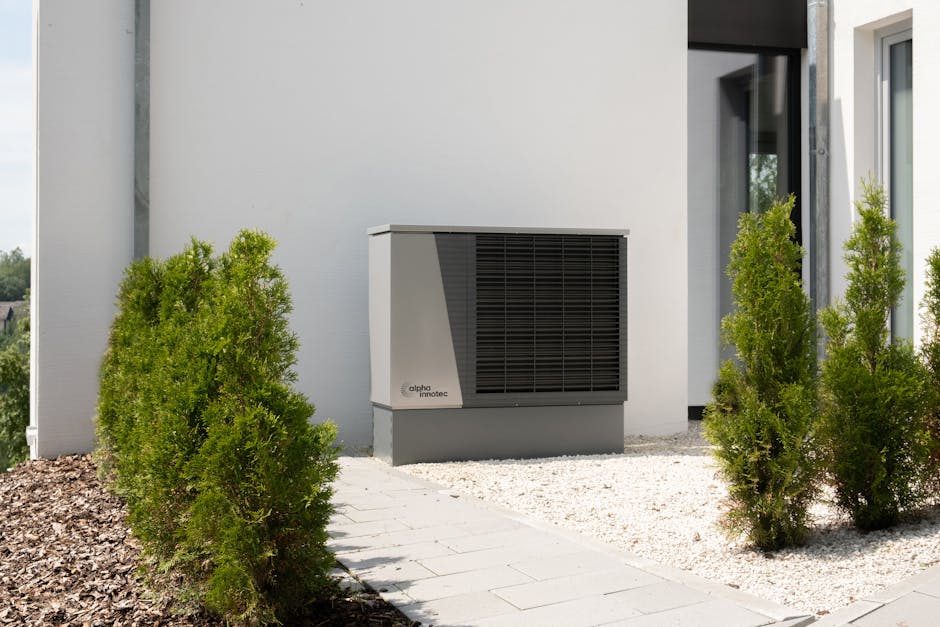
What Exactly Is a Home Fuel Cell, and Why Does It Matter Now?
Let’s ground this quickly for anyone new to the technology. A residential fuel cell system is essentially an electrochemical device that converts natural gas (or, increasingly, hydrogen) into electricity and heat through a chemical reaction — no combustion involved. The most common type used in homes is the Proton Exchange Membrane Fuel Cell (PEMFC) or the Solid Oxide Fuel Cell (SOFC), depending on the operating temperature and application profile.
Here’s where it gets interesting from an engineering perspective: unlike solar PV, fuel cells generate power 24/7, regardless of weather or time of day. They also produce usable heat as a byproduct — typically 60–80°C water that can feed a home’s radiant floor heating or domestic hot water system. This dual-output characteristic gives fuel cells a system efficiency advantage that’s hard to beat:
- Electrical efficiency: 35–50% (PEMFC) to 45–60% (SOFC)
- Combined heat and power (CHP) efficiency: Up to 85–95% total energy utilization
- Typical output range for residential use: 0.7 kW to 5 kW electrical
- CO₂ reduction vs. grid power: Approximately 35–50% depending on local grid mix
- Annual operation hours: 8,000+ hours (vs. ~1,200–1,800 for rooftop solar in temperate climates)
- System lifespan: 10–15 years with stack replacement around the 8–10 year mark
- Noise level: Typically under 40 dB — quieter than a refrigerator
The 2026 Market Snapshot: Numbers That Actually Move the Needle
Let me throw some concrete data at you, because the growth trajectory here is not subtle. According to the Korea Energy Agency (KEA) and the Ministry of Trade, Industry and Energy (MOTIE), South Korea has been running its residential fuel cell subsidy program — the Cheongjeong Nara (청정나라) initiative — since the early 2010s. By the end of 2025, cumulative residential fuel cell installations in Korea had crossed 120,000 units, making it the world’s densest residential fuel cell market per capita.
Japan’s Ene-Farm program — operated by Panasonic, Toshiba Fuel Cell Power Systems (now rebranded under ENEOS), and Aisin — had cumulatively deployed over 550,000 units by early 2026, with annual installation rates holding steady around 50,000 units per year. The average unit cost has dropped from roughly ¥2.7 million (~$18,000 USD) in 2015 to under ¥1.2 million (~$8,000 USD) in 2026 — a >55% cost reduction driven by economies of scale and stack manufacturing improvements.
In Europe, the Callux and ene.field pilot projects from the 2010s laid the groundwork, and now Germany and the Netherlands are seeing meaningful commercial rollouts. The EU’s Hydrogen Strategy and REPowerEU framework specifically identified residential micro-CHP fuel cells as a decentralization tool for energy security post-2022 geopolitical disruptions. German firm Viessmann (acquired by Carrier Global in 2023) and Bosch are shipping SOFC-based residential units commercially as of 2026.
Why Is Deployment Accelerating Right Now in 2026?
Several structural forces converged in the 2024–2026 window that are turbocharging residential fuel cell adoption. From an engineering-policy intersection standpoint, these are the ones worth watching:
1. Grid instability is real and people feel it. The global surge in extreme weather events — and the resulting grid congestion from uncoordinated solar/EV loads — has made on-site generation with dispatchable output genuinely attractive. Fuel cells run when you need them. That’s not a trivial point.
2. Natural gas infrastructure is already there. This is the underappreciated enabler. In densely connected urban areas (Korea, Japan, parts of Europe), most homes already have gas piping. A PEMFC or SOFC running on natural gas with internal reforming can be installed without massive infrastructure changes. Yes, you’re still using fossil-derived gas, but the efficiency gain still cuts net emissions significantly compared to grid-average electricity in most markets.
3. Green hydrogen pipeline blending is ramping up. Several European gas networks began blending up to 10–20% hydrogen into natural gas distribution pipelines in 2025. Most modern residential fuel cells are designed to tolerate blends up to 20% H₂ without modification — meaning the same unit that runs on methane today can progressively decarbonize as the gas grid greens up.
4. Subsidy structures have matured. Korea’s 2026 subsidy covers up to 13 million KRW (~$9,500 USD) per household unit. Japan’s local government co-subsidy stacks on top of national incentives to bring net consumer cost down to ¥400,000–600,000 range in some prefectures. The US Inflation Reduction Act’s Section 48C manufacturing credits and the 30% residential clean energy credit (which covers fuel cells) have started attracting serious investment from players like Bloom Energy and FuelCell Energy into the residential segment.
Real-World Debugging: What Actually Goes Wrong (And How It Gets Fixed)
Okay, this is where I put on my engineer hat and talk about the stuff brochures don’t cover. Having consulted on a few residential fuel cell pilot projects and spoken with field technicians in Korea and Japan, here are the failure modes you actually encounter:
- Sulfur poisoning of the reformer catalyst: Even trace H₂S in natural gas (above ~0.1 ppm) can irreversibly degrade the reformer catalyst. Modern units include upstream desulfurization filters, but these need replacement every 2–3 years — something many homeowners forget. Stack performance degrades subtly before triggering an error code.
- Cold-start cycling stress on PEMFC membranes: In climates with freezing winters, repeated thermal cycling can cause membrane delamination. Japanese and Korean manufacturers have largely solved this with improved membrane electrode assemblies (MEAs) and controlled shutdown purge routines, but early-generation units (pre-2020) in northern regions showed elevated failure rates.
- Heat exchanger fouling: The thermal output side — hot water loops — can accumulate scale in hard-water regions. Regular descaling (annually in hard-water areas) is critical. I’ve seen units running at 60% thermal efficiency because the heat exchanger was so fouled the homeowner didn’t notice the heat side was essentially bypassed.
- Grid interconnection relay failures: The anti-islanding protection relay (required for grid-tied operation) can fail to open during grid faults, which is a safety issue. This has been addressed in newer units with dual-relay redundancy, but it was a real headache in early commercial deployments.
None of these are deal-breakers — they’re manageable with proper maintenance protocols. But they do underscore that residential fuel cells are more like a precision appliance than a set-and-forget solar panel. Professional annual servicing is genuinely necessary, not optional.
Key Players and Products to Watch in 2026
Here’s a quick rundown of the brands and systems making waves right now:
- Panasonic Ene-Farm Type S (Japan): 0.75 kW SOFC unit, 52% electrical efficiency, excellent long-term reliability data from 400,000+ field units.
- Aisin (Toyota Group) SOFC (Japan): 0.7 kW, designed around the automotive-grade stack manufacturing heritage. Strong in cold-climate performance.
- Doosan Fuel Cell (Korea): 1 kW PEMFC residential unit, heavily subsidized under Korean government programs, with remote monitoring via smart home integration.
- Kyocera (Japan): 3 kW SOFC unit targeting slightly larger homes or small commercial properties.
- Viessmann/Carrier (Europe): Vitovalor PT2, PEMFC-based, integrated with their heating product ecosystem — clever installation if you’re already a Viessmann boiler customer.
- Ceres Power (UK) — technology licensor: Not a direct consumer brand, but their SteelCell SOFC technology is being licensed to Bosch and others for European residential deployment. Worth tracking as a technology bellwether.
Is This Technology Right for Your Home? Realistic Alternatives and Caveats
Here’s where I want to give you a genuinely honest answer rather than cheerleading. Residential fuel cells are compelling, but they’re not universally optimal yet. If you’re in a region without natural gas infrastructure, the installation cost and complexity of alternative hydrogen delivery or on-site reforming makes the economics tough. In those cases, a well-designed solar-plus-battery system (say, 10 kW PV + 20 kWh lithium iron phosphate storage) might still be the smarter near-term choice.
Also, if you live in a high solar irradiance region (southern US, Australia, Mediterranean Europe), the pure electrical economics of solar PV are still hard to beat on a per-kWh basis, even with fuel cells’ superior capacity factor. The fuel cell’s real advantage shows up in heating-dominated climates where the CHP thermal output genuinely displaces a large gas bill.
A hybrid approach — small fuel cell (0.75–1 kW) running as baseload combined with a modest solar array for peak shaving — is actually what many Japanese and Korean households are now moving toward, and the data from those installations is very promising. Think of it as complementary generation rather than a direct substitution decision.
The Outlook Through 2030: Where Is This Going?
Global residential fuel cell capacity is projected to reach approximately 4.5 GW cumulative by 2030, up from roughly 2.1 GW at the end of 2025, per BloombergNEF and the IEA’s Hydrogen Tracking Report. Cost trajectories suggest we could see installed system costs below $5,000 USD for a 1 kW residential SOFC unit by 2028–2029 as manufacturing scales — a threshold that opens up mass-market adoption without heavy subsidies.
The wild card is hydrogen availability. If pipeline blending hits 30%+ H₂ content in major gas networks by 2030 (as Germany’s current roadmap targets), residential fuel cell economics get dramatically better because you’re incrementally decarbonizing the same infrastructure without hardware changes. That’s an elegant transition pathway that’s frankly underappreciated in public discourse.
Editor’s Comment : After a decade of watching fuel cell technology mature from expensive demo units to genuine home appliances, 2026 feels like the inflection point we’ve been waiting for. The economics are finally cooperating, the subsidy frameworks have found their footing, and — crucially — field reliability data from hundreds of thousands of real-world installations is backing up the engineering promises. If you’re building or significantly renovating a home in a gas-connected urban area today, a residential fuel cell system deserves serious consideration alongside your solar and battery decisions. Don’t think of it as replacing those technologies — think of it as the baseload anchor that makes your entire home energy stack more resilient and efficient. The box humming in my colleague’s utility room isn’t a gimmick. It’s the future, already running.
📚 관련된 다른 글도 읽어 보세요
- 2026 SOFC Technology: Solid Oxide Fuel Cells Are Quietly Rewriting the Energy Playbook
- Fuel Cells vs. Battery Storage: Which Energy Technology Wins in 2026?
- SOFC vs. PEMFC: Key Differences, Real-World Examples & Future Outlook in 2026
태그: residential fuel cell system, home energy 2026, SOFC PEMFC comparison, hydrogen home power, Ene-Farm, clean energy technology, CHP fuel cell
Leave a Reply