Picture this: it’s a crisp Tuesday morning in 2026, and you’re standing at a crossroads — literally. To your left, a hydrogen fueling station gleams with a handful of pumps. To your right, a row of EV chargers hums quietly, most of them occupied. Which way do you go? That scene isn’t hypothetical anymore. It’s the daily reality millions of drivers are navigating right now, and the debate between Hydrogen Fuel Cell Electric Vehicles (FCEVs) and Battery Electric Vehicles (BEVs) has never been more relevant — or more nuanced.
Let’s think through this together, because the “right” answer genuinely depends on who you are and how you drive.
⚡ How Each Technology Actually Works
Before we dive into the numbers, a quick primer. A BEV stores electrical energy in a lithium-ion (or increasingly, solid-state) battery pack and drives an electric motor directly. Simple, elegant, and increasingly cheap to produce.
An FCEV, on the other hand, carries compressed hydrogen gas. That hydrogen is fed into a fuel cell stack, where it reacts with oxygen to generate electricity on the fly — with water vapor as the only byproduct. Think of it as a tiny power plant riding shotgun in your car.
Both are zero-emission at the tailpipe. But the journey to get there? Very different.
📊 2026 Data Snapshot: Cost, Range, and Infrastructure
Let’s get into the specifics, because vague comparisons don’t help anyone make a real decision.
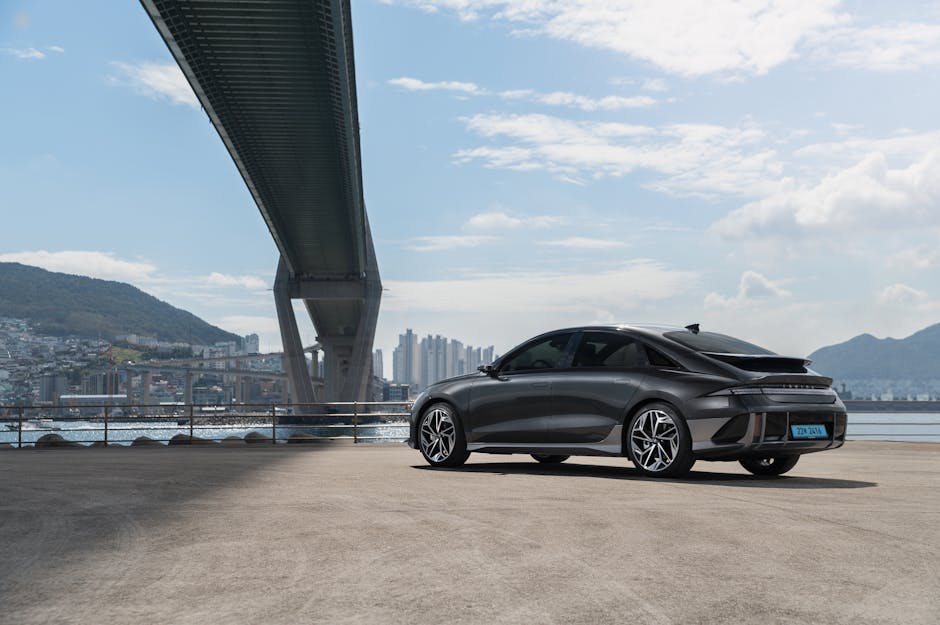
- Purchase Price: In 2026, the average mid-range BEV (think Tesla Model 3, Hyundai IONIQ 6, or BYD Seal) sits between $32,000–$48,000 USD. FCEVs like the Toyota Mirai or Hyundai NEXO still hover around $50,000–$65,000, though lease deals have made them more accessible in regions with incentives.
- Fuel Cost: Charging a BEV at home averages around $0.03–$0.05 per mile in most U.S. and European markets. Hydrogen, despite infrastructure expansion, still costs roughly $0.12–$0.18 per mile — about 3–4x more expensive per kilometer traveled.
- Range: Modern BEVs routinely offer 300–400+ miles per charge. The Mirai and NEXO offer 380–420 miles per hydrogen tank — genuinely competitive here.
- Refueling/Recharging Time: This is where FCEVs shine. Hydrogen fill-up: 3–5 minutes. DC fast charging for a BEV: 20–45 minutes for an 80% charge. For high-mileage users, that gap is psychologically significant.
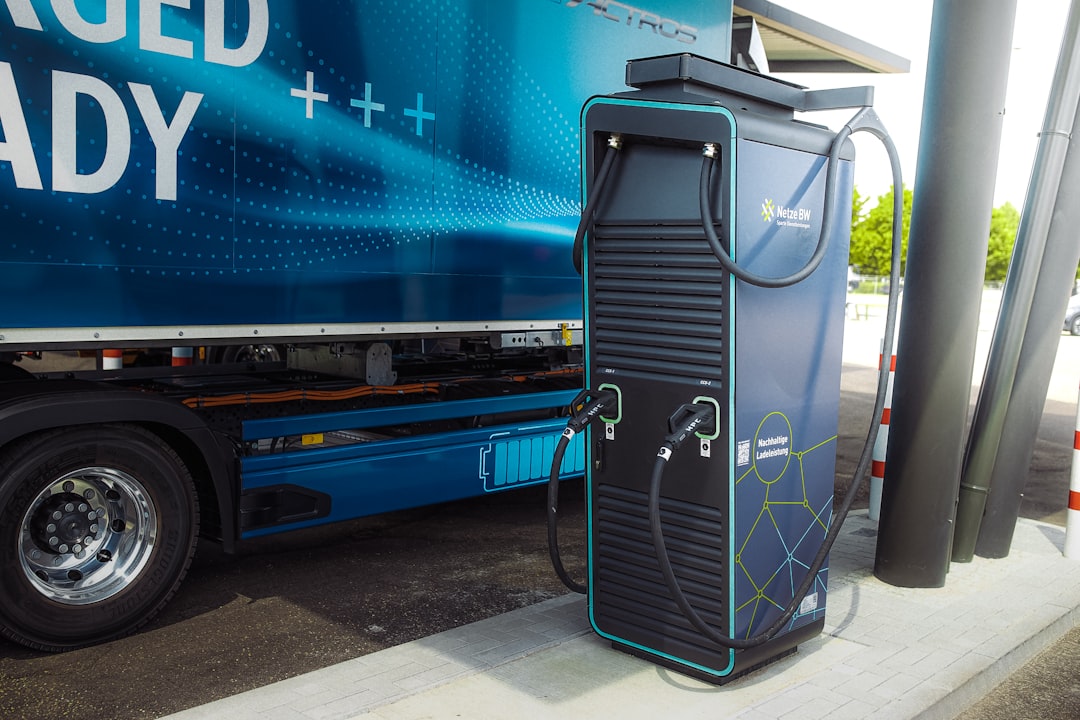
- Infrastructure: As of early 2026, there are approximately 1,200 hydrogen stations globally (concentrated in Japan, South Korea, California, and Germany), versus over 2.8 million public EV charging points worldwide. BEVs win this round decisively.
🌍 Real-World Examples: Who’s Betting on What?
South Korea remains the world’s most committed FCEV nation. Hyundai’s NEXO has sold over 45,000 units domestically, and the government’s Hydrogen Economy Roadmap targets 6.2 million FCEVs on Korean roads by 2040. Seoul’s city buses are increasingly hydrogen-powered, and the experience has been largely positive — particularly for high-utilization public transit where refueling speed matters enormously.
Japan continues its dual-track approach. Toyota’s Mirai is now in its second generation refresh cycle, and Japan has invested heavily in hydrogen supply chains, particularly for industrial decarbonization. However, even Toyota quietly expanded its BEV lineup in 2025–2026, acknowledging market realities.
China is the BEV juggernaut. BYD alone sold over 4 million EVs in 2025, and its vertically integrated supply chain has crushed battery costs. China does have hydrogen ambitions for heavy trucks and buses, but passenger FCEVs remain niche.
Europe presents a fascinating split. Germany and the Netherlands have invested in hydrogen corridors for long-haul trucking (a genuinely smart use case), while passenger car FCEVs have struggled against the rapidly expanding BEV infrastructure backed by EU policy.
The United States tells a tale of two coasts. California has 80+ hydrogen stations and a loyal FCEV community, often citing the refueling experience as transformative. But outside the Golden State, FCEV ownership remains impractical. Meanwhile, Tesla’s Supercharger network — now partially open to other brands — and the expanding NACS standard have dramatically improved the BEV ownership experience nationwide.
🔬 The Efficiency Elephant in the Room
Here’s something the FCEV marketing brochures don’t emphasize: the well-to-wheel efficiency gap. To power an FCEV, you need to: produce hydrogen (usually via electrolysis), compress it, transport it, and then convert it back to electricity in the fuel cell. Each step loses energy. The overall efficiency lands around 25–35%.
A BEV, by contrast, takes electricity from the grid, stores it in a battery, and uses it — achieving 70–80% well-to-wheel efficiency. That’s not a minor difference. It means you need roughly 2.5x more renewable energy input to drive the same distance in an FCEV versus a BEV.
That said, this argument weakens in scenarios where hydrogen is a byproduct of industrial processes (like chlorine production), or where renewable energy is abundant but the grid can’t absorb it — making hydrogen a useful storage medium.
🚛 Where Hydrogen Actually Makes More Sense
Let’s be fair to hydrogen, because it genuinely has winning use cases:
- Heavy-duty trucking: Battery weight becomes prohibitive for 18-wheelers. Hydrogen offers energy density advantages that matter here.
- Long-haul buses and coaches: Fixed routes with dedicated refueling depots make infrastructure less of a barrier.
- Maritime shipping: Several hydrogen-powered ferries are already operational in Norway and South Korea.
- Fleet vehicles with intensive daily use: Taxi fleets, delivery vans running multiple shifts — anywhere that 3-minute refueling creates genuine operational value.
- Aviation: Liquid hydrogen is being seriously explored for short-to-medium haul flights.
🧭 Realistic Alternatives Based on Your Situation
So, what should you actually do in 2026? Let’s reason through it:
If you own a home and drive under 200 miles/day: A BEV is almost certainly your best bet. Home charging eliminates range anxiety for most daily use, operating costs are dramatically lower, and the vehicle selection has never been better. Consider the IONIQ 6, Model 3, or Volkswagen ID.7.
If you live in an apartment with no home charging: This is where BEVs get complicated. Ultra-fast public charging networks have improved, but if your commute is heavy and your access to charging is unreliable, an FCEV in a hydrogen-rich region (California, Seoul, Tokyo, Munich) could genuinely make sense — or a plug-in hybrid as a pragmatic bridge.
If you drive 400+ miles frequently and value refueling speed: FCEVs are worth considering only if you live within a hydrogen infrastructure corridor. Otherwise, the inconvenience outweighs the benefit.
For fleet managers: Run the total cost of ownership numbers carefully. In 2026, hydrogen fuel costs still make BEV fleets cheaper to operate in most cases — unless hydrogen supply is subsidized locally or your duty cycle demands rapid turnaround.
If you’re in a region with abundant, cheap renewable energy: Green hydrogen produced locally could tip the scales — but check actual local hydrogen prices before assuming this applies to you.
Editor’s Comment : The hydrogen vs. BEV debate in 2026 isn’t really about which technology is superior in the abstract — it’s about matching the right tool to the right job. Battery EVs have clearly won the passenger car mainstream, and the data supports that conclusion overwhelmingly. But dismissing hydrogen entirely would be shortsighted. For heavy transport, industrial applications, and specific high-utilization fleet scenarios, hydrogen has a legitimate and growing role. The most honest advice? Stop waiting for a single “winner” to be declared. Evaluate your actual driving patterns, your local infrastructure, and your total cost of ownership — and make the decision that makes sense for your life, not for a think-piece headline.
📚 관련된 다른 글도 읽어 보세요
- Green Hydrogen From Water: How Renewable-Powered Electrolysis Is Reshaping Energy in 2026
- 탄소중립 실현의 열쇠, 그린 수소가 2026년 에너지 판도를 바꾸는 이유
- 재생에너지 기반 수전해 수소 생산 방법 완벽 정리 | 2026년 그린수소 기술 현황
태그: [‘hydrogen fuel cell vehicle 2026’, ‘battery electric vehicle comparison’, ‘FCEV vs BEV’, ‘EV buying guide 2026’, ‘Hyundai NEXO vs Tesla’, ‘green hydrogen cars’, ‘electric vehicle infrastructure’]
Leave a Reply