Picture this: it’s a chilly Tuesday morning in March 2026, and a colleague of mine pulls into the office parking lot in a sleek hydrogen fuel cell vehicle (FCEV). She fills up in about four minutes — roughly the same time it takes to grab a coffee — and drives off with zero tailpipe emissions except water vapor. I watched, genuinely impressed, but also couldn’t help wondering: Is this actually the future, or is it still a niche tech play for early adopters? Let’s think through this together, because the answer is more nuanced than the headlines suggest.
What Exactly Is a Hydrogen Fuel Cell Vehicle?
Before we dive into reviews and data, let’s make sure we’re on the same page. A hydrogen fuel cell vehicle uses compressed hydrogen gas stored in high-pressure tanks. That hydrogen reacts with oxygen in a fuel cell stack, generating electricity to power an electric motor. The only byproduct? Water. It’s essentially an electric car — but instead of plugging in to recharge a battery, you refuel with hydrogen gas. Think of the fuel cell as a mini power plant living under your hood.
The 2026 FCEV Landscape: Key Data You Should Know
The market has matured considerably compared to just a few years ago. Here’s what the numbers look like as of early 2026:
- Global FCEV sales growth: The International Energy Agency (IEA) reported approximately 120,000 FCEVs sold globally in 2025, with 2026 projections pushing toward 180,000 units — a 50% year-over-year increase.
- Range per fill-up: Current flagship models like the Toyota Mirai (Gen 3, 2026 refresh) and Hyundai NEXO 2026 edition boast real-world ranges of 550–620 miles (880–1,000 km) on a full tank.
- Refueling time: Most modern FCEVs refuel in 3–5 minutes at a certified 700-bar hydrogen station.
- Hydrogen station count (global): As of Q1 2026, there are approximately 1,200 public hydrogen refueling stations worldwide — up from 814 in 2023, but still dramatically fewer than EV charging points.
- Average fuel cost: In markets like South Korea and Japan, hydrogen costs roughly $8–$12 per kilogram. An FCEV typically consumes about 1 kg per 60 miles, making cost-per-mile comparable to — or slightly higher than — premium EVs.
- Vehicle price range: Entry-level FCEVs start around $45,000, with luxury trims reaching $75,000+.
Domestic & International Standouts in 2026
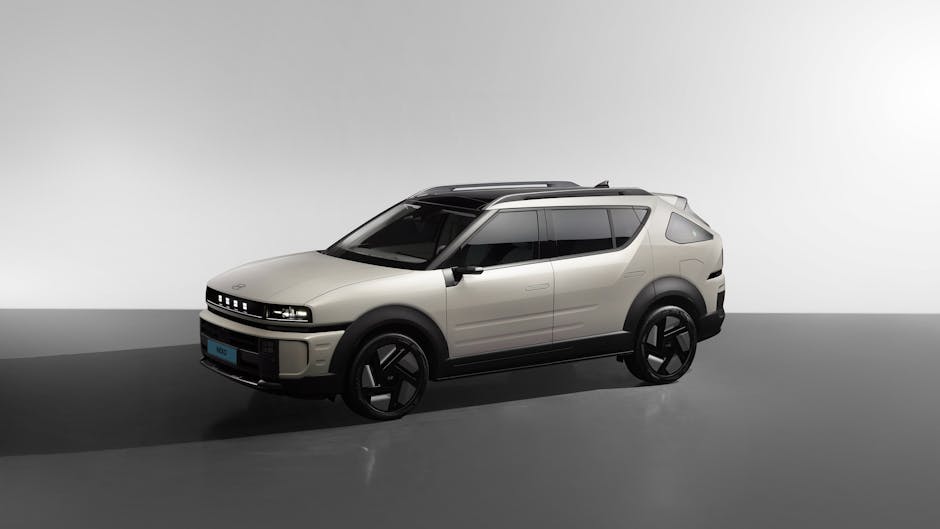
South Korea — Hyundai NEXO 2026: Hyundai continues to be the most aggressive FCEV producer globally. The refreshed 2026 NEXO comes with a new platinum-reduced catalyst (cutting manufacturing costs by ~18%), improved cold-weather performance down to -30°C, and a 640 km real-world range. South Korea’s government has simultaneously expanded its hydrogen highway network to over 310 stations nationwide, making the NEXO genuinely practical for daily commuters in Seoul and Busan.
Japan — Toyota Mirai Gen 3: Toyota dropped a quiet bombshell in late 2025 with their third-generation Mirai, which features a dual fuel cell stack system that significantly improves power output (182 hp vs. the previous 182 hp but with more torque) and addresses one of the biggest criticisms — it now has proper cargo space. Japan currently operates the densest hydrogen station network in the Asia-Pacific region, with nearly 200 stations, mostly concentrated in urban corridors.
Europe — BMW iX5 Hydrogen (Limited Fleet Expansion): BMW’s hydrogen SUV moved from pure fleet testing to limited consumer leasing programs across Germany and the Netherlands in 2026. The iX5 H2 uses a combination of a hydrogen fuel cell and a small buffer battery, delivering 374 hp and genuinely sporty performance. European hydrogen infrastructure is growing fastest in Germany, France, and the Benelux corridor, supported by the EU’s Hydrogen Backbone Initiative.
United States — The Cautious Market: The U.S. remains the trickiest FCEV market. California still dominates with about 70% of all U.S. hydrogen stations (roughly 80 stations), but station reliability issues — which made headlines in 2023 and 2024 — have largely been addressed through infrastructure investment by Air Products and Shell. Outside California, FCEVs are still largely impractical.

The Real Pros & Cons: Let’s Be Honest
Here’s where I want us to think critically rather than just cheerlead:
- ✅ Fast refueling: 3–5 minutes beats even the fastest DC fast chargers for long-distance trips.
- ✅ Superior range: 550–640 km real-world range outpaces most BEVs in the same price class.
- ✅ Cold weather performance: FCEVs outperform battery EVs in extreme cold, as the fuel cell generates its own heat.
- ❌ Infrastructure scarcity: Unless you live near a hydrogen corridor, this car is not practical. Period.
- ❌ Green hydrogen question: Only about 1% of global hydrogen production is currently “green” (made via electrolysis from renewables). Most is still “grey hydrogen” from natural gas — which undermines the environmental case significantly.
- ❌ Higher upfront cost: Comparable BEVs offer more features per dollar at this price point.
- ❌ Resale value uncertainty: The used FCEV market is still thin and unpredictable.
Realistic Alternatives Worth Considering
If you’re intrigued by FCEVs but the infrastructure gap makes you nervous — which is a perfectly rational concern — here’s how I’d think through your options:
- If you want long range + fast refueling: A plug-in hybrid (PHEV) like the 2026 Toyota RAV4 Prime or Hyundai Tucson PHEV gives you EV-mode for daily driving and gas backup for long trips. Not zero-emission, but pragmatically green.
- If you’re committed to zero emissions: The 2026 Tesla Model Y Long Range or Hyundai IONIQ 6 with 800V ultra-fast charging closes the refueling gap significantly. If you have home charging, the daily experience is actually smoother than FCEV ownership.
- If you’re in a hydrogen-ready city (Seoul, Tokyo, Munich, LA): A FCEV lease (rather than purchase) makes a lot of strategic sense in 2026 — you get the experience without locking into long-term ownership risk as the technology evolves.
- If you’re a fleet/commercial operator: This is where FCEVs genuinely shine right now. Long-haul trucking, bus fleets, and logistics vehicles benefit most from the range and refueling speed. Companies like Hyundai’s XCIENT and Nikola are seeing real traction here.
My Overall Take for 2026
Hydrogen fuel cell vehicles in 2026 are no longer prototype experiments — they’re real, refined, and genuinely impressive machines. The technology itself has largely delivered on its promises. The remaining barrier is almost entirely infrastructural and economic, not technological. If you happen to live in a hydrogen-infrastructure-rich region and drive long distances regularly, an FCEV could be a compelling choice today. For everyone else, I’d suggest watching this space closely for another two to three years as the green hydrogen supply chain matures and station density increases. The tipping point isn’t far — but it’s not quite here yet for mainstream adoption.
Editor’s Comment : What strikes me most about hydrogen cars in 2026 is that we’re watching a technology that was “always five years away” finally start closing the gap — but the honest truth is that the car itself is ready before the world around it is. If you’re an early adopter with access to hydrogen infrastructure, go for it, especially as a lease. If you’re on the fence, a battery EV with home charging is still the smarter everyday bet right now. That said, don’t write off hydrogen — in commercial transport and energy storage, it may end up being the quiet hero of the clean energy transition.
📚 관련된 다른 글도 읽어 보세요
- SOFC 스택 내구성 수명 연장 기술 개발 2026 총정리 — 고체산화물 연료전지의 미래는 얼마나 길어질 수 있을까?
- Hydrogen Society in 2026: The Real Challenges Slowing Down Our Clean Energy Future
- Can Hydrogen Energy Really Deliver Carbon Neutrality? A 2026 Reality Check
태그: [‘hydrogen fuel cell car 2026’, ‘FCEV review 2026’, ‘Hyundai NEXO 2026’, ‘Toyota Mirai 2026’, ‘hydrogen vs electric vehicle’, ‘clean energy cars’, ‘hydrogen infrastructure 2026’]
Leave a Reply