Picture this: a medical drone silently gliding over a remote mountain range in Norway, carrying blood samples to a hospital — not once stopping to recharge, covering over 200 kilometers on a single hydrogen tank. That’s not a sci-fi script. That’s something that happened earlier this year, and it’s a pretty good signal that fuel cell drone technology has officially crossed from “promising experiment” into “real-world workhorse.”
If you’ve been loosely tracking the urban air mobility (UAM) and drone delivery space, you’ve probably noticed that battery-electric drones keep hitting the same wall: limited range, long recharge times, and payload trade-offs. Fuel cells — specifically hydrogen proton exchange membrane (PEM) fuel cells — are quietly solving all three of those problems at once. Let’s dig into how, and more importantly, where this is actually being applied right now.
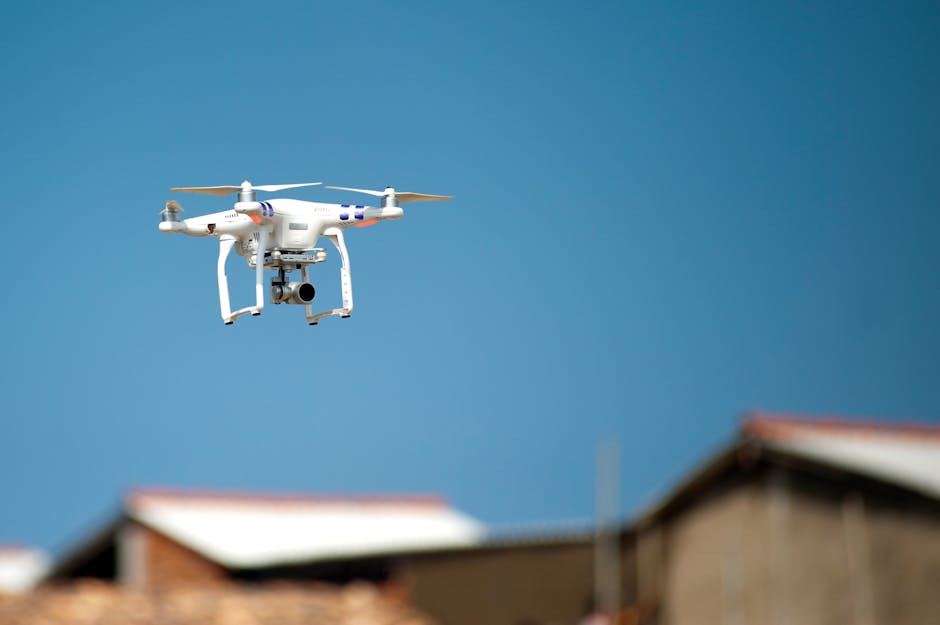
Why Fuel Cells? The Numbers Tell the Story
To understand the excitement, you have to look at what engineers call specific energy — essentially, how much energy you can store per kilogram of weight. Lithium-ion batteries (the gold standard in drones today) typically offer around 150–250 Wh/kg. Hydrogen fuel cell systems, when you account for the full system weight, come in at roughly 400–1,000 Wh/kg depending on storage configuration. That’s a 2x to 4x energy density advantage.
What does that translate to in practice?
- Flight time: Battery drones average 20–40 minutes of useful flight. Fuel cell drones are routinely hitting 2–4 hours, with some research platforms exceeding 6 hours.
- Range: Commercial hydrogen drones are now operating in the 100–300 km range — a category that simply didn’t exist for battery-electric platforms.
- Refueling time: Swapping a hydrogen cartridge takes under 10 minutes, versus 45–90 minutes for a meaningful battery recharge.
- Payload efficiency: Because fuel cells generate electricity as they consume hydrogen (rather than carrying a heavy battery pack), payload ratios improve significantly at longer range missions.
- Zero emissions output: The only byproduct is water vapor — a genuine plus as drone regulations increasingly factor in environmental impact.
Of course, there are trade-offs. Hydrogen storage infrastructure is still sparse, cold-weather performance requires thermal management systems, and upfront hardware costs remain higher than battery equivalents. But the trajectory in 2026 is clearly pointing toward these gaps closing fast.
Global and Domestic Case Studies: Who’s Actually Flying These Things?
Let’s get specific, because this is where it gets genuinely interesting.
🇰🇷 South Korea — Urban Logistics and Smart City Integration
South Korea has been one of the most aggressive early adopters. Hyundai Motor Group’s UAM division, in collaboration with Korea Aerospace Research Institute (KARI), has been running hydrogen-powered cargo drone corridors between Incheon logistics hubs and outer Seoul districts since late 2025. The drones carry up to 5 kg payloads and complete round trips of approximately 80 km — a route that would require two battery swaps on conventional platforms. The Korean Ministry of Land, Infrastructure and Transport reported in early 2026 that fuel cell drones now account for roughly 18% of all licensed commercial drone operations in designated smart logistics zones.
🇩🇪 Germany — Industrial Inspection at Scale
Deutsche Bahn (Germany’s national rail operator) has been deploying hydrogen drones from a startup called H2Fly’s commercial spinoff for railway infrastructure inspection across the Bavaria corridor. The drones fly automated inspection routes covering over 500 km of track per day — something that required multiple drone teams and frequent recharging pit stops before the fuel cell switch. The key win here isn’t just range; it’s operational continuity. Inspectors get uninterrupted data streams rather than patchy coverage between battery swaps.
🇺🇸 United States — Emergency Response and Remote Delivery
In Alaska and rural Montana, companies like Heven Drones (operating under an FAA Beyond Visual Line of Sight waiver program expanded in 2025) are using hydrogen fuel cell platforms for medical supply delivery to communities that are otherwise cut off during winter months. One notable deployment in January 2026 saw a fuel cell drone deliver insulin and antibiotics to a community 140 km from the nearest road-accessible pharmacy during a snowstorm — a mission impossible for battery alternatives.
🇯🇵 Japan — Disaster Response Pre-Positioning
Following the 2024 Noto Peninsula earthquake response lessons, Japan’s Self-Defense Force and the Japan Aerospace Exploration Agency (JAXA) fast-tracked a fuel cell drone rapid-deployment program. By 2026, prefectural governments in high-seismic-risk zones are required to maintain at least two hydrogen drone units for disaster reconnaissance, capable of 3-hour continuous surveillance flight with thermal imaging payloads.
The Infrastructure Problem — And Realistic Workarounds
Here’s where I want to be honest with you, because a lot of breathless coverage glosses over this: hydrogen infrastructure is still a legitimate bottleneck. If you’re a logistics operator in, say, rural Southeast Asia or sub-Saharan Africa, you can’t just order a fleet of hydrogen drones and expect smooth operations. The supply chain for compressed hydrogen cylinders, the handling certifications, the storage requirements — it’s a real operational layer that battery drones simply don’t have.
So what are the realistic alternatives and workarounds people are actually using?
- Hybrid systems: Some operators are running hydrogen fuel cells as range-extenders alongside a smaller lithium battery buffer. The battery handles peak power demands (takeoff, rapid maneuvers) while the fuel cell handles cruise efficiency. This reduces hydrogen consumption and smooths out power spikes.
- Hydrogen-as-a-service models: Companies like Air Products and Iwatani are piloting mobile hydrogen refueling units — essentially a truck that comes to your drone base. This sidesteps the need for fixed infrastructure in early-adoption phases.
- Methanol fuel cells as a bridge technology: For regions where hydrogen logistics are impractical, direct methanol fuel cells (DMFCs) offer a middle path. They’re less energy-dense than hydrogen but far easier to store and transport, and they’re seeing real traction in Southeast Asian drone delivery markets.
- Battery-electric for short-range, fuel cell for long-range: The pragmatic answer for most fleet operators in 2026 is a mixed fleet strategy — don’t try to replace everything with hydrogen, just route your long-range, high-endurance missions to fuel cell platforms.
What This Means for the Broader Air Mobility Picture
Zoom out for a second. The reason fuel cell drone applications matter beyond the drone industry itself is that they’re essentially a proving ground for hydrogen propulsion in larger urban air mobility vehicles — the air taxis and regional air mobility aircraft that companies like Joby, Lilium’s successor ventures, and Korea’s Plana are developing. Every hour of operational data from a hydrogen drone fleet is informing the safety cases, maintenance protocols, and regulatory frameworks that will eventually govern hydrogen-powered air taxis.
Regulators in the EU (EASA), the US (FAA), and Korea (MOLIT) have all explicitly cited drone-scale fuel cell operational data as a key input for their 2027–2030 hydrogen aviation rulemaking roadmaps. So the drones flying medical supplies over Norwegian fjords today are, in a very real sense, paving the runway for the hydrogen air taxi that might serve your city in 2030.
Editor’s Comment : What genuinely surprises me about the fuel cell drone space in 2026 is how quickly it’s shifted from niche research to operational deployment — and how the real adoption drivers aren’t the flashy urban delivery headlines, but the quiet, unglamorous use cases: railway inspections, disaster pre-positioning, remote medical access. If you’re evaluating drone technology for any serious long-range application right now and you’re not at least piloting a hydrogen platform in your assessment, you’re probably making decisions with incomplete information. The infrastructure gaps are real, but the hybrid and service-model workarounds are genuinely usable today. Worth the homework.
태그: [‘fuel cell drone’, ‘hydrogen drone 2026’, ‘urban air mobility’, ‘hydrogen propulsion aviation’, ‘drone delivery technology’, ‘UAM fuel cell’, ‘hydrogen aerial mobility’]
Leave a Reply