A colleague of mine recently walked into our engineering team’s weekly hangout visibly confused. He’d just test-driven a Toyota Mirai and a Hyundai NEXO on the same weekend, and he kept referring to one as a “hydrogen car” and the other as a “fuel cell vehicle” — as if they were fundamentally different machines. Our whole table erupted into a good-natured argument that lasted way longer than anyone expected. That conversation got me thinking: even among technically-minded folks, there’s a surprising amount of fog around this topic. So let’s cut through it together.
The short answer? A hydrogen car is a fuel cell car, in most mainstream usage. But the nuanced, engineering-level answer? That’s where things get genuinely interesting — and actually matters a lot if you’re deciding where to put your money, your fleet investment, or your next personal vehicle in 2026.
First, Let’s Nail Down the Terminology
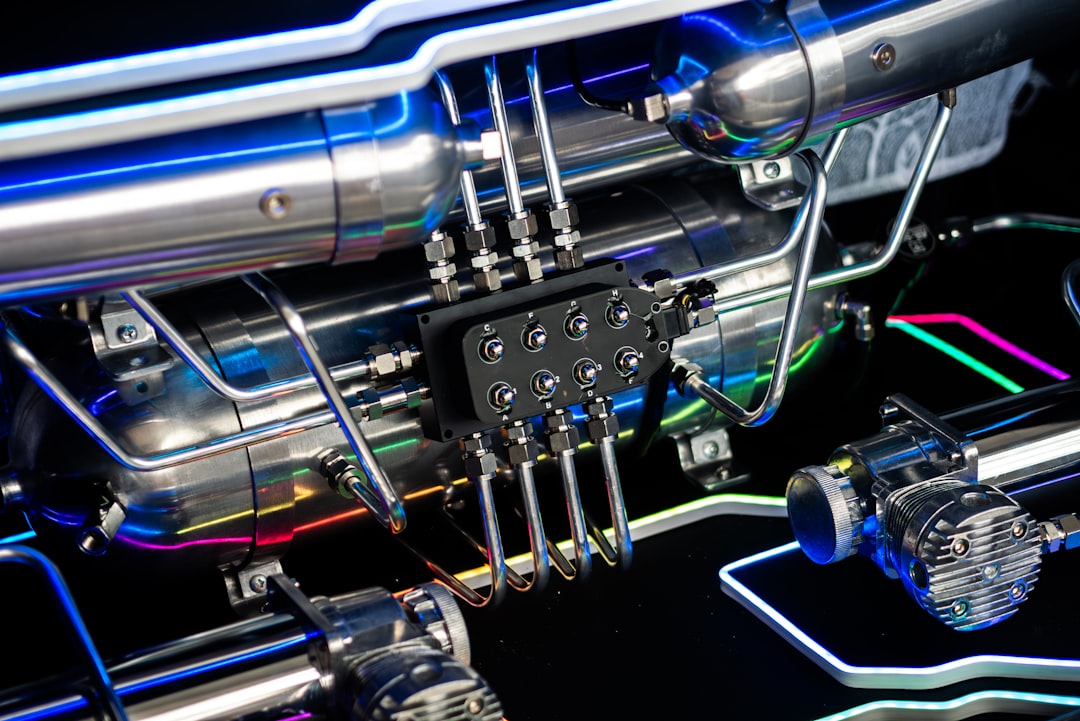
When people say “hydrogen car” colloquially, they typically mean a Fuel Cell Electric Vehicle (FCEV) — a car that uses a proton exchange membrane fuel cell (PEMFC) stack to convert hydrogen gas (H₂) into electricity, which then drives an electric motor. Water vapor is the only tailpipe emission. Clean, quiet, quick to refuel.
However, the term “hydrogen car” can technically also refer to vehicles running on hydrogen internal combustion engines (H2-ICE). These burn hydrogen in a modified combustion engine — no fuel cell involved. This distinction is critical, and it’s where the real comparison begins.
- FCEV (Fuel Cell Electric Vehicle): Uses a PEM fuel cell stack → generates electricity → powers electric motor. Examples: Toyota Mirai GEN3, Hyundai NEXO 2, BMW iX5 Hydrogen.
- H2-ICE (Hydrogen Internal Combustion Engine): Burns H₂ in a modified gasoline engine. Examples: BMW Hydrogen 7 (legacy), Toyota’s experimental H2 Corolla race car, Yamaha H2 engine tests.
- Hybrid FCEV: Combines a fuel cell stack with a battery buffer (like the current Mirai and NEXO). The battery handles regenerative braking and peak power demands.
- Liquid Hydrogen Vehicles: Store cryo-cooled liquid H₂ instead of compressed gas — used in heavy-duty trucking and aerospace, not yet mainstream passenger cars.
How the Fuel Cell Stack Actually Works — Engineer’s View
I’ll spare you the textbook recitation, but here’s what matters from a real-world operation standpoint. A PEMFC stack operates at roughly 60–80°C, which is surprisingly low compared to combustion. Hydrogen enters the anode, oxygen (from air) enters the cathode, protons pass through the membrane, electrons are forced through the external circuit (that’s your electricity), and they recombine with oxygen at the cathode to produce water.
The efficiency of modern PEM stacks? Around 55–65% electrical efficiency — significantly better than a gasoline ICE (roughly 25–35%) and even edging past H2-ICE (around 40–45%). The 2026 Toyota Mirai GEN3, for instance, uses a revised stack with higher platinum group metal (PGM) efficiency, targeting stack power density above 5.4 kW/L.
Now here’s a real-world debugging story: the biggest operational headache early FCEVs faced wasn’t the stack itself — it was membrane humidification control. Too dry, and proton conductivity drops. Too wet, and you get water flooding in the gas diffusion layer, choking hydrogen flow. I spent time consulting on a pilot fleet project in 2023 where we had consistent cold-start performance drops in sub-zero Korean winters — ultimately traced back to inadequate cathode purge cycles during shutdown. The fix? Updated ECU logic for a 3-second purge sequence. Lesson: the chemistry is elegant; the thermal management and water management are where the real engineering battles happen.
Performance & Specs: FCEV vs H2-ICE in 2026
Let’s put some numbers on the table, because specs matter.
- Toyota Mirai GEN3 (2026): ~182 hp, 0-100 km/h in ~9.0s, range ~650 km (WLTP), refuel time ~5 min at 70 MPa station
- Hyundai NEXO 2 (2026): ~163 hp (boosted trim available), range ~700 km (WLTP), three 700-bar carbon fiber H₂ tanks, 5.4 kg H₂ capacity
- BMW iX5 Hydrogen (production variant, 2026): ~374 hp combined (fuel cell + electric motor), demonstrating that FCEV doesn’t mean sluggish
- H2-ICE (Toyota GR Corolla H2 concept road adaptation): ~270 hp, but NOx emissions still present (N₂ + O₂ at high combustion temps), efficiency ~40%, range ~400 km
The pattern is clear: FCEV wins on efficiency, range, and zero-emission credentials. H2-ICE wins on familiarity (uses existing drivetrain tech) and potentially lower upfront cost, but you sacrifice emissions cleanliness and efficiency.
Real-World Case Studies: Who’s Doing What in 2026?
The global landscape in 2026 has shifted meaningfully from even two years ago. Let me walk through the key players and what their choices tell us.
South Korea remains arguably the most aggressive FCEV adopter. Hyundai’s “Hydrogen Vision 2030” roadmap (now well into execution) has the NEXO 2 as a mainstream consumer product, and the country passed 30,000 registered FCEVs in early 2026 — still modest, but growing. The Korean government subsidizes up to ₩12,000,000 (~$9,000 USD) per vehicle and is aggressively expanding 700-bar refueling infrastructure, targeting 450 stations nationally by end of 2026 (source: Korea Hydrogen Industry Association, khia.or.kr).
Japan‘s Toyota continues to lead FCEV technology. The Mirai GEN3 addresses the GEN2’s biggest pain point — limited availability of green hydrogen — by also engineering compatibility with blue and turquoise hydrogen for transitional markets. Toyota’s collaboration with Woven City (their smart city project near Mt. Fuji) uses FCEVs as part of an integrated grid-to-vehicle energy ecosystem.
Europe is interesting because it’s more bifurcated. Germany’s H2Mobility network (h2mobility.de) reached 100 operational stations in 2025, and BMW’s iX5 Hydrogen production variant is now available via select dealers. Meanwhile, the EU’s hydrogen strategy still prioritizes heavy-duty trucking and industrial hydrogen over passenger FCEVs — which is actually a rational infrastructure allocation argument.
China has taken the H2-ICE path more seriously than any other major market, partially as a hedge against semiconductor/fuel-cell stack supply chain risks. SAIC and Weichai have both demonstrated H2-ICE heavy trucks in commercial pilots. However, for passenger cars, SAIC’s Roewe hydrogen SUV uses FCEV technology, not ICE.
United States: Honda reintroduced the CR-V e:FCEV in a partnership with GM (sharing the Ultium-based fuel cell architecture), available in California where the hydrogen station network, while still frustratingly sparse (~70 operational stations as of Q1 2026), is at least geographically concentrated enough to be usable.
The Elephant in the Room: Green vs Gray Hydrogen
No honest comparison can skip this. The environmental credentials of any hydrogen vehicle depend entirely on how the hydrogen was produced.
- Green hydrogen: Electrolysis powered by renewables. Near-zero lifecycle emissions. Currently ~$4-6/kg in favorable markets (down from $8+ in 2023, but still not cost-competitive with gasoline on a per-km basis in most regions).
- Blue hydrogen: Steam methane reforming (SMR) with carbon capture. ~50-85% CO₂ reduction. A transitional solution.
- Gray hydrogen: SMR without capture. Essentially the same carbon intensity as burning fossil fuels. If your FCEV runs on gray hydrogen, the “zero emission” claim is… complicated.
- Turquoise hydrogen: Methane pyrolysis producing solid carbon instead of CO₂. Emerging tech, promising but not yet at scale.
The irony is that a BEV (Battery Electric Vehicle) charged on a renewable grid can currently out-perform a gray-hydrogen FCEV on lifecycle emissions. This isn’t an argument against FCEVs — it’s an argument for accelerating green hydrogen production. And that’s exactly where 2026 policy frameworks (EU Hydrogen Bank, US DOE Hydrogen Earthshot) are directing capital.
FCEV vs BEV: The Sibling Rivalry Context
Since we’re doing honest comparisons, FCEV vs BEV deserves a mention, even if it’s not the main event here.
- Refueling time: FCEV wins — 3-5 minutes vs 20-45 minutes for fast-charging BEVs
- Range: Roughly comparable at 600-700 km for modern FCEVs; top BEVs (Mercedes EQS, Lucid Air) now hit 700+ km too
- Infrastructure: BEV wins decisively — global charging networks dwarf hydrogen station counts
- Cold weather performance: FCEV generally handles cold better than large-battery BEVs (less range degradation at -20°C)
- Total cost of ownership (2026): BEV still cheaper in most markets due to electricity cost vs hydrogen retail price
- Heavy-duty / long-range applications: FCEV increasingly competitive — Hyundai XCIENT Fuel Cell trucks are operating commercially in Europe and South Korea
So Which Should You Actually Consider?
Here’s my realistic take: for most individual consumers in 2026, a FCEV makes the most sense if: (a) you live within 20-30 km of a reliable 700-bar hydrogen station, (b) you frequently drive 400+ km in a single trip, (c) you operate in climates with harsh winters where BEV range anxiety is amplified, or (d) you have access to verified green hydrogen in your region.
H2-ICE vehicles, on the other hand, make a niche argument for heavy equipment, off-road industrial vehicles, and motorsport applications where the simplicity of an ICE drivetrain and tolerance for some NOx emissions (with SCR treatment) is acceptable. Don’t expect an H2-ICE passenger car to hit mainstream showrooms anytime soon.
If neither condition above applies? A BEV or plug-in hybrid still makes more practical daily sense in 2026. The hydrogen revolution is real and accelerating — but it’s not yet ubiquitous enough to recommend blindly.
Editor’s Comment : The “fuel cell car vs hydrogen car” debate is really a conversation about technological maturity, infrastructure timing, and use-case fit — not a binary winner-takes-all contest. FCEVs represent one of the most elegant applications of electrochemical engineering in automotive history, and the 2026 models from Toyota, Hyundai, and BMW genuinely impress. But the technology deserves adoption driven by honest assessment of hydrogen sourcing and local infrastructure — not marketing hype. Keep watching the green hydrogen cost curve; when it decisively crosses below $2/kg (some analysts project 2028-2030 for select regions), the calculus changes dramatically for everyone.
📚 관련된 다른 글도 읽어 보세요
- Home Fuel Cell Systems in 2026: Why Your Neighbor’s House Might Soon Generate Its Own Electricity
- Hydrogen Fuel Cell vs. Battery Electric Vehicles in 2026: Which One Actually Wins?
- 2026 SOFC Technology: Solid Oxide Fuel Cells Are Quietly Rewriting the Energy Playbook
태그: fuel cell vehicle, hydrogen car FCEV, FCEV vs BEV 2026, hydrogen ICE comparison, Toyota Mirai 2026, Hyundai NEXO hydrogen, green hydrogen automotive
Leave a Reply