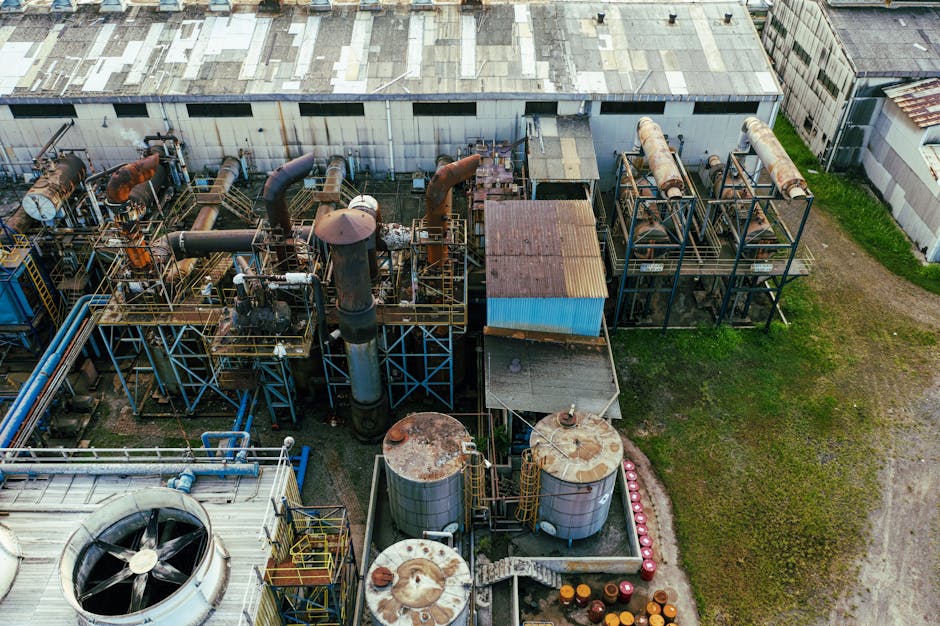
Picture this: you’re driving through Incheon’s industrial corridor in early 2026, and instead of the usual smokestack silhouettes against the skyline, you notice sleek, low-profile structures humming quietly beside a wastewater treatment facility. No dramatic plumes of smoke, no roaring combustion — just steady, clean electricity flowing into the grid. That’s a hydrogen fuel cell power plant in action, and South Korea has been quietly building out one of the world’s most ambitious domestic fleets of them. But how far along are we really, and is the momentum enough to matter?
Let’s think through this together.
The Big Picture: South Korea’s Hydrogen Power Landscape in 2026
South Korea’s push into hydrogen fuel cell power generation didn’t happen overnight. It traces back to the government’s Hydrogen Economy Roadmap (first unveiled in 2019), which set ambitious capacity targets for stationary fuel cells. Fast-forward to 2026, and the cumulative installed capacity of fuel cell power plants in South Korea has crossed the 1.2 GW threshold — making it, by most credible industry estimates, one of the top three nations globally in stationary fuel cell deployment alongside the United States and Japan.
To put that in perspective, 1.2 GW is enough to power roughly 900,000 average Korean households. Not the whole country by a long shot, but a meaningful slice — and growing. The Ministry of Trade, Industry and Energy (MOTIE) has been pushing for 2.1 GW by 2030, meaning the current pace needs to accelerate significantly.
Key Deployment Numbers Worth Knowing
- ~1.2 GW of cumulative installed fuel cell capacity as of early 2026
- Over 70 individual fuel cell power plants operating commercially across the country
- Gyeonggi, Incheon, and South Chungcheong provinces lead in installed capacity
- POSCO Energy (now re-branded under POSCO Holdings’ energy arm) and Doosan Fuel Cell remain the dominant domestic manufacturers
- Average plant capacity ranges from 10 MW to 50 MW per site, with some clustered installations exceeding 100 MW
- About 65% of plants are co-located with LNG infrastructure or wastewater treatment facilities for fuel/heat synergy
- The government’s Renewable Portfolio Standard (RPS) assigns higher weights to fuel cells, which has driven private investment
Why Fuel Cells? The Logic Behind the Choice
Here’s a question worth asking: with solar and wind scaling up rapidly, why does South Korea keep doubling down on fuel cells? The honest answer is geography and grid reality. South Korea is a small, densely populated peninsula with limited land for utility-scale solar farms and inconsistent wind resources compared to, say, the North Sea corridor. Fuel cells, by contrast, offer dispatchable, 24/7 baseload power that can be sited in urban or semi-urban areas near demand centers — reducing transmission loss.
The thermal efficiency of modern molten carbonate fuel cells (MCFCs) and phosphoric acid fuel cells (PAFCs) used widely in Korea reaches 47–60% electrical efficiency, and when waste heat is recovered for district heating or industrial processes, overall system efficiency can hit 80–85%. That’s a genuinely hard number to beat with intermittent renewables alone.
Domestic & International Benchmarks
Let’s zoom out and compare.
Domestically, the Boryeong Fuel Cell Power Plant in South Chungcheong Province remains a flagship example — a 40 MW facility that has operated stably since 2022 and was expanded in 2025. It uses Doosan Fuel Cell’s PAFC units and feeds directly into KEPCO’s grid while supplying waste heat to nearby industrial users. The Incheon LNG Terminal complex hosts another cluster where fuel cells act as an on-site generation buffer, improving the terminal’s overall energy economics.
Internationally, South Korea often draws comparisons to California’s Self-Generation Incentive Program (SGIP), which has spurred fuel cell adoption at commercial and industrial sites. However, California’s deployment is far more distributed (smaller units at individual buildings) while Korea’s model favors utility-scale clusters — a key philosophical difference. Japan’s ENE-FARM program offers yet another contrast: highly distributed micro-CHP units (1–5 kW) at the residential level. Korea sits between these two poles but is clearly trending toward larger, centralized installations.
The Honest Challenges: It’s Not All Smooth Sailing
Here’s where we need to be real. The majority of South Korea’s fuel cell plants in 2026 still run on reformed natural gas — meaning the hydrogen they use is extracted from LNG on-site through steam methane reforming (SMR). This is often called “grey hydrogen” in industry parlance. While fuel cells are far cleaner than direct gas combustion at the point of use (dramatically lower NOx, near-zero particulates), the upstream carbon footprint remains significant without carbon capture.
The transition to green hydrogen (produced via electrolysis using renewable electricity) is the key inflection point everyone is watching. As of early 2026, less than 8% of Korea’s stationary fuel cell plants operate on certified green or blue hydrogen. The economics still don’t fully pencil out — green hydrogen costs remain roughly 2.5–3x higher than reformed gas hydrogen in the Korean market, though that gap is narrowing with electrolysis scale-up.
Realistic Alternatives and the Path Forward
So where does this leave us? If you’re a local government, industrial complex operator, or energy planner thinking about the next five years, here’s how to think about your options:
- Hybrid fuel cell + solar/storage systems: Pair a mid-scale fuel cell (10–20 MW) with rooftop/carport solar and battery storage. The fuel cell handles baseload and night demand; solar handles peak daytime load. This is already being piloted in Sejong City’s smart grid zone.
- LNG-to-hydrogen transition planning: If you’re locked into an LNG contract anyway, fuel cells with future hydrogen-blend capability make economic sense now. Doosan and POSCO’s newer PAFC units are rated for up to 30% hydrogen blending today, with roadmaps for 100% by 2028–2029.
- Wastewater biogas integration: Several municipalities are already capturing biogas from sewage treatment and feeding it to fuel cells. This is arguably the cleanest near-term path — waste-derived, low-carbon, and it reduces methane emissions from wastewater plants simultaneously.
- Wait-and-scale on green hydrogen: For new project planning beyond 2027, waiting for green hydrogen cost curves to decline further before locking in long-term fuel contracts may be the smartest financial play. The tipping point in Korea is projected between 2028 and 2031 by KOGAS research estimates.
The bottom line? South Korea’s fuel cell power sector in 2026 is a genuine success story in deployment terms — but it’s also at a critical crossroads. The hardware is proven, the grid integration works, and the domestic manufacturing ecosystem is globally competitive. What happens next depends almost entirely on how quickly green hydrogen economics improve and whether regulatory frameworks keep pace with the ambition.
It’s a fascinating space to watch — and honestly, to participate in if you’re in any part of the energy or municipal planning ecosystem.
Editor’s Comment : South Korea’s fuel cell story is one of those rare cases where industrial policy actually created a functioning industry — not just a government-subsidized bubble. The real test in the late 2020s will be whether the country can thread the needle between maintaining grid reliability and making the green hydrogen pivot without killing the economics that made fuel cells attractive in the first place. My honest take: the wastewater biogas pathway deserves far more attention than it’s currently getting. It’s not glamorous, but it may be the most pragmatic bridge to a genuinely low-carbon fuel cell future.
태그: [‘hydrogen fuel cell power plant’, ‘South Korea energy 2026’, ‘green hydrogen Korea’, ‘stationary fuel cell deployment’, ‘PAFC MCFC power generation’, ‘Korean energy transition’, ‘hydrogen economy roadmap’]
Leave a Reply