Picture this: a small ceramic disc, no bigger than a coin, sitting at the heart of a power generator that runs quietly, efficiently, and cleanly — no combustion, no turbines, just electrochemical magic. That little disc is the electrolyte in a Solid Oxide Fuel Cell (SOFC), and right now, researchers around the world are betting big that perovskite-structured materials are the key to making this technology genuinely commercially viable. If you’ve been following the clean energy space even casually, you’ve probably heard the buzz. But let’s slow down and actually think through what’s happening, why it matters, and whether the hype is justified.
What Exactly Is a Perovskite, and Why Does It Matter for SOFCs?
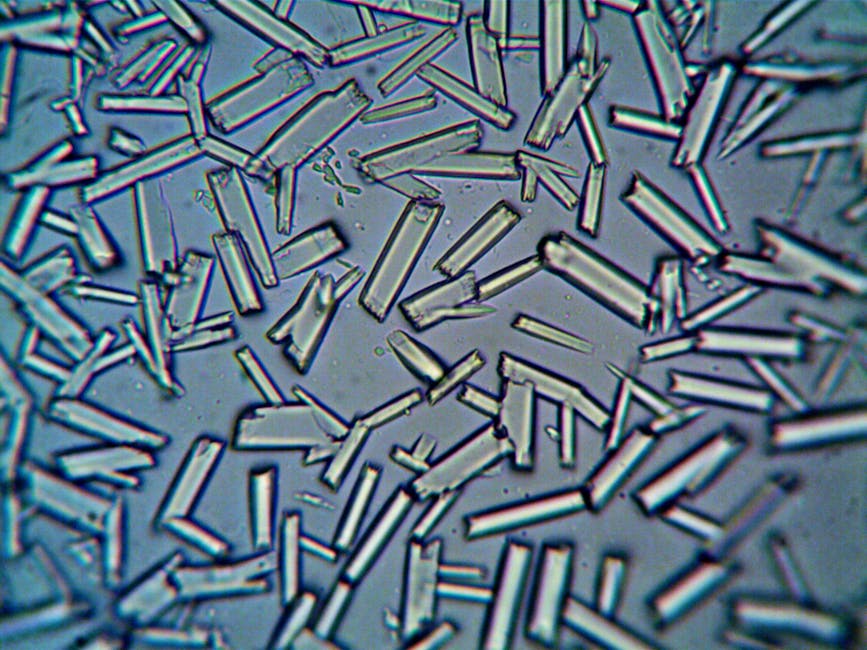
Let’s start from the ground up. A perovskite is not a single material — it’s a crystal structure type, defined by the general formula ABO₃, where A and B are cation sites occupied by different metal elements, and O is oxygen. The magic of this structure lies in its almost infinite compositional flexibility: you can substitute different elements at the A or B site and dramatically tune the material’s ionic conductivity, thermal expansion, and chemical stability.
In an SOFC, the electrolyte’s job is to shuttle oxygen ions (O²⁻) from the cathode to the anode — and do it efficiently at high temperatures, typically between 600°C and 900°C. The traditional go-to material has been Yttria-Stabilized Zirconia (YSZ), which has served the field well for decades. But YSZ has a limitation: it really only hits its stride above 700°C, which means the whole system needs to run hot, leading to expensive balance-of-plant components and slower startup times.
This is precisely where perovskites enter the conversation. Certain perovskite compositions — particularly those based on barium zirconate (BaZrO₃), barium cerate (BaCeO₃), and their solid solutions — show proton conductivity at intermediate temperatures (400–700°C), potentially unlocking a new generation of lower-temperature SOFCs.
The Data Behind the Promise: Where Perovskites Outperform
Let’s look at some numbers, because that’s where the story really gets interesting. Research published in early 2026 from multiple groups has consolidated some compelling performance benchmarks:
- BaZr₀.₈Y₀.₂O₃₋δ (BZY20) — one of the most studied proton-conducting perovskites — achieves ionic conductivity values of approximately 10⁻² S/cm at 600°C, compared to YSZ which typically delivers around 10⁻³ S/cm at the same temperature. That’s a full order of magnitude difference.
- Mixed proton-electron conductors like BaCo₀.₄Fe₀.₄Zr₀.₁Y₀.₁O₃₋δ (BCFZY) have demonstrated peak power densities exceeding 1.3 W/cm² at 600°C in symmetrical cell configurations, a benchmark that was nearly unthinkable five years ago.
- Thermal expansion coefficients of well-optimized perovskite electrolytes (around 9–11 × 10⁻⁶ K⁻¹) are becoming increasingly compatible with electrode materials, which historically caused delamination and cracking during thermal cycling.
- Grain boundary resistance — historically perovskites’ Achilles’ heel — has been dramatically reduced through sintering aid strategies (e.g., adding small amounts of ZnO or NiO) and advanced spark plasma sintering (SPS) techniques, pushing grain boundary conductivity to near-bulk levels.
These aren’t just lab curiosities anymore. The trajectory of improvement is steep enough that several industry analysts are now projecting perovskite-based protonic ceramic fuel cells (PCFCs) could reach stack-level demonstrations at kilowatt scale by late 2026 or 2027.
International and Domestic Research Landscapes in 2026
The research activity on this topic is genuinely global, which tells you something about its perceived importance. Let me walk you through some of the most significant players and what they’re doing differently.
South Korea has emerged as one of the most aggressive investors in this space. KIST (Korea Institute of Science and Technology) and POSTECH have both active perovskite electrolyte programs, with particular focus on co-doping strategies at the B-site to simultaneously optimize proton conductivity and chemical stability in CO₂-rich environments — a critical real-world concern since fuel reformate gases always contain CO₂, which can carbonate barium-containing perovskites and degrade performance. The Korean government’s Hydrogen Economy Roadmap has funneled significant R&D funding into this exact problem.
In the United States, groups at MIT, Stanford, and the Colorado School of Mines have been pushing the envelope on thin-film perovskite electrolytes — depositing electrolyte layers as thin as 1–3 micrometers using pulsed laser deposition (PLD) and atomic layer deposition (ALD). The thinner the electrolyte, the lower the ohmic resistance, which means the cell can operate at even lower temperatures. MIT’s 2025–2026 results on anode-supported cells with sub-2-μm BZY electrolytes showed exceptional performance stability over 1,000-hour tests.
Germany and the EU — through the Horizon Europe framework — are funding cross-institutional projects (notably the GAIA-X Hydrogen Cluster collaborations) that are trying to connect perovskite electrolyte R&D directly to manufacturing scale-up. Companies like Sunfire GmbH are watching these developments closely, as they could future-proof their SOFC stacks for lower operating temperatures.
China’s contributions shouldn’t be underestimated. Groups at Tsinghua University and Huazhong University of Science and Technology have been prolific publishers on A-site deficiency engineering in perovskites — deliberately creating vacancies on the A-site to tune sintering behavior and ionic conductivity simultaneously. Their output in 2025–2026 has been particularly focused on scaling fabrication from lab-scale pellets to tape-cast sheets suitable for stack assembly.
The Honest Challenges: Not All That Glitters Is Perovskite
It would be intellectually dishonest not to flag the real hurdles here, because this is genuinely where the field needs to do more work before commercialization becomes realistic.
- Chemical stability in CO₂ and H₂O: Barium-rich perovskites are notoriously prone to forming BaCO₃ and Ba(OH)₂ surface phases under operating conditions. These secondary phases block ionic transport pathways and degrade cell performance over time. No fully satisfying solution exists yet, though Zr-rich compositions and surface coatings are showing promise.
- Sintering temperature mismatch: Dense, gas-tight perovskite electrolytes typically require sintering above 1400°C, which is incompatible with co-sintering alongside Ni-based cermet anodes (which densify at lower temperatures). This forces multi-step firing processes that complicate manufacturing and add cost.
- Scale-up from pellet to tape: Most impressive performance data comes from small, carefully prepared pellets in laboratory settings. Translating those results to large-area, defect-free thin sheets through tape casting or screen printing — without cracking, warping, or compositional gradients — remains a serious engineering challenge.
- Long-term stability data: Many exciting 2026 results are still reporting 500–1,000-hour durability tests. For commercial applications, you realistically need 40,000+ hours. The community is aware of this gap.
Realistic Alternatives and Complementary Approaches Worth Watching
If you’re a researcher, engineer, or investor evaluating where to focus energy in this space, it’s worth knowing that perovskites don’t exist in a vacuum — there are complementary and competing electrolyte strategies worth benchmarking against:
- Scandia-stabilized zirconia (ScSZ): Higher conductivity than YSZ at intermediate temperatures, more mature manufacturing base, but expensive due to scandium cost.
- Gadolinium-doped ceria (GDC/CGO): Excellent oxide ion conductivity below 600°C, but suffers from electronic leakage under reducing atmospheres at the anode side, reducing open-circuit voltage. Often used as a bilayer with YSZ to combine advantages.
- Lanthanum silicate apatites: An emerging class with genuinely interesting anisotropic conductivity and good stability, but still early-stage compared to perovskites.
- Hybrid perovskite-fluorite composites: Some researchers are blending perovskite phases with fluorite-structured oxides to get the best of both — this is a particularly active area in 2026 and worth tracking.
The honest advice? If you’re building a research program from scratch today, a perovskite-first approach with a GDC comparison baseline is probably the smartest strategic position. You get the upside optionality of proton conductors while staying grounded in a well-understood reference material.
The broader picture here is genuinely exciting. We’re at a moment where the fundamental science of perovskite electrolytes is mature enough to see real performance gains, but immature enough that there are still major breakthroughs to be made — particularly around stability and manufacturability. That’s the sweet spot for impactful research. Whether you’re a materials scientist, a clean energy entrepreneur, or just someone who finds solid-state electrochemistry fascinating (guilty as charged), 2026 feels like a genuinely pivotal year in this story. The ceramic disc in that imaginary fuel cell might be smaller, cooler, and more durable than ever before — and perovskites are a big reason why.
Editor’s Comment : What strikes me most about the perovskite electrolyte story is that it’s fundamentally a tale about tunable complexity — the fact that one crystal structure template can yield such wildly different properties depending on what you put into it is both scientifically beautiful and practically powerful. The field’s challenge now isn’t imagination; it’s engineering patience. The researchers who crack the stability and scale-up problems won’t just publish good papers — they’ll help decarbonize industrial heat and distributed power generation at a scale that actually moves the needle on climate. That’s worth staying curious about.
태그: [‘SOFC electrolyte materials’, ‘perovskite fuel cell research’, ‘proton conducting ceramics’, ‘solid oxide fuel cell 2026’, ‘BaZrO3 electrolyte’, ‘protonic ceramic fuel cells’, ‘hydrogen energy materials’]
Leave a Reply