A few years ago, a friend of mine who works in urban planning mentioned something that stuck with me: “We keep talking about the hydrogen economy like it’s always five years away.” Fast forward to early 2026, and the story has changed — dramatically. Fuel cell technology is no longer a futuristic promise gathering dust in research labs. It’s quietly powering apartment buildings in Seoul, long-haul freight trucks on German autobahns, and backup systems in data centers across the American Southwest. Let’s dig into what’s actually happening right now and what it means for the way we live, work, and move.

1. The Efficiency Breakthrough Everyone’s Been Waiting For
For decades, Proton Exchange Membrane (PEM) fuel cells — the type most commonly used in vehicles — hovered around 50–60% electrical efficiency. That was decent, but not transformative enough to tip the economics decisively against lithium-ion batteries. In 2026, several manufacturers have crossed a meaningful threshold: combined heat and power (CHP) fuel cell systems are now routinely achieving 85–90% total energy utilization when waste heat is captured, according to recent reports from the International Energy Agency (IEA) and Fuel Cell & Hydrogen Energy Association (FCHEA).
What does that actually mean? Think of it this way — if you’re heating a building AND generating electricity from a single hydrogen fuel cell unit, you’re wasting almost nothing. That’s genuinely competitive with the best grid systems available today, especially in regions where electricity prices are volatile.
2. Solid Oxide Fuel Cells (SOFCs) Are Having a Moment
While PEM cells dominate the transportation headlines, Solid Oxide Fuel Cells (SOFCs) are quietly stealing the show in stationary power applications. Unlike PEM cells, SOFCs don’t require ultra-pure hydrogen — they can run on natural gas, biogas, or even ammonia. That fuel flexibility is a massive practical advantage in 2026, where pure hydrogen infrastructure is still being built out.
Bloom Energy, for example, has deployed SOFC systems in data centers across California and Singapore, reporting operational efficiencies exceeding 65% in electrical-only mode. Meanwhile, South Korea’s POSCO Holdings and Doosan Fuel Cell have expanded their residential SOFC product lines, with thousands of units now installed across apartment complexes in the greater Seoul metropolitan area — a real-world proving ground the rest of the world is watching closely.
3. Key Trends Reshaping the Fuel Cell Landscape in 2026
- Cost Reduction Curves Accelerating: PEM fuel cell system costs have dropped below $150/kW for large deployments in 2026, down from over $400/kW five years ago. This is the classic learning curve effect — more production means lower costs, which enables more production.
- Green Hydrogen Supply Chain Maturation: The bottleneck was never the fuel cell itself — it was affordable, clean hydrogen. Electrolyzer costs have fallen sharply, and large-scale green hydrogen projects in Australia (HyDeal), Chile (H2 Magallanes), and the Middle East (NEOM’s ENOWA) are now delivering hydrogen at increasingly competitive prices.
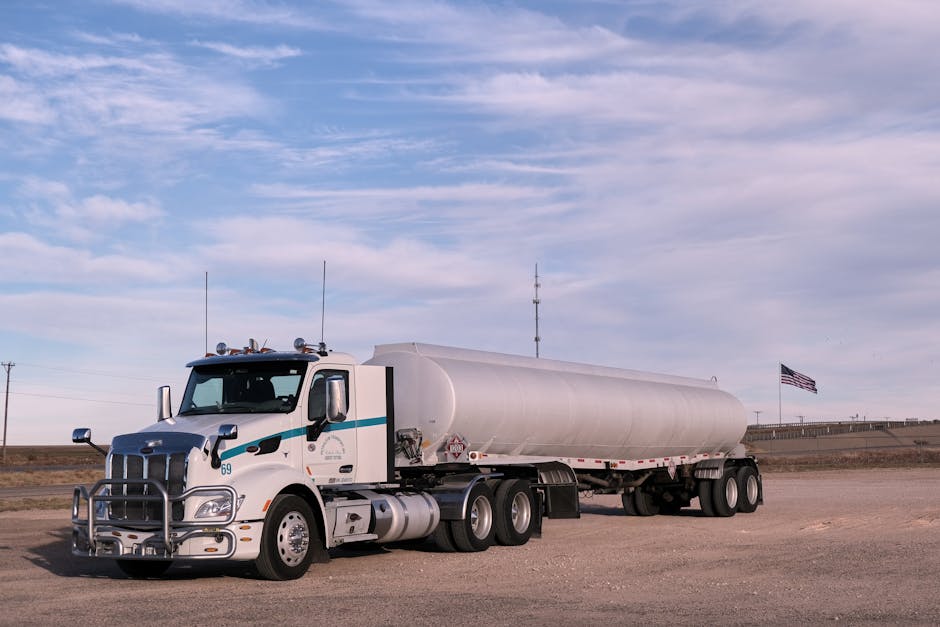
- Fuel Cell Trucks Going Mainstream: Hyundai’s XCIENT Fuel Cell trucks have surpassed 10 million kilometers of cumulative commercial operation in Europe. Toyota and Daimler Truck’s joint venture is scaling production. Long-haul trucking — where battery weight is a serious disadvantage — is emerging as fuel cells’ clearest near-term transportation win.
- Marine Applications Scaling Up: Shipping giant Hapag-Lloyd and Norwegian firm Hydrogen Pro are piloting fuel cell hybrid vessels on North Sea routes in 2026. The maritime sector, responsible for about 3% of global CO₂ emissions, sees hydrogen fuel cells as one of the few viable deep-decarbonization pathways.
- AI-Optimized Fuel Cell Management: One underreported trend — embedded AI systems are now managing real-time fuel cell stack health, predictive maintenance, and load balancing. This has meaningfully extended operational lifespans and reduced unplanned downtime, making the business case for fuel cells significantly stronger.
- Ammonia-Fed Fuel Cells: Several pilot programs in Japan and the Netherlands are testing direct-ammonia solid oxide fuel cells. Ammonia is far easier to transport and store than compressed hydrogen, and if these pilots succeed at commercial scale, they could rewrite the entire hydrogen logistics equation.
4. Real-World Examples Worth Knowing About
South Korea — The Residential SOFC Model: South Korea has arguably the world’s most mature residential fuel cell market. The government’s hydrogen economy roadmap, now in its second phase, has incentivized building owners to install combined heat and power fuel cell units. By early 2026, over 80,000 residential units are operating nationwide. The practical benefit for residents? Lower combined energy bills and dramatically improved grid resilience during peak summer demand periods.
Germany — Industrial Decarbonization with Fuel Cells: German steelmaker ThyssenKrupp has integrated high-temperature fuel cell systems into its Duisburg facility as part of its “green steel” transition, using hydrogen both as a fuel cell feedstock and as a direct reduction agent in steel production. This dual-use hydrogen strategy is being studied as a replicable model for heavy industry worldwide.
United States — Data Center Power Reliability: With AI-driven computing demand pushing data center power consumption to record highs in 2026, operators are increasingly turning to fuel cell systems for both primary and backup power. Microsoft and Google have both announced expanded fuel cell deployments at their hyperscale facilities, citing the superior reliability and lower carbon footprint compared to diesel backup generators.
5. The Honest Challenges Still on the Table
It wouldn’t be a fair analysis if we glossed over the real hurdles. Green hydrogen is still more expensive per unit of energy than fossil alternatives in most markets — the price parity race is ongoing. Hydrogen infrastructure (refueling stations, pipelines, storage) remains patchy outside of leading markets like South Korea, Japan, and parts of Europe. And public awareness — especially among everyday consumers — is still lagging far behind the technology’s actual capabilities.
If you’re an individual or small business thinking about fuel cell adoption, the realistic path in 2026 is likely through stationary applications first (backup power, combined heat and power for commercial buildings) rather than personal vehicles, unless you’re in a geography with solid hydrogen refueling infrastructure.
6. Realistic Alternatives Based on Your Situation
Not everyone is in a position to adopt fuel cell technology right now — and that’s completely fine. Here’s a practical way to think about it:
- If you’re a homeowner or building manager: Explore whether your utility offers virtual power plant programs using fuel cell CHP systems. In some regions, grid operators are actively subsidizing installations. If not yet available locally, high-efficiency heat pumps combined with battery storage remain the most practical near-term alternative.
- If you manage a fleet of long-haul vehicles: Fuel cell trucks are genuinely worth evaluating in 2026, particularly in Europe and Japan. For shorter routes or urban delivery, battery-electric vehicles still hold the advantage on total cost of ownership.
- If you’re an investor or policy watcher: The electrolyzer and hydrogen infrastructure supply chain is where the most interesting growth is happening right now — arguably more so than the fuel cell hardware itself.
The story of fuel cell technology in 2026 is ultimately a story about patience paying off. The physics was always sound. The engineering has caught up. And now, incrementally but unmistakably, the economics are following.
Editor’s Comment : What I find genuinely exciting about fuel cells in 2026 isn’t any single breakthrough — it’s the compounding effect of multiple improvements arriving simultaneously: cheaper green hydrogen, better materials science, AI-assisted operations, and maturing supply chains. The “five years away” joke is finally becoming a punchline rather than a prediction. If you’re in a sector touched by energy costs, resilience, or decarbonization commitments (and honestly, what sector isn’t?), now is exactly the right time to move from watching to actively exploring. Don’t wait for the technology to be perfect — it never will be. But right now, it’s good enough to make a real difference.
태그: [‘fuel cell technology 2026’, ‘hydrogen fuel cell trends’, ‘green hydrogen energy’, ‘solid oxide fuel cell’, ‘PEM fuel cell efficiency’, ‘hydrogen economy’, ‘clean energy technology’]
Leave a Reply