A few months back, a colleague of mine who manages a mid-size industrial boiler facility half-jokingly said, “Green hydrogen is always five years away from being affordable — and it always will be.” I laughed, but honestly, I’d heard some version of that skepticism for years at every energy conference I attended. Then I started digging into what’s actually been landing in labs, pilot plants, and peer-reviewed journals in 2026 — and I have to say, the engineering landscape has shifted more than most people realize. Let’s unpack what’s really happening on the front lines of green hydrogen cost reduction, because this time, the data is genuinely exciting.
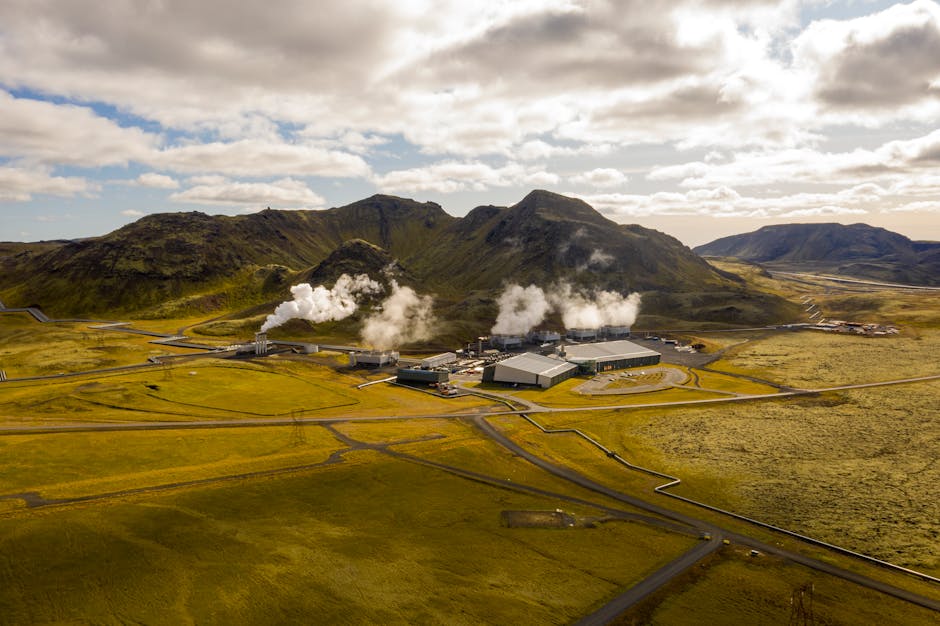
The Cost Problem — And Why It’s Finally Cracking
To understand why cost reduction matters so much, you need to know one number: $2/kg. That’s the widely accepted threshold at which green hydrogen becomes commercially competitive with fossil-fuel-derived “gray” hydrogen. For context, most green hydrogen today still costs significantly more to produce.
From today’s price range, a 50%–70% cost reduction is achievable in 2026–2030 via a combination of economies of scale, system design improvements, manufacturing optimization, and power system optimization. That’s not a hopeful press release — that’s RMI analysis. Meanwhile, green hydrogen costs have been shown to likely reach the key target of <$2.5/kg by 2030 via progressive innovations, with disruptive technological developments required to push costs significantly further.
On the more aggressive end, the DOE’s Hydrogen Shot Initiative aims to lower green hydrogen costs to $1.00/kg by 2031, emphasizing the need for CAPEX reductions, economies of scale, and improved electrolyzer efficiency. That’s the moonshot target — and engineers are actually working backward from it with credible roadmaps.
One fundamental engineering reality that never gets enough attention: the cost of electricity is more than 64% of LCOH (Levelized Cost of Hydrogen) in all electrolyzer technologies, so it is important to match electrolyzers with stable or hybrid renewable energy resources such as geothermal, wind-solar, or Concentrated Solar Power (CSP). This tells us that electrolyzer efficiency improvements alone won’t save us — the renewable electricity pairing strategy is equally critical.
The Four Electrolyzer Technologies Battling for Dominance
Not all electrolyzers are created equal, and picking the right one for a given deployment is where real engineering judgment matters. The four leading electrolyzer technologies are Alkaline Water Electrolyzers (AWE), Proton Exchange Membrane (PEM) electrolyzers, Solid Oxide Electrolyzer Cells (SOEC), and Anion Exchange Membrane (AEM) systems. Here’s how they stack up from a practicing engineer’s view:
- Alkaline (AWE): AWE is identified as the most cost-effective option for baseload power contexts. Mature, proven, and cheaper to build — but sluggish to respond to fluctuating renewable inputs.
- PEM: PEM electrolyzers can ramp hydrogen production up and down quickly and easily, which makes them attractive for projects powered directly by wind or solar because they can automatically decrease production when the wind isn’t blowing or the sun isn’t shining. The trade-off? Higher capex and a dependence on expensive rare metals.
- SOEC: SOECs, despite their high theoretical efficiency, remain limited by thermal cycling and material degradation. Think of them as the turbocharged sports car that’s still not road-ready for daily use.
- AEM: AEMs, though less mature, hold promise for low-cost, decentralized hydrogen production. The scrappy underdog — watch this space carefully.
- PEM Market Share in 2026: The Proton Exchange Membrane electrolyzer segment is expected to contribute 38.1% of the global green hydrogen market share in 2026, due to their superior efficiency, compact design, and operational flexibility.
The Iridium Bottleneck — And the Breakthroughs Solving It
Here’s where it gets really interesting from a materials engineering standpoint. Iridium — a platinum-group metal rarer than gold — is the critical catalyst in PEM electrolyzers, and its scarcity and cost have been a genuine ceiling on scaling. But in 2026, multiple research tracks are cracking this problem simultaneously.
Dutch firm VSPARTICLE achieved a breakthrough in iridium barrier technology for PEM electrolyzers. Their layer technology has demonstrated a tenfold improvement in iridium utilization, paving the way for cost-competitive green hydrogen production. Working with Plug Power Inc. and the University of Delaware, this breakthrough surpasses the US Department of Energy’s 2026 targets for iridium utilization and performance, paving the way for green hydrogen to reach cost parity at $1/kg.
Meanwhile, on the European front, current PEM systems depend on so-called “forever chemicals” (PFAS), which the EU plans to phase out due to environmental and health risks. The EU-funded SUPREME project has researchers led by the University of Southern Denmark, working with Graz University of Technology and other partners, developing a PFAS-free electrolysis system that is more efficient and uses far smaller amounts of critical raw materials such as iridium.
The DOE target is equally aggressive: the U.S. DOE has set targets to reduce total PGM content from 3.0 mg/cm² (2022 status) to 0.5 mg/cm² by 2026, with an ultimate goal of 0.125 mg/cm².
MIT Spinout: Boron Changes the Membrane Game
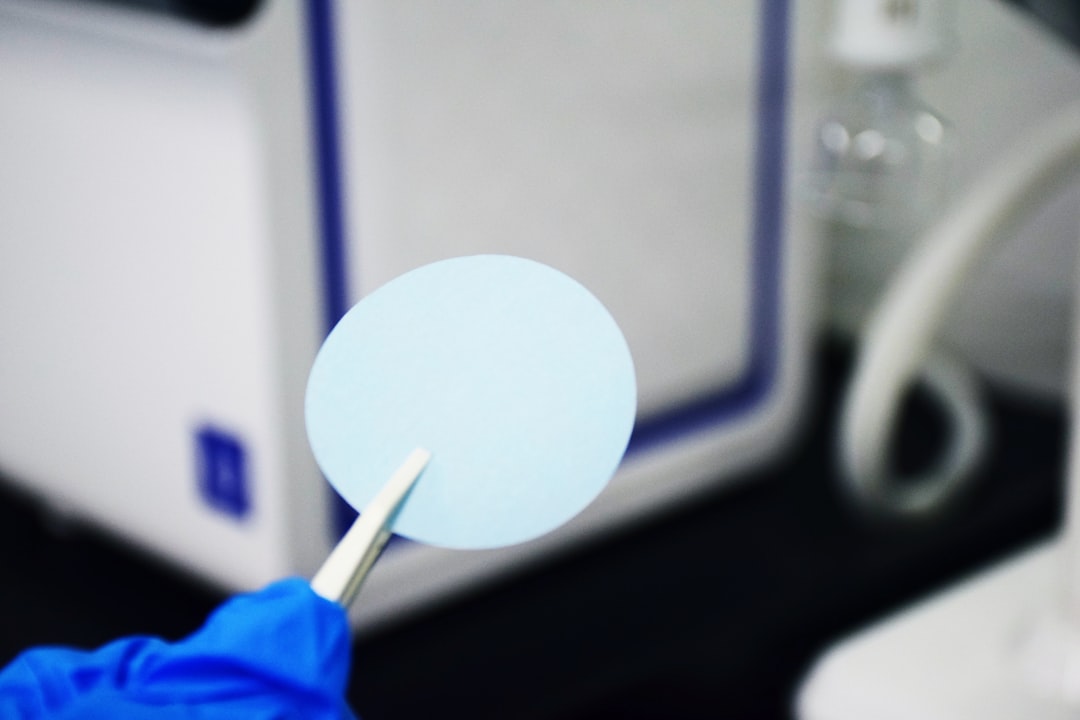
One of the most compelling engineering stories coming out of 2026 is what MIT spinout 1s1 Energy is doing with boron-based membranes. 1s1 Energy has developed electrochemical cell materials for hydrogen electrolyzers that it says reduces energy use by 30 percent. The science behind it is elegant: boron can be given a negative charge, which makes hydrogen ions (protons) bond to it more quickly; the hydrogen ions can then be filtered through the membrane and released as they move through the cell. Boron-based materials are also more stable and resistant to corrosion, further improving the long-term performance of electrolyzers.
In 2021, the U.S. Department of Energy set a goal for PEM electrolysis to achieve 77 percent electrical efficiency by 2031 — and 1s1 says it is already reaching that milestone in tests. Their customers are noticing: they have a pipeline of potential customers that see around a 60 percent reduction in operating costs with their technology.
AI, Smart Grids, and Digitalization: The Silent Cost-Cutter
Beyond the hardware, software and AI-driven optimization are quietly shaving significant costs off green hydrogen production. A new AI-assisted data-driven prediction model has been developed for in-depth analysis of current and future levelized costs of green hydrogen, using natural language processing to gather data and generate trends for the technological development of key aspects of electrolyzer technology.
Digital technologies, such as smart grids and AI-driven systems, are improving efficiency and enabling decentralized hydrogen production. On the operations side, advanced monitoring and control systems are being integrated into electrolyzers to optimize performance, improve efficiency, and reduce operational costs — enabling predictive maintenance and real-time analytics that enhance the overall reliability of hydrogen production systems.
Market Scale and Global Investment Signals
The commercial signals are now backing up the engineering hype. The global green hydrogen market size is predicted to increase from USD 17.28 billion in 2026 to approximately USD 231.32 billion by 2035, expanding at a CAGR of 34.09%.
Investment trends indicate a growing shift toward green hydrogen, with over $250 billion projected by 2035, surpassing blue hydrogen’s expected $100 billion. Regionally, the Europe region is expected to exhibit the fastest growth in the market, contributing a 15.3% share in 2026, driven by its proactive regulatory environment, robust renewable energy infrastructure, and strategic investments aimed at decarbonization. In Asia, China accounts for the largest market share in the Asia-Pacific green hydrogen market, with a 20-million-ton output leading global production.
Key industry players driving this wave include NEL ASA, ITM Power, ENGIE, Siemens, Air Products Inc., Plug Power Inc., Cummins Inc., Air Liquide, and Linde.
Realistic Alternatives and What You Should Actually Do Right Now
If you’re an engineer, project developer, or policy-maker navigating this space, the key is not to wait for the “perfect” technology. Instead, consider a tiered strategy:
- Near-term (2026–2028): Deploy AWE electrolyzers paired with geothermal or hybrid renewable sources for baseload industrial hydrogen. The economics are closest to viable today.
- Mid-term (2028–2030): Integrate next-gen PEM systems (boron membranes, low-iridium catalysts) as they reach commercial scale. Monitor 1s1 Energy and VSPARTICLE for commercial rollout milestones.
- Long-term (2030+): SOEC and AEM technologies will likely unlock the sub-$1/kg regime for specific high-temperature industrial applications — but only if durability issues are resolved.
- Always: Renewable electricity costs below $20–$30/MWh are essential for green hydrogen to achieve cost parity with fossil-based hydrogen — so the site selection and power purchase agreement strategy is just as critical as the electrolyzer choice.
- Don’t overlook digitalization: AI-driven operations and predictive maintenance are low-hanging fruit for cost reduction with existing equipment, often yielding 10–20% efficiency improvements without any hardware swap.
The “always five years away” joke is getting harder to tell with a straight face. The convergence of materials breakthroughs (boron membranes, iridium nanoprinting, PFAS-free systems), AI-driven optimization, and massive policy-backed capital deployment is creating genuine momentum. The path to cost-competitive green hydrogen isn’t a single breakthrough — it’s dozens of simultaneous engineering improvements all pulling in the same direction.
Editor’s Comment : Green hydrogen’s cost reduction story in 2026 isn’t about one silver bullet — it’s a classic engineering systems problem being solved from every angle at once: materials science, process efficiency, renewable energy integration, and digital optimization. If you’re building energy strategy right now, don’t bet against this technology. Instead, start with pilot-scale deployments that let your team build operational expertise while the cost curve continues its inevitable descent. The engineers who understand why it’s getting cheaper — not just that it’s getting cheaper — will be the ones who make the best deployment decisions over the next decade.
📚 관련된 다른 글도 읽어 보세요
- 그린 수소 아직도 비싸다고? 2026년 비용 절감 핵심 기술 5가지 — kg당 $1.54 시대가 온다
- 가정용 연료전지 시스템 설치 비용과 효율, 2026년 지금 투자할 만한가?
- 수소 연료전지 vs 리튬이온 배터리 효율 비교 (2026년 최신 기준) — 어떤 기술이 미래를 이끌까?
태그: green hydrogen, electrolyzer technology, hydrogen production cost, PEM electrolyzer, LCOH reduction, renewable energy hydrogen, hydrogen economy 2026
Leave a Reply