Picture this: it’s a cold January morning, and your neighbor is standing at a hydrogen refueling station, filling up his Toyota Mirai in under five minutes. Meanwhile, you’re at home, still waiting for your Tesla Model 3 to finish its overnight charge. Who made the smarter choice? The answer, as we’ll explore together, is genuinely more complicated — and more interesting — than you might think.
As we move deeper into 2026, the debate between Fuel Cell Electric Vehicles (FCEVs) and Battery Electric Vehicles (BEVs) has never been more relevant. Both technologies have matured significantly, both have real-world champions, and both have very real limitations. Let’s think through this together, side by side.
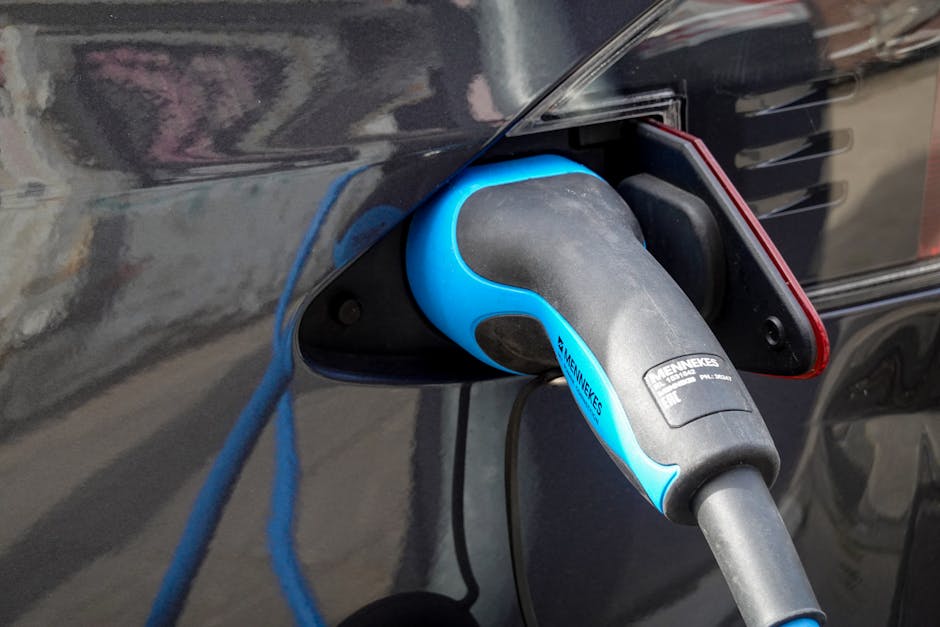
🔋 How Each Technology Actually Works
Before diving into the numbers, let’s ground ourselves in the basics — because understanding how these cars work shapes everything else about them.
Battery Electric Vehicles (BEVs) store electrical energy in large lithium-ion (or increasingly, solid-state) battery packs. You plug them in, charge the battery, and the motor draws from it. Simple. Elegant. The Tesla Model Y, Hyundai IONIQ 6, and BYD Han EV are classic examples dominating global roads in 2026.
Fuel Cell Electric Vehicles (FCEVs), on the other hand, generate electricity on the go by combining hydrogen gas stored in a high-pressure tank with oxygen from the air inside a fuel cell stack. The only byproduct? Water vapor. Cars like the Toyota Mirai Gen 3 and Hyundai NEXO 2026 edition operate on this principle.
📊 Performance & Specs: 2026 Head-to-Head Data
Let’s look at where the real differences show up in practical metrics:
- Refueling/Recharging Time: FCEVs win decisively here — a full hydrogen fill takes 3–5 minutes. BEVs using the latest 800V ultra-fast chargers (like Hyundai’s E-GMP platform or Tesla Supercharger V4) can add 200 km of range in about 15–20 minutes, which is impressive but still not instant.
- Range: Both have improved significantly. The 2026 Toyota Mirai offers approximately 650 km on a single tank. Top-tier BEVs like the Mercedes EQS 450+ now push 780 km on a charge. Slight edge to BEVs in raw range numbers.
- Energy Efficiency: This is where BEVs shine hard. BEVs convert roughly 77–85% of energy to motion. FCEVs, accounting for hydrogen production, compression, and fuel cell conversion losses, deliver closer to 25–35% well-to-wheel efficiency. That’s a massive gap.
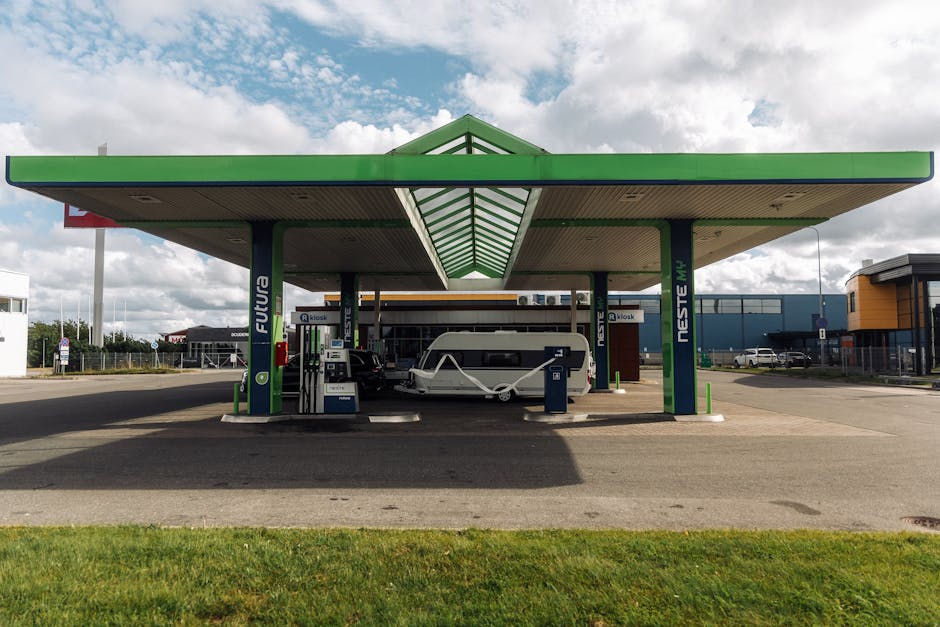
- Infrastructure Availability: BEV charging networks are now extensive globally — over 3.2 million public chargers worldwide as of early 2026. Hydrogen stations? Roughly 1,200 globally, heavily concentrated in Japan, South Korea, Germany, and California.
- Purchase Price: BEVs have achieved near price parity with combustion vehicles in many segments. FCEVs remain significantly more expensive — the 2026 Hyundai NEXO starts around $65,000 USD before incentives.
- Maintenance: Both are low-maintenance compared to ICE vehicles, but FCEVs have an additional layer of complexity around the fuel cell stack and hydrogen storage system.
- Cold Weather Performance: FCEVs handle cold climates better than most BEVs, since the chemical reaction in the fuel cell is less temperature-sensitive than lithium battery chemistry.
🌍 Real-World Examples: Who’s Betting on What in 2026?
The global landscape tells a fascinating story of diverging bets.
South Korea remains the most ambitious FCEV market in the world. The government’s Hydrogen Economy Roadmap 2.0 targets 3 million FCEVs on Korean roads by 2030, backed by massive subsidies and a growing network of 600+ hydrogen stations as of 2026. Hyundai’s commercial hydrogen trucks — the XCIENT Fuel Cell — are already operating in Switzerland and California fleet logistics.
Japan continues to be Toyota’s home turf for hydrogen advocacy. The Tokyo metropolitan area now operates hydrogen-powered public buses on 12 dedicated routes, and the third-generation Mirai has quietly become a favorite among long-distance commuters in rural prefectures where BEV charging infrastructure is sparse.
Europe tells a split story. Germany invested heavily in hydrogen corridor infrastructure along the Autobahn, while the UK, France, and the Netherlands have overwhelmingly shifted consumer subsidies toward BEVs. The EU’s 2026 Clean Vehicles Directive technically supports both, but market momentum clearly favors BEVs at the consumer level.
China and the United States are BEV strongholds. BYD sold over 4.2 million EVs globally in 2025, and Tesla continues to expand Supercharger density in North America. Hydrogen in these markets is being developed primarily for commercial and industrial use — long-haul trucking, port equipment, and industrial heat — rather than personal cars.
🤔 The Honest Pros & Cons Breakdown
Let’s not sugarcoat either side. Both technologies have genuine strengths and genuine problems worth naming clearly.
Why FCEVs make sense: If you drive long distances regularly, live in a cold climate, can’t charge at home (apartment dweller, for instance), or operate in a region with strong hydrogen infrastructure like Seoul or Tokyo, an FCEV genuinely solves problems a BEV can’t. Fleet operators running delivery trucks or taxis that need to turn around fast will also find FCEVs compelling.
Why BEVs make more sense for most people right now: The charging network is just there. The efficiency advantage is real money over time. Purchase prices have dropped dramatically. And solid-state battery technology — rolling out in limited production from Toyota, Samsung SDI, and CATL in 2026 — promises to close the remaining gaps in charge time and cold-weather performance within the next two to three years.
💡 Realistic Alternatives for Different Reader Situations
Not sure where you fit? Let’s reason through a few scenarios:
- Urban commuter, apartment renter: Look hard at BEVs with strong public charging networks in your city first. But if public chargers near you are unreliable or congested, an FCEV (if hydrogen stations exist nearby) could genuinely be your more practical daily driver.
- Suburban homeowner with a garage: A BEV is almost certainly your best choice. Home charging overnight is the killer feature that makes BEV ownership nearly effortless.
- Rural driver, long daily distances: Evaluate your region’s hydrogen infrastructure honestly. If it’s there, FCEVs are worth serious consideration. If not, a long-range BEV paired with strategic fast-charging habits works well.
- Fleet operator / logistics company: The FCEV case is strongest here, particularly for heavy vehicles. Hydrogen’s fast refueling translates directly to uptime and profitability.
- Eco-conscious buyer worried about total carbon footprint: Dig into your local electricity grid’s energy mix for BEVs, and your region’s hydrogen production source for FCEVs. Green hydrogen (from renewables) is still limited in supply in 2026 — most hydrogen today is still “grey” (from natural gas). A BEV charged on a renewable-heavy grid is often the cleaner choice right now.
🔮 Where Is This Heading?
The honest forecast for 2026 and beyond is that these two technologies are likely to find their own niches rather than one fully displacing the other. BEVs are winning the personal car market decisively. FCEVs are carving out a durable role in commercial transport, industrial applications, and markets with strong government-backed hydrogen infrastructure.
The wildcard? Green hydrogen production costs are finally starting to fall meaningfully, driven by electrolysis powered by cheap renewable energy in places like Australia, Chile, and the Middle East. If hydrogen gets cheap and clean at scale, the efficiency math changes, and FCEVs become far more compelling for a wider audience.
For now, the honest advice is: don’t let technology tribalism make your decision for you. Map your actual life — your commute, your charging access, your regional infrastructure — onto the technology that genuinely fits. That’s always the smarter play.
Editor’s Comment : After years of watching this debate get heated and tribal online, what strikes me most in 2026 is how both technologies have earned their place. FCEVs are not “dead” as some BEV enthusiasts insist — they’re finding their lane in commercial logistics and infrastructure-rich markets. And BEVs are not perfect — ask anyone who’s hunted for a working fast charger on a road trip. The best version of a clean transportation future probably has room for both. Pick the one that fits your life, not the one that wins Twitter arguments.
📚 관련된 다른 글도 읽어 보세요
- Hydrogen Fuel Cell Vehicles in 2026: Are We Finally at the Tipping Point?
- 수소 에너지 미래 전망 2026: 진짜 게임 체인저가 될 수 있을까?
- Hydrogen Society in 2026: The Real Challenges Slowing Down Our Clean Energy Future
태그: [‘fuel cell vehicle 2026’, ‘battery electric vehicle comparison’, ‘FCEV vs BEV’, ‘hydrogen car pros cons’, ‘electric vehicle guide 2026’, ‘Toyota Mirai vs Tesla’, ‘green transportation 2026’]
Leave a Reply