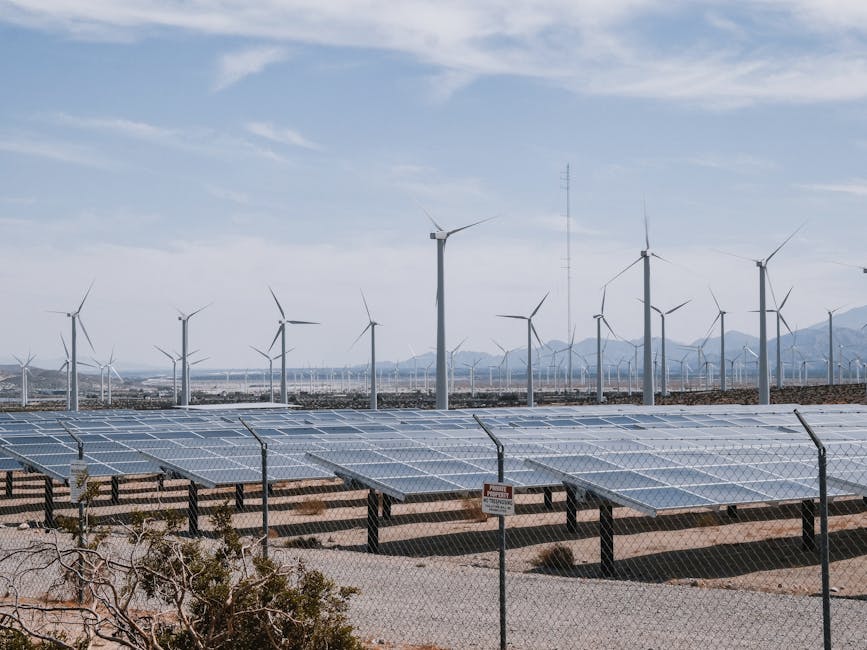
Picture this: a wind farm off the coast of Denmark, spinning at full capacity on a blustery Tuesday morning — but the grid doesn’t need all that power right now. Instead of curtailing the turbines (basically throwing free energy away), operators pipe that surplus electricity into an electrolyzer, splitting water molecules into hydrogen and oxygen. The hydrogen gets stored, shipped, and eventually burned cleanly. No carbon. No waste. That’s the dream of renewable-linked green hydrogen — and in 2026, that dream is closer to reality than ever, though still frustratingly imperfect.
Let’s think through exactly where the efficiency story stands today, why the numbers matter more than the headlines, and what realistic paths forward actually look like.
Why Efficiency Is the Make-or-Break Metric
When people talk about green hydrogen production efficiency, they’re usually referring to the system round-trip efficiency — how much of the original renewable electricity actually ends up as usable hydrogen energy. This is sometimes called the Power-to-Hydrogen (P2H) efficiency.
Here’s the honest breakdown as of 2026:
- Alkaline Electrolyzers (AEL): The workhorse of the industry. Typical stack efficiency sits around 63–70% (LHV basis). They’re cheap and durable, but slow to ramp up — a real problem when you’re pairing them with variable solar or wind.
- Proton Exchange Membrane (PEM) Electrolyzers: Faster dynamic response, ideal for intermittent renewables. Stack efficiency now reaches 70–75% in commercial deployments, up from ~68% just three years ago. The trade-off? Higher capital cost and platinum-group metal catalysts that strain supply chains.
- Solid Oxide Electrolyzers (SOEC): The efficiency champion — up to 85–90% at high operating temperatures — but still largely at demonstration scale. Companies like Topsoe and Elcogen have been pushing hard, and 2026 is seeing the first genuine multi-MW SOEC projects come online.
- Anion Exchange Membrane (AEM): The emerging dark horse. Efficiency in the 65–72% range, but potentially combining PEM’s flexibility with AEL’s lower costs. Several startups hit commercial milestones in late 2025.
But here’s where things get interesting — and a bit humbling. When you zoom out to full-system efficiency (including power conditioning, compression, storage losses, and transportation), even the best setups drop to around 25–40% end-to-end. That means for every 100 units of renewable energy you feed in, you might recover 25–40 units of usable hydrogen energy at the point of use. That’s not a bug in the system — it’s a physics reality we have to design around.
The Renewable Coupling Problem (And How Smart Operations Are Solving It)
The core challenge with renewable-linked green hydrogen isn’t the electrolyzer alone — it’s the mismatch between variable power generation and the steady, high-utilization operation that electrolyzers prefer for maximum efficiency and longevity.
Running a PEM electrolyzer at 30% capacity factor (common with direct solar coupling) dramatically raises the Levelized Cost of Hydrogen (LCOH) because you’re amortizing expensive capital equipment over fewer operating hours. The efficiency per run might be fine, but the economics collapse.
Smart hybrid approaches now being deployed in 2026 include:
- Hybrid renewable + grid buffering: Using grid electricity during off-peak, low-carbon hours to maintain higher electrolyzer utilization without compromising green credentials.
- Co-located battery storage: Short-duration batteries (2–4 hours) smooth out solar intermittency, keeping electrolyzers operating in their optimal efficiency band more consistently.
- Demand-side flexibility: Scheduling hydrogen compression and purification during peak generation windows, shifting parasitic loads away from low-generation periods.
- Digital twin optimization: AI-driven plant management systems that predict renewable output 15–30 minutes ahead and pre-condition electrolyzers accordingly — now standard in large-scale projects.
Real-World Examples: Who’s Actually Doing This Well in 2026?
NEOM’s HELIOS Project (Saudi Arabia): Still arguably the most ambitious green hydrogen project on Earth, this 4 GW wind-and-solar-powered complex in northwestern Saudi Arabia is now in its operational ramp-up phase. The project uses AEL technology at massive scale, targeting an LCOH below $2/kg — a psychological and economic threshold the industry has chased for years. Early operational data suggests they’re consistently hitting system efficiencies around 68–70% at the electrolyzer stack level, with full-system losses bringing delivered hydrogen closer to 55–58% efficiency before end-use.
HyDeal Europe (Spain/Germany Corridor): This consortium has been linking Spanish solar farms directly to German industrial consumers via repurposed natural gas pipelines. Their 2026 operating data shows that the pipeline transport efficiency (including compression and blending management) is actually better than many skeptics predicted — around 95–97% for pure hydrogen over medium distances. The bottleneck remains the electrolyzer utilization rate, hovering around 42–48% annually due to solar variability without sufficient storage.
South Korea’s Hydrogen Economy Roadmap — 2026 Update: Korea has taken a different angle, focusing on importing green hydrogen and ammonia (which reconverts to hydrogen) rather than domestic production. Their Saemangeum offshore wind-to-hydrogen pilot, however, is showing promising results — PEM electrolyzers coupled with offshore wind are achieving capacity factors of 48–52%, significantly higher than most solar-only projects, thanks to more consistent wind resources.
Australia’s Asian Renewable Energy Hub (AREH): Western Australia’s hybrid wind-solar project is now exporting green ammonia to Japan and South Korea. Their operational efficiency reports for early 2026 indicate a full-chain efficiency (from renewable generation to ammonia at the export terminal) of approximately 38–42% — lower than pure hydrogen pathways, but the energy density and shipping economics of ammonia make it more practical for long-distance trade.
What the Numbers Tell Us About Where We Actually Are
Let’s be honest with ourselves here. Green hydrogen is not yet the cheapest clean energy carrier in most markets. The LCOH from best-in-class projects in 2026 ranges from about $1.80–$3.50/kg depending on location, renewable resource quality, and scale. Grey hydrogen (from natural gas without carbon capture) still sits at roughly $1.00–$1.50/kg in most regions. The gap is narrowing — electrolyzer costs have dropped about 40% since 2022 — but it hasn’t closed.
The efficiency improvements we’ve seen since 2023 are real and meaningful:
- PEM stack efficiency up ~3–5 percentage points
- System-level balance-of-plant losses reduced by better thermal integration
- Electrolyzer stack degradation rates improved — stacks now routinely last 80,000–100,000 hours versus ~60,000 hours previously
- SOEC moving from lab curiosity to MW-scale reality
But the fundamental physics ceiling means we’re unlikely to see dramatic leaps beyond current efficiency ranges without breakthrough materials science — think new proton-conducting membranes or earth-abundant catalysts replacing platinum and iridium in PEM systems.
Realistic Alternatives Worth Considering Right Now
If you’re a business, policymaker, or even just an informed citizen thinking about the hydrogen economy, here’s the pragmatic 2026 reality check:
- For industrial heat users: If you’re replacing high-temperature industrial processes, green hydrogen (or green ammonia reconverted) is genuinely competitive in specific sectors like steel, cement, and fertilizer — especially where direct electrification is technically impossible.
- For transportation: Fuel cell hydrogen still makes more sense for heavy-duty trucking, shipping, and aviation than for passenger cars (where battery EVs have decisively won on efficiency grounds). The round-trip efficiency disadvantage of hydrogen versus direct battery use is too large to ignore for light vehicles.
- For energy storage: Seasonal storage of hydrogen is becoming genuinely interesting — underground salt cavern storage projects in the UK and Germany are demonstrating viable long-duration energy storage at scale where batteries simply can’t compete on duration.
- For regions without transmission infrastructure: Island nations, remote industrial sites, and developing regions with excellent renewable resources but poor grid connectivity may find green hydrogen the most practical energy carrier — leapfrogging grid infrastructure entirely.
The most honest advice? Don’t bet everything on hydrogen being the universal answer. It’s an extraordinary solution for specific, well-matched problems. Matching the application to the technology’s actual strengths — rather than forcing hydrogen into every clean energy narrative — is the mature, 2026 approach.
We’re in a fascinating transitional moment. The efficiency numbers are good enough to justify serious investment in the right applications. The cost curves are bending in the right direction. And the real-world operational data coming in from projects like NEOM, AREH, and the Korea pilots is replacing speculation with evidence.
Green hydrogen won’t save the entire energy system. But in its lane? It’s increasingly formidable.
Editor’s Comment : What strikes me most about the green hydrogen story in 2026 is how the conversation has matured from breathless hype to careful, application-specific analysis. Five years ago, hydrogen was going to power everything from your lawnmower to transcontinental flights by next Tuesday. Today’s engineers and investors are asking much better questions: Where does the efficiency math actually work? Where does it not? That’s healthy. The efficiency gaps are real, the physics are unforgiving, and the cost journey is still underway — but the use cases where green hydrogen genuinely shines are becoming clearer every quarter. Keep watching the SOEC commercial rollout closely; if those efficiency numbers at scale hold up through 2026 and into 2027, that could be the genuine game-changer the sector has been waiting for.
태그: [‘green hydrogen efficiency 2026’, ‘renewable energy hydrogen production’, ‘PEM electrolyzer efficiency’, ‘power to hydrogen’, ‘LCOH green hydrogen’, ‘renewable linked hydrogen’, ‘green hydrogen electrolysis technology’]
Leave a Reply