Imagine a small hospital in rural South Korea that hasn’t experienced a single power outage in three years — not even during the record-breaking summer storms of 2025. The secret? A solid oxide fuel cell (SOFC) system seamlessly woven into a localized microgrid. I came across this story while researching distributed energy trends earlier this year, and honestly, it stopped me in my tracks. We talk about “energy resilience” a lot, but this was living proof of what it actually looks like on the ground.
So let’s dig into SOFC microgrid integration together — what the data says, who’s already doing it well, and whether this is a realistic option for communities, businesses, or even apartment complexes thinking about energy independence in 2026.
What Exactly Is an SOFC — And Why Does It Matter for Microgrids?
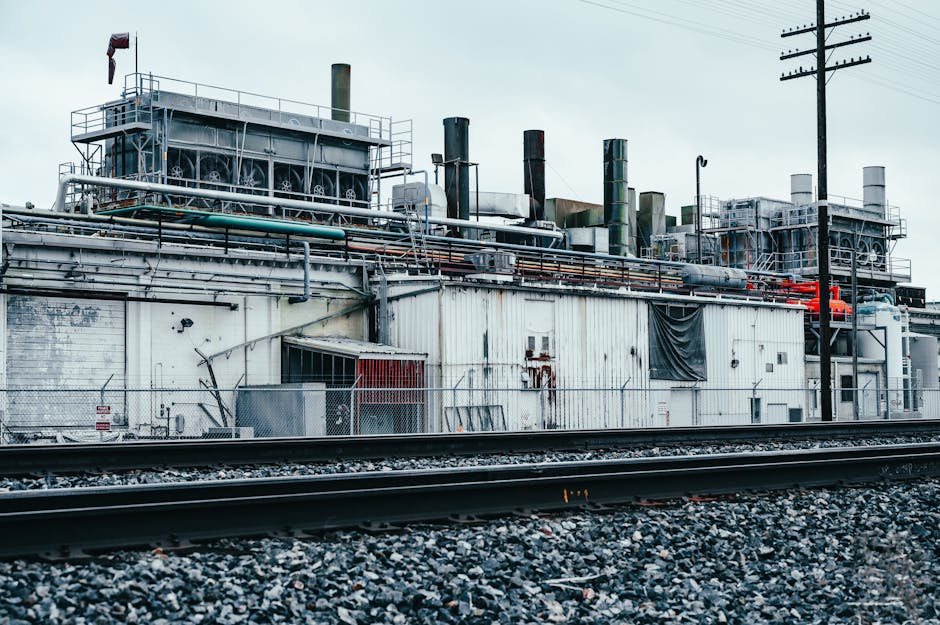
A Solid Oxide Fuel Cell (SOFC) is a type of electrochemical device that converts fuel (typically natural gas, hydrogen, or biogas) directly into electricity through an oxidation process — without combustion. That’s the key differentiator. No burning means significantly lower NOx and particulate emissions compared to diesel generators or even conventional gas turbines.
Operating at temperatures between 600°C and 1,000°C, SOFCs achieve electrical efficiencies of 50–65%, and when waste heat is recovered in a combined heat and power (CHP) configuration, total system efficiency can climb to 85–90%. For a microgrid — a localized energy network that can operate independently (“islanded”) or connected to the main grid — that kind of efficiency is transformative.
Here’s the quick breakdown of why SOFCs and microgrids are such a natural pairing:
- Baseload stability: Unlike solar or wind, SOFCs generate power continuously, providing a reliable anchor for the microgrid’s energy balance.
- Fuel flexibility: SOFCs can run on natural gas today and transition to green hydrogen as that infrastructure matures — a future-proofing quality that’s increasingly valuable in 2026’s shifting energy markets.
- Low noise and emissions: Critical for urban or semi-urban deployments where a diesel generator would be socially or legally problematic.
- High-quality waste heat: The high operating temperature means the exhaust heat is usable for industrial processes, space heating, or absorption cooling.
- Modular scalability: Systems can be stacked from kilowatts to megawatts, making them appropriate for everything from a university campus to a data center cluster.
The 2026 Data Landscape: Where Are We Actually Headed?
The global SOFC market was valued at approximately $2.8 billion USD in 2025, with projections pointing toward $5.4 billion by 2030, driven largely by microgrid and distributed generation applications. According to BloombergNEF’s Q1 2026 distributed energy report, SOFC deployments in commercial and industrial microgrid settings grew by 34% year-over-year in Asia-Pacific alone.
Cost has historically been SOFC’s Achilles’ heel — early systems ran upward of $4,000–$6,000 per kilowatt installed. But manufacturing scale-up and materials innovation have pushed that number down considerably. As of early 2026, leading manufacturers are quoting commercial projects in the range of $1,800–$2,500/kW, with some Korean and Japanese OEMs reportedly targeting sub-$1,500/kW by 2028.
Degradation rates — another traditional concern — have also improved. Modern SOFC stacks now target less than 0.5% per 1,000 hours of operation, translating to useful system lifespans of 15–20 years with proper maintenance protocols.
Real-World Examples: Who’s Leading the Charge?
Let’s look at who’s actually putting this technology to work, because theory is one thing and deployment is quite another.
🇰🇷 South Korea — POSCO Energy & Bloom Energy Partnership: South Korea has been one of the most aggressive SOFC adopters globally, driven partly by its Hydrogen Economy Roadmap. POSCO Energy (now restructured under POSCO Holdings’ energy division) has been operating multi-megawatt SOFC installations at industrial complexes since the early 2020s. In 2026, a notable pilot in Incheon integrates a 2.5 MW SOFC array with rooftop solar and battery storage to serve a mixed-use commercial district — complete with a vehicle-to-grid interface for EV charging. The system reportedly maintains islanded operation for up to 72 hours during grid disruptions.
🇯🇵 Japan — ENE-FARM & the Residential Scale: Japan took a different scaling approach — residential micro-CHP. The ENE-FARM program, now in its second decade, has installed over 500,000 residential SOFC units. While individual units are small (around 700W electrical), the aggregated effect on neighborhood-level microgrids is significant. Tokyo’s Smart City pilot in Toyosu has been experimenting with aggregating ENE-FARM units into a virtual power plant (VPP) that feeds back into a community microgrid — a genuinely clever bottom-up approach.
🇺🇸 United States — Bloom Energy at Data Centers: Bloom Energy’s installations at tech campuses in California and Virginia have demonstrated SOFC microgrids at scale. A 2025–2026 project with a major cloud infrastructure provider in Northern Virginia uses a 10 MW SOFC system as the primary baseload anchor, supplemented by battery storage and solar carports. The system is designed to operate fully islanded if the regional grid faces stress — a direct response to the reliability concerns that followed the Mid-Atlantic grid events of 2024.
🇩🇪 Germany — Industrial Microgrid with Hydrogen Transition: A manufacturing consortium in Baden-Württemberg launched a flagship SOFC-hydrogen microgrid in late 2025. What makes this one particularly interesting is the dual-fuel setup: the SOFCs run on natural gas blended with up to 30% green hydrogen, with a clear roadmap to 100% hydrogen by 2030 as local electrolyzer capacity expands. It’s a textbook example of building infrastructure today that doesn’t lock you into yesterday’s fuel.
The Challenges You Should Honestly Know About
I’d be doing you a disservice if I only told the upside story. There are real friction points worth understanding:
- Thermal cycling sensitivity: SOFCs don’t love being turned on and off repeatedly. Frequent startups can accelerate degradation. This makes them better suited as steady baseload components rather than rapid-response peaking assets — which means microgrid design needs to account for complementary storage or flexible loads.
- Long startup times: Cold-start from ambient can take several hours, unlike a diesel generator that fires up in seconds. This is partly mitigated by keeping systems at operating temperature, but that has its own energy cost.
- Capital cost sensitivity: While costs are falling, the upfront investment still creates financing barriers for smaller municipalities or cooperatives without access to green bonds or government incentive programs.
- Supply chain concentration: Key materials like yttria-stabilized zirconia (YSZ) electrolytes and lanthanum-based cathode materials have concentrated supply chains — a geopolitical risk factor that energy planners are increasingly flagging in 2026’s complex trade environment.
Realistic Alternatives: Not Everyone Needs a Full SOFC Microgrid
Here’s where I want to have an honest conversation. SOFCs are genuinely exciting, but they’re not the right fit for every situation. Let’s think through some alternatives based on different contexts:
- If you’re a small business or multi-tenant building: A proton exchange membrane (PEM) fuel cell or even a natural gas microturbine paired with battery storage may offer a lower-complexity, lower-cost path to energy resilience. SOFC’s advantages shine at scale; below 100 kW, the economics are thinner.
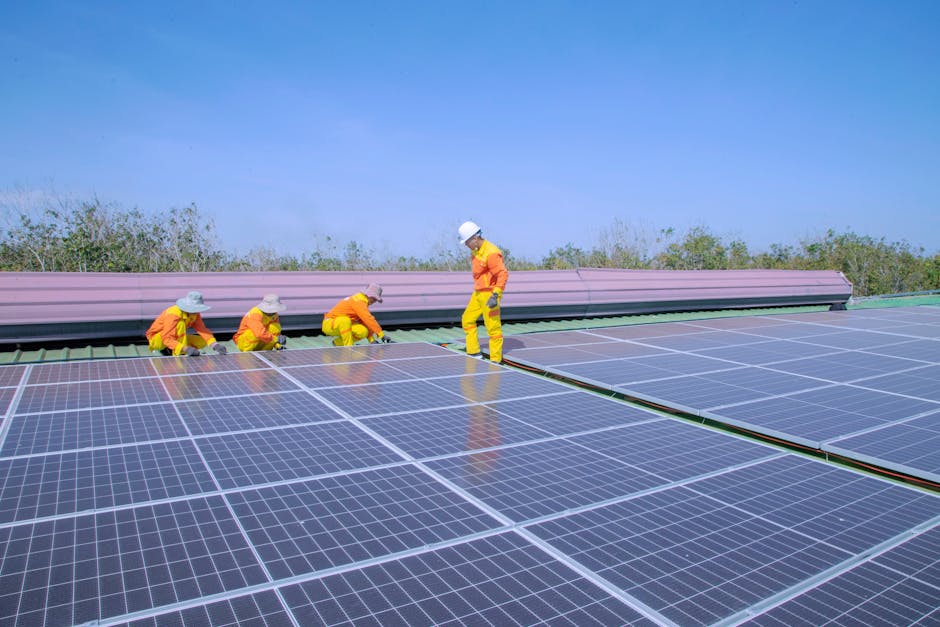
- If you’re in a region with excellent solar resources: A solar + long-duration battery storage (like iron-air or flow batteries) microgrid might deliver sufficient resilience at lower operational complexity — especially if your grid reliability issues are seasonal rather than chronic.
- If you’re transitioning to hydrogen but not there yet: Consider a hybrid system that uses PEM electrolyzers to produce hydrogen from excess renewable power, with SOFC as the reconversion path. This creates a local hydrogen loop that scales with your renewable capacity.
- If upfront capital is the binding constraint: Energy-as-a-service (EaaS) models are becoming more common in 2026. Companies like Bloom Energy and several Korean competitors now offer SOFC microgrid systems on a subscription or power purchase agreement (PPA) basis, eliminating the capital hurdle entirely.
The bottom line? SOFC microgrid integration is one of the most compelling distributed energy solutions available today — particularly for organizations that need continuous, high-quality power, have heat loads to serve, and are thinking about a fuel transition pathway over the next decade. But it works best as part of a thoughtfully designed system, not as a standalone silver bullet.
The energy landscape in 2026 rewards those who think in systems, not in individual technologies. And SOFCs, at their best, are a phenomenal anchor for a well-designed system.
Editor’s Comment : What strikes me most about the SOFC microgrid story is that it’s one of the few energy technologies where the future-proofing argument is genuinely credible — not just marketing language. Running on natural gas today, blending in hydrogen tomorrow, and potentially going fully green hydrogen the day after: that’s a real transition pathway, not a theoretical one. If you’re involved in facility planning, campus energy management, or community energy cooperatives, I’d strongly recommend putting SOFC integration on your evaluation list for 2026 projects. The cost curve is moving in the right direction, the reference cases are multiplying, and the technology maturity is finally catching up to the promise.
태그: [‘SOFC microgrid 2026’, ‘solid oxide fuel cell energy’, ‘microgrid integration solutions’, ‘distributed energy storage’, ‘fuel cell CHP system’, ‘hydrogen energy transition’, ‘clean energy infrastructure 2026’]
Leave a Reply